
Article: Dog Feeder Materials: Ceramic vs Metal vs Wood Comparison
Dog Feeder Materials: Ceramic vs Metal vs Wood Comparison
The short answer: match the material to how your dog eats and where the bowl lives. Stainless steel is the easiest to clean thoroughly and stands up to daily use, heavy ceramic sits firm during meals and holds food temperature well, and a wooden elevated feeder adds ergonomic benefit for larger and older dogs. The sections below weigh each one on hygiene, durability and placement.
Ceramic Dog Bowls: Beauty Meets Functionality
Ceramic bowls combine practical benefits with visual appeal, making them a popular choice among discerning pet owners. The non-porous surface prevents bacteria from embedding in microscopic cracks, which is particularly important for maintaining proper hygiene standards. Unlike plastic alternatives, ceramic won't retain odours or stains from wet food, ensuring each meal is served in a clean environment.
Weight plays a significant role in ceramic's appeal. Heavy ceramic bowls stay firmly in place during meals, preventing the frustrating sliding that lighter materials often cause. This stability is especially beneficial for enthusiastic eaters or larger breeds that tend to push their bowls around. The weight also prevents tipping during water consumption, maintaining a cleaner floor around the dining area.
Temperature retention is another ceramic advantage. The material keeps food at a consistent temperature longer than metal alternatives, which can be particularly appealing for dogs who prefer their meals slightly warm. This thermal property also means ceramic bowls won't become uncomfortably cold in winter months, making them more pleasant for sensitive-mouthed dogs.
The Ceramic Dog Bowl from Wirksworth Pottery exemplifies quality craftsmanship that doubles as both functional feeding dish and attractive kitchen accessory. These handmade pieces offer the durability and aesthetic appeal that makes ceramic such an enduring choice for thoughtful pet owners.
However, ceramic's main vulnerability is breakage. Dropped bowls can chip or shatter, creating potential hazards. Additionally, cracked ceramic can harbour bacteria in the fracture lines, making damaged bowls unsafe for continued use. Regular inspection helps identify damage before it becomes a health concern.
Stainless Steel: The Hygiene Champion
Stainless steel stands out as the most hygienic option available for dog feeding. The completely non-porous surface makes bacterial growth nearly impossible, whilst the material resists scratching better than alternatives. Veterinarians often recommend stainless steel for dogs with sensitive stomachs or allergies because it's entirely inert and won't react with food or cleaning products.
Durability is steel's greatest strength. These bowls withstand drops, rough handling, and aggressive chewing around the rim without damage. They're also dishwasher-safe and can handle the hottest wash cycles, making sanitisation effortless. This resilience makes stainless steel particularly valuable for multi-pet households where feeding time can become competitive.
The lightweight nature creates both advantages and drawbacks. Whilst easier to lift and move for cleaning, lighter bowls may slide during meals unless they have rubber bases or are integrated into elevated feeding systems. This mobility can be frustrating during mealtimes.
Steel's main aesthetic limitation is its clinical appearance. Some owners find the industrial look doesn't complement their home décor, particularly in carefully designed kitchen spaces where feeding bowls remain visible. The reflective surface also shows water spots and fingerprints more readily than other materials.
Wooden Elevated Feeders: Natural Style with Practical Benefits
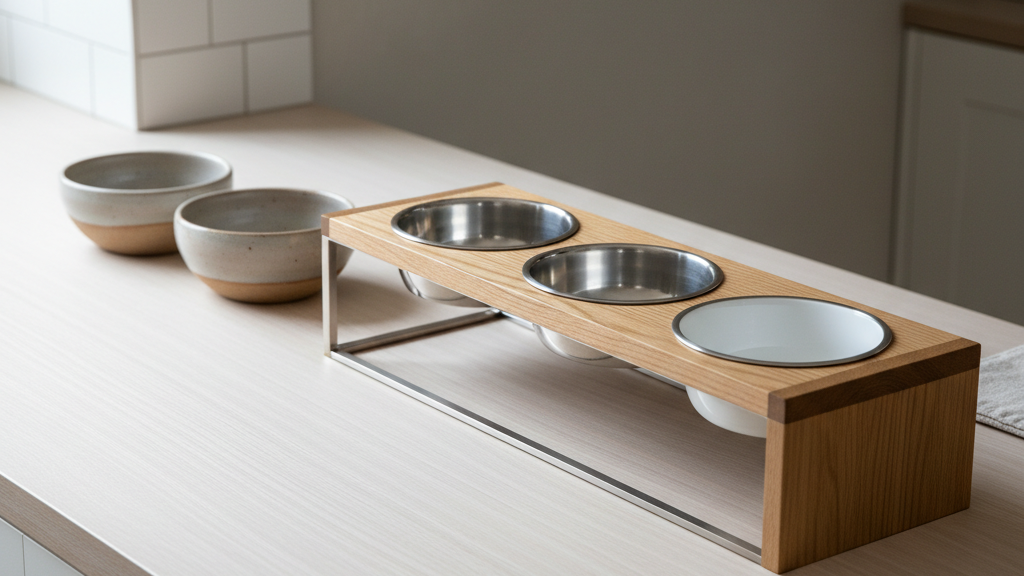
Wooden raised feeders represent a design-conscious approach to dog feeding, combining natural materials with ergonomic benefits. The elevated position reduces strain on your dog's neck and joints, particularly beneficial for larger breeds or senior dogs with mobility issues. This height advantage also promotes better digestion by allowing food to travel more naturally through the digestive system.
From an interior design perspective, wood integrates beautifully with most home aesthetics. Quality timber feeders complement everything from Scandinavian minimalism to traditional British country styles, making the dining spot feel intentionally designed rather than purely functional. The natural grain patterns and warm tones create visual interest that plastic or steel simply cannot match.
Wood's natural insulation properties provide practical benefits too. Unlike metal, wooden frames won't conduct extreme temperatures, maintaining comfortable feeding conditions year-round. This thermal stability also prevents condensation buildup that can occur with metal elevated systems in humid conditions.
The Desco Dog Feeder exemplifies how a bent-plywood frame can house removable bowls made from other materials, combining wood's aesthetic appeal with ceramic's hygiene advantages. This hybrid approach offers the best of multiple materials in one thoughtfully designed system.
Wood species set the character of the piece. Ash has a pale, open grain that suits modern interiors, while walnut brings rich, dark tones to traditional settings; the Desco's wooden frames come in ash (natural or black stained) and walnut finishes. Quality matters significantly with wooden products, as poorly treated wood can warp, crack, or develop unsafe splinters over time.
Breed-Specific Material Considerations
Different breeds benefit from specific material choices based on their physical characteristics and eating habits. Flat-faced breeds like Bulldogs and Pugs often struggle with deep bowls, making shallow ceramic or steel options more suitable. The wide, stable base of ceramic bowls particularly suits these breeds' eating style.
Tall, long-legged dogs benefit from elevated wooden feeding systems that reduce neck strain. Choosing among fixed sizes does the same job: the Desco's plywood frame comes in two heights (10 and 17 cm), and its powder-coated aluminium frame adds a third at 24 cm, so a growing dog moves up a size rather than the feeder adjusting.
Smaller breeds can use any material comfortably, but their tendency to be picky eaters sometimes responds well to the warmth-retaining properties of ceramic bowls. Working breeds and high-energy dogs often eat quickly and messily, making stainless steel's easy-clean properties particularly valuable.
Making Your Material Choice
Your dog's specific needs should guide your material decision. Dogs with food allergies or sensitive digestion benefit most from stainless steel's completely neutral surface. Aggressive chewers require the durability of steel or high-quality ceramic, whilst gentle eaters can enjoy any material option.
Consider your maintenance preferences carefully. Steel offers the easiest cleaning routine, ceramic requires gentle handling but provides excellent hygiene, and wood needs regular care to maintain its appearance and safety. Factor in your household's cleaning schedule and who typically manages pet care tasks.
Your home's design also influences the choice. Open-plan kitchens where bowls remain visible benefit from aesthetically pleasing options like quality ceramic or coordinated elevated feeding systems. Utility areas or dedicated pet spaces can prioritise pure functionality with stainless steel.
Budget considerations extend beyond initial purchase price. Steel bowls last indefinitely with proper care, ceramic can last years but may need replacement if broken, and quality wooden feeders represent a long-term investment requiring ongoing maintenance. Multiple material systems offer flexibility for different situations, allowing you to use steel for travel whilst maintaining ceramic or wooden systems for daily home meals.
Safety and Health Considerations
Material safety extends beyond basic functionality to impact your dog's long-term health. Avoid plastic bowls entirely, as they can cause contact allergies and harbour bacteria in scratches. Cheap ceramic with questionable glazes may contain lead or other harmful substances, making source and quality verification important.
Regular inspection prevents health hazards. Check ceramic bowls for chips or cracks that could harbour bacteria or create sharp edges. Examine wooden feeders for splinters, warping, or signs of mould growth. Even durable stainless steel should be checked for deep scratches that might trap food particles.
Bowl height affects eating comfort. Floor-level feeding suits plenty of dogs, particularly small and short-legged breeds, while a taller dog is usually more comfortable with the bowl raised towards elbow height so it can eat standing square. Measure from the floor to the elbow, the joint where the front leg meets the body, and keep the bowl rim close to that height.
Conclusion
Each feeding material offers distinct advantages: ceramic provides hygiene and stability with visual appeal, stainless steel delivers unmatched cleanliness and durability, whilst wooden raised systems combine ergonomic benefits with natural beauty. The best choice depends on your dog's specific needs, your maintenance preferences, and how the feeding space fits within your home's overall design. Consider your priorities carefully, and don't hesitate to combine different materials for various feeding situations to maximise both functionality and aesthetic appeal.
Frequently Asked Questions
Which dog bowl material is the most hygienic?
Stainless steel is the most hygienic option. Its completely non-porous surface makes bacterial growth nearly impossible and it resists scratching better than the alternatives. Because it is entirely inert and will not react with food or cleaning products, vets often recommend it for dogs with sensitive stomachs or allergies, and it is dishwasher safe on the hottest cycles.
Are ceramic dog bowls a good choice?
Yes. Ceramic has a non-porous surface that stops bacteria embedding in microscopic cracks, and it will not retain odours or stains from wet food. Heavy ceramic bowls stay firmly in place during meals and hold food temperature well, and their weight and finish make them a natural fit for a considered interior.
What are the benefits of a wooden elevated feeder?
A wooden raised feeder lifts the bowl so your dog eats at a more natural angle, reducing strain on the neck and joints, which particularly helps larger breeds and older dogs. Wood insulates rather than conducting extreme temperatures, and its grain and warm tones sit comfortably in most interiors, giving a feeding station that reads as furniture rather than an accessory.
Should I avoid plastic dog bowls?
Yes. Plastic bowls are best avoided entirely because they can cause contact allergies and harbour bacteria in surface scratches. Ceramic, stainless steel, and sealed wood are all better long-term choices for both hygiene and appearance.
Does bowl material matter for different breeds?
It can. Flat-faced breeds such as Bulldogs and Pugs often manage better with shallow, wide ceramic or steel bowls, while tall, long-legged dogs benefit most from elevated wooden feeding systems that reduce neck strain. Smaller, pickier eaters sometimes respond well to the warmth-retaining quality of ceramic, and fast, messy eaters suit the easy-clean nature of stainless steel.