

Article: Elevated Cat Bowls: The Style-First Guide to Cat Feeding Stations
Elevated Cat Bowls: The Style-First Guide to Cat Feeding Stations
Your cat's feeding station shouldn't be something you hide away in a corner. The days of plastic bowls tucked behind the kitchen door are over. Today's elevated cat bowls combine feline wellness with sophisticated design, creating feeding stations that deserve their place in your carefully curated home. These aren't just functional pet accessories, they're intentional design pieces that happen to make your cat happier and healthier.
Why Your Cat Needs Elevated Bowls
Yes, raised food bowls are good for most cats. Elevating the bowl lets a cat eat with its head level and neck straight rather than craned downward, which supports natural digestion and reduces strain on the neck and shoulders. It also stops sensitive whiskers brushing against the bowl's sides during every meal, a common source of feeding stress known as whisker fatigue.
Cats weren't designed to eat from floor level. In the wild, they'd consume prey while standing or in elevated positions, maintaining a natural posture that supports proper digestion. Floor-level feeding forces cats to crane their necks downward, creating unnecessary strain and potentially leading to digestive discomfort.
Whisker fatigue presents another compelling reason for elevation. Those sensitive whiskers weren't meant to brush against bowl edges repeatedly during meals. Shallow, elevated bowls positioned at the right height allow cats to eat comfortably without their whiskers touching the sides, reducing stress and encouraging healthier eating habits.
Senior cats particularly benefit from raised feeding stations. Arthritis and joint stiffness make bending down to floor level increasingly uncomfortable. The gentle incline of their neck whilst eating from an elevated position mimics their natural hunting posture, supporting better swallowing and reducing the risk of regurgitation.
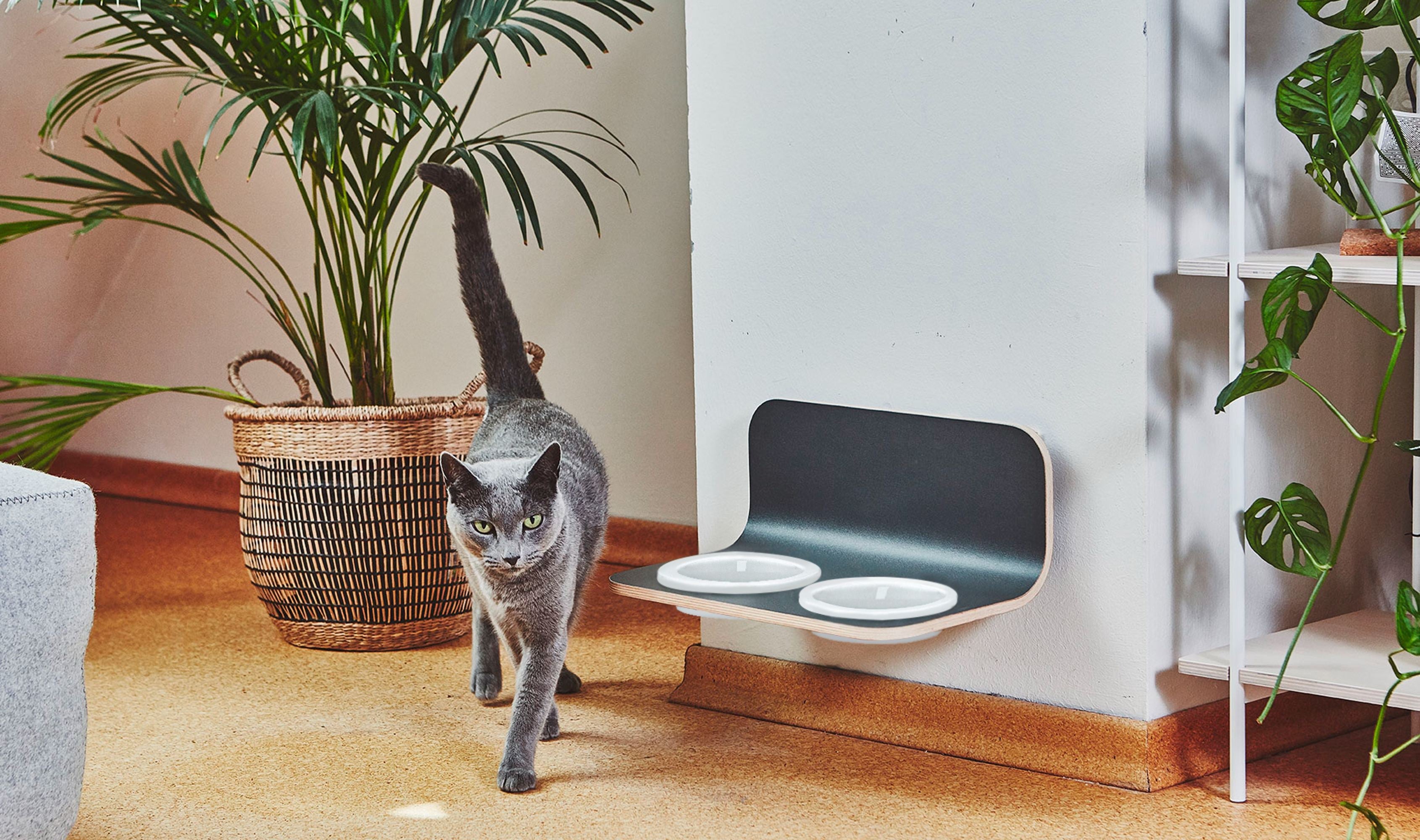
Overall, elevated cat bowls are a positive change for the vast majority of cats: better posture at mealtimes, less strain on the neck and joints, and no whiskers pressed against the bowl's sides. The only thing to get right is the height itself, since a stand set too high or too low for a specific cat cancels out the benefit, so measure to shoulder height rather than assuming one fixed setting suits every cat. If you would rather set the height precisely than rely on a fixed stand, the wall-mounted Arco Cat Feeder lets you match it to your own cat.
Finding the Perfect Height and Positioning
The best height for a cat food bowl is roughly level with the cat's shoulder, which for most adult cats means raising the bowl 2-4 inches off the ground. Bowl height is more about your individual cat's build than a fixed number: stand the cat naturally on all four paws and use the top of the front legs, where they meet the body, as the target height for the food surface.
Bowl height matters more than many cat owners realise. The ideal elevation positions the food surface roughly at your cat's shoulder height, allowing them to eat with their head in a neutral position. This typically means raising bowls 2-4 inches off the ground, though individual cats vary based on size and build.
Measure your cat's shoulder height by having them stand naturally on all four paws. The top of their front legs where they meet the body indicates optimal bowl placement. Persian cats and other flat-faced breeds often benefit from slightly higher positioning to accommodate their unique facial structure and breathing needs.
Placement requires strategic thinking beyond height alone. Position feeding stations away from high-traffic areas where your cat might feel rushed during meals. Corner locations often work well, creating a dedicated dining space that feels secure and remains accessible for daily maintenance. The Cena Cat Feeder is floor-standing and holds its bowls about 10 cm (roughly 4 inches) off the ground, a comfortable standard height for most adult cats. The Arco Cat Feeder takes a different approach: it mounts on the wall, so you set the exact height yourself and can match it precisely to your cat.
Designing Your Kitchen Around Pet Wellness
The modern kitchen naturally integrates pet care with human living spaces. Rather than treating pet accessories as afterthoughts, thoughtful homeowners select cat feeding stations that complement their interior design. Our kitchen pet feeder collection brings together elevated feeders designed specifically to sit in a kitchen or dining area without looking out of place. This shift reflects a broader understanding that pets are family members whose needs deserve the same design consideration as human requirements.
Material selection plays a crucial role in kitchen integration. Powder-coated aluminium frames offer durability while maintaining clean lines that suit contemporary interiors. Geometric precision creates order rather than clutter, establishing dedicated zones within your kitchen layout without overwhelming the space.
Consider your daily kitchen workflow alongside your cat's needs. Feeding stations positioned too close to main preparation areas can create obstacles during cooking, whilst locations too far removed make routine feeding more cumbersome. Find the balance that works for your household's specific rhythms and space constraints.
Materials That Work in Real Homes
Porcelain bowls bring restaurant-quality elegance to pet feeding. They're naturally antibacterial, dishwasher-safe, and won't retain odours or stains like plastic alternatives. The MiaCara Piatto Ceramic Cat Bowl shows how a single porcelain piece can stand alone as a hydration station or pair up with a feeding frame. The weight of porcelain also prevents bowls from sliding during meals, creating a stable eating experience for enthusiastic eaters. These qualities make porcelain particularly suitable for wet food feeding, where odour retention becomes a significant concern with lesser materials.
Stainless steel offers different advantages, particularly for cats who prefer their water bowls to stay cooler. The reflective surface can help encourage hydration by keeping water looking fresh and appealing. Steel bowls also provide excellent durability for cats who tend to be rougher with their feeding equipment.
Frame construction determines longevity and visual impact. Powder-coating creates a smooth, easy-to-clean surface that resists scratches and maintains its appearance over years of daily use. Quality engineering ensures stability during feeding whilst creating clean architectural lines that complement rather than compete with your kitchen design.
Multi-Cat Household Strategies
Households with multiple cats face unique feeding challenges that elevated stations can help address. Resource guarding becomes less problematic with clearly defined, elevated feeding zones that provide each cat with their own territory. The height advantage gives more timid cats confidence whilst eating, reducing stress around mealtimes.
Spacing between feeding stations prevents competition whilst maintaining visual cohesion. Position elevated feeders at least three feet apart to give each cat adequate personal space during meals. This distance allows cats to eat comfortably without feeling threatened by nearby companions, particularly important in homes where feeding hierarchies have developed.
Age differences within multi-cat households make elevated feeding particularly valuable. Senior cats with mobility issues can access their elevated bowls more easily, whilst younger cats adapt quickly to the raised position. The Arco Cat Feeder works beautifully as part of a coordinated feeding system, with matching units creating visual harmony whilst providing individual dining spaces.
Creating Functional Daily Routines
Water and food bowl separation often works better than combined feeding stations. Cats naturally prefer their water source slightly away from their food, and separate elevated bowls allow you to position each optimally within your kitchen layout whilst respecting feline instincts. This separation also makes cleaning easier and reduces the risk of food contaminating the water supply.
Maintenance becomes part of your kitchen routine rather than a separate chore. Choose feeding stations with removable bowls that fit comfortably in your dishwasher. Frames should wipe clean easily without requiring special cleaners or complicated disassembly. This practical consideration ensures your beautiful feeding station remains hygienic and attractive with minimal effort.
Consider feeding schedules alongside your daily rhythm. Elevated stations make it easier to maintain consistent meal times because they're more visible and accessible, becoming natural reminders in your kitchen workflow. This visibility also helps you monitor your cat's eating habits more effectively.
Investment in Long-term Wellness
Quality elevated feeding stations represent an investment in your cat's long-term health and your home's aesthetic. Well-made frames withstand years of daily use without showing wear, whilst quality bowls maintain their appearance through countless wash cycles. Consider the total cost of ownership, including replacement bowls and any maintenance requirements.
Your cat's needs may evolve over time, making adaptability valuable in feeding station selection. What works for a young, healthy cat might need adjustment as they age or if health issues develop. Some cats develop conditions that make different bowl materials or heights more comfortable, highlighting the value of systems that can accommodate changing needs.
Elevated cat bowls represent more than a trend in pet care. They're recognition that our feline companions deserve feeding solutions that support their physical wellness whilst enhancing rather than compromising our living spaces. The right feeding station becomes an integral part of your kitchen design, creating a more harmonious home for everyone. The Desco Cat Feeder exemplifies this perfect balance of form and function, offering thoughtful design that transforms daily feeding into an elegant ritual that both you and your cat will appreciate.
Related guide: Designer Cat Furniture: Luxury Wall Shelves & Towers
Elevated cat bowls: quick answers
Are raised food bowls good for cats? Yes, raised food bowls are good for most cats. Elevating the bowl lets a cat eat with its head level and neck straight rather than craned downward, supporting natural digestion and easing strain on the neck and shoulders. It also stops sensitive whiskers brushing the bowl's sides during meals, a common source of feeding stress known as whisker fatigue, and it makes mealtimes more comfortable for senior cats with joint stiffness.
What is the best height for a cat food bowl? The best height for a cat food bowl is roughly level with the cat's shoulder, which for most adult cats means raising the bowl 2 to 4 inches off the ground. The exact figure depends on the individual cat's size and build rather than a single fixed number, so stand the cat naturally on all four paws and use the top of the front legs, where they meet the body, as the target height.
How high should a cat bowl be? A cat bowl should sit at roughly shoulder height so the cat can eat with its head level rather than bowed down or straining upward. For most adult cats that works out at about 2 to 4 inches of elevation, though the right figure varies with the individual cat's size. Measure from the floor to the top of the front legs, where they meet the body, for an accurate target.
Are elevated cat bowls good or bad for cats? Elevated cat bowls are a positive change for the vast majority of cats. Raising the bowl improves posture at mealtimes, eases strain on the neck and joints, and stops whiskers pressing against the bowl's sides. The only thing to get right is the height itself: a stand set too high or too low for a specific cat cancels out the benefit, so measure to shoulder height rather than using one fixed setting for every cat.
Should cat food bowls be elevated? Yes, for most cats food bowls are better elevated than left at floor level. Elevation brings the food surface up to shoulder height, so the cat eats with a neutral neck position instead of craning downward, and keeps sensitive whiskers away from the bowl's rim. Senior cats with stiff joints and flat-faced breeds tend to benefit the most, though the stand still needs to be sized to that individual cat.
How high should a cat feeding station be? A cat feeding station should be set so the bowls sit at roughly the cat's shoulder height, which is typically 2 to 4 inches off the ground for an adult cat. Multi-cat households should also space stations at least three feet apart so each cat has its own territory at mealtimes. Measure the individual cat rather than relying on a single universal height for every feeding station.

