

Luxury Dog Living
Luxury dog living is the practice of designing a home around a dog with the same intention you bring to everything else in it: choosing pieces that are beautiful, well made, and thought through, rather than functional afterthoughts meant to be hidden or tolerated.
The idea is simple. A dog spends the majority of each day in your home, sleeping, eating, resting between walks. The furniture and accessories around those moments can either sit awkwardly at odds with the room or become part of it. Luxury dog living means they become part of it. It is not about spending more than necessary; it is about choosing deliberately, from makers who treat both craft and function as non-negotiable.
The Sleeping Space: Choosing a Designer Dog Bed
The bed is where to start. Dogs sleep for ten to fourteen hours a day, and the sleeping space they return to dozens of times every week is the most visible, most permanent piece of dog furniture in a home. Getting it right matters on two levels: it needs to support the dog properly, and it needs to belong in the room.
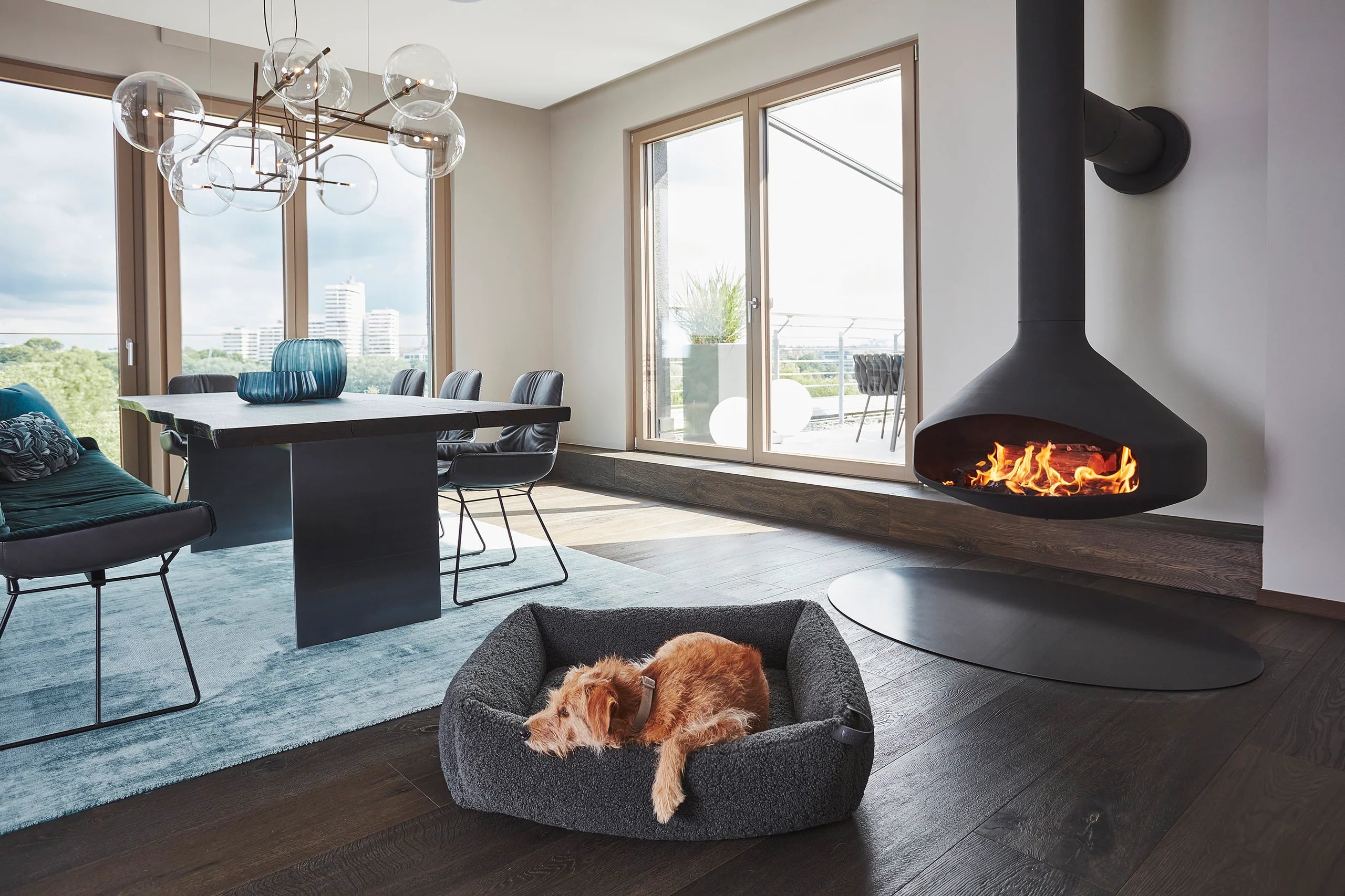
A designer dog bed earns its place on both counts. The better-made beds use layered foam construction: structural moulded foam that holds its shape over years, a memory foam mattress that contours to the dog's body and distributes weight evenly across the joints, and a removable fabric cover that is machine washable. What separates a well-considered design from a commodity bed is the integration of these layers. The cover should not pill or pull. The frame should not sag. The overall silhouette should read as a considered object in the room rather than a product left on the floor.
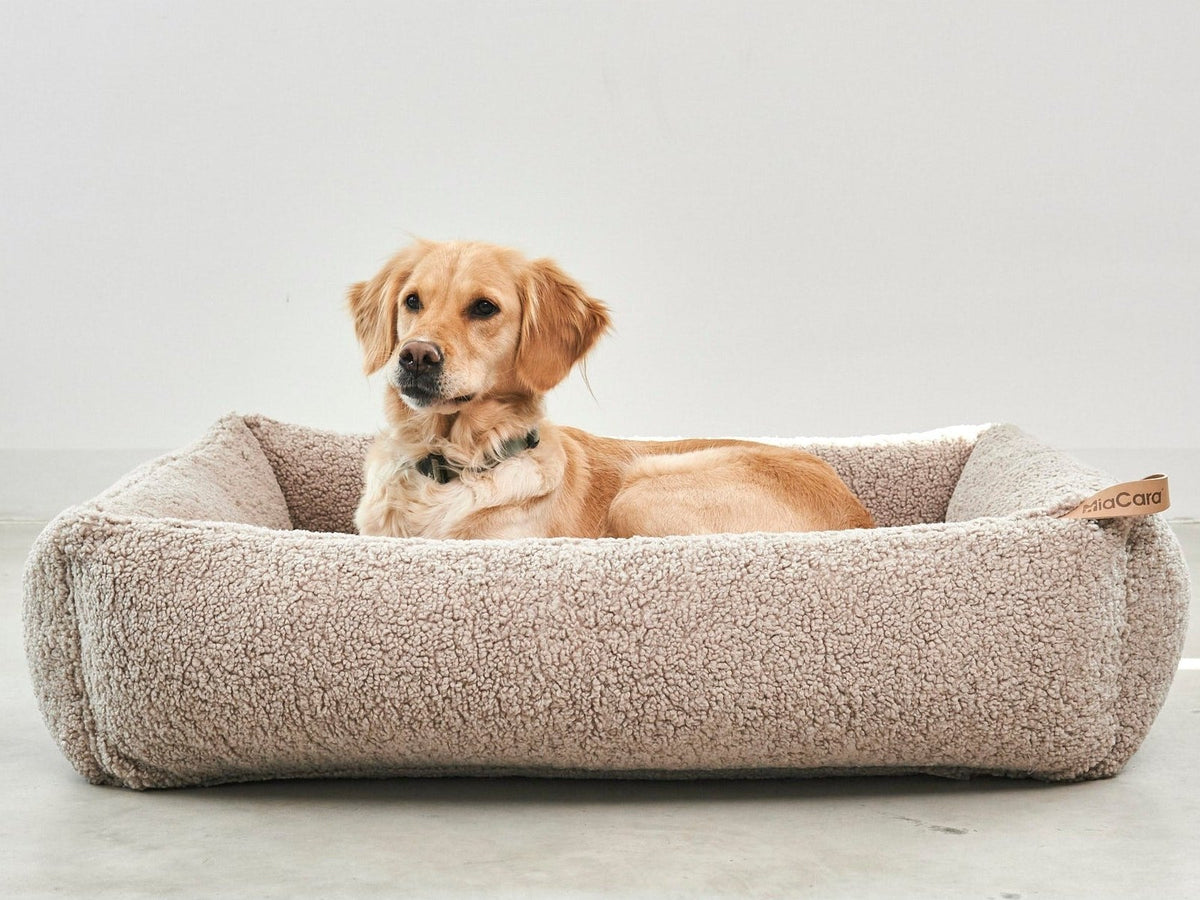
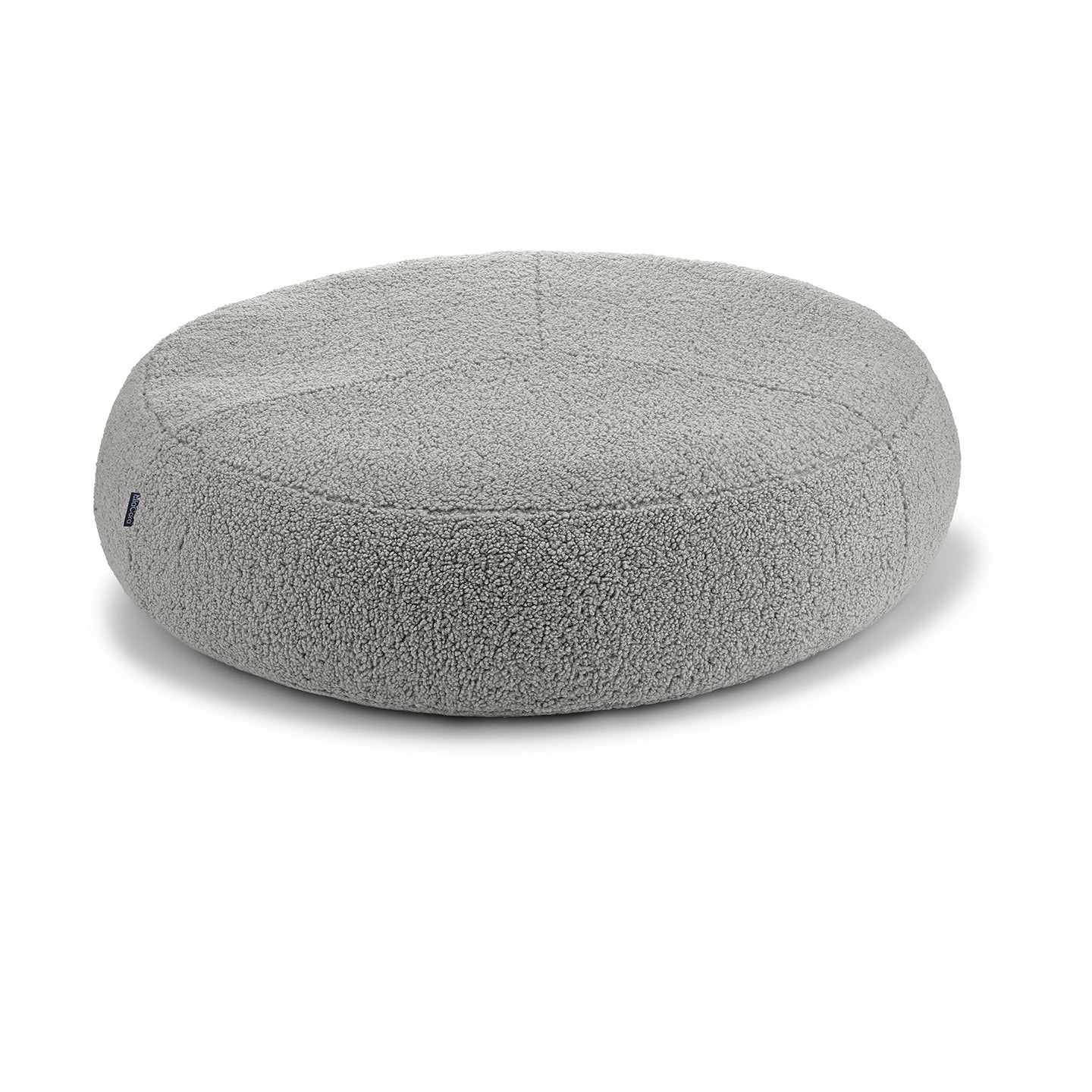
The MiaCara Barca, from the German design brand, is a useful reference point. Its oval, raised-edge structure provides bolster support without the overstuffed aesthetic of a traditional pet bed. The frame is four interlocking moulded foam components that connect without tools: the closed-cell outer foam resists moisture and wipes clean, while the memory foam mattress and knitted fabric covers are both machine washable. Covers come in Slate and Taupe, tones that sit with natural linen, oak, and most pared-back contemporary interiors. Two sizes are available: SM at 93 x 76 cm and ML at 113 x 93 cm.
The support angle: For older dogs, the foam specification becomes the primary consideration. Memory foam that responds to body heat and distributes pressure across the joints is the recommended specification, particularly for breeds prone to hip and elbow issues. Our guide to senior dog comfort and age-friendly sleep spaces covers this in full.
Shop Dog Beds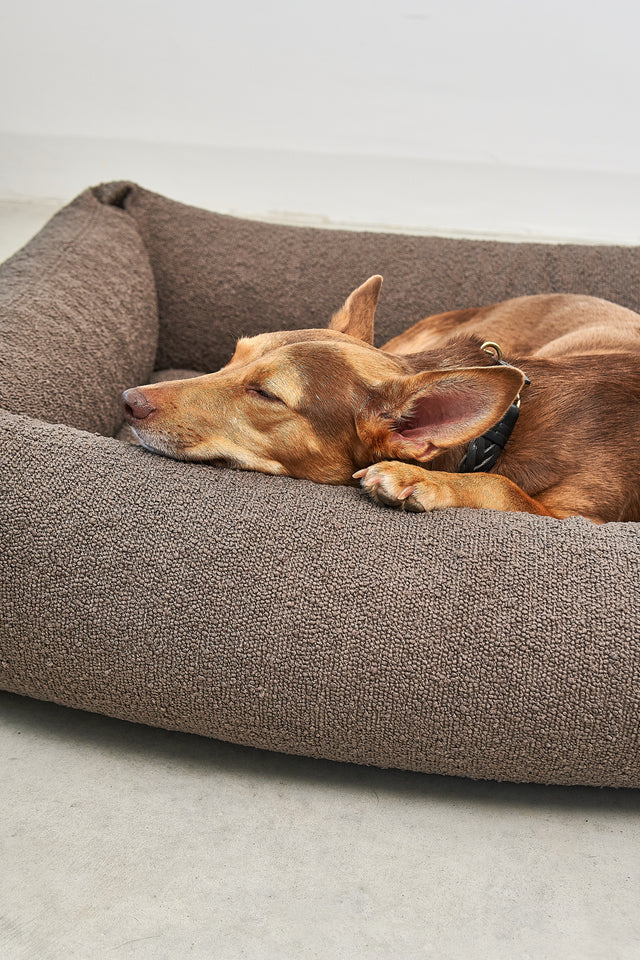
Dog Bed Materials: A Comparison
Sources: MiaCara Barca and Mare product data; Senior Dog Comfort: Designing Age-Friendly Sleep Spaces.
| Material | Best for | Key advantage | Care |
|---|---|---|---|
| Memory foam mattress | Senior dogs, dogs with joint concerns | Distributes body weight evenly, relieves pressure at the joints | Cover machine washable; spot-clean foam |
| High-density moulded foam frame | All life stages | Non-sag structure retains its shape over years of use | Cover machine washable |
| Water-repellent closed-cell foam | Active dogs, dogs prone to accidents | Resists moisture, easy to wipe clean | Wipe with a damp cloth |
| Removable knitted cover | All dogs | Soft, breathable, maintains its appearance with regular washing | Machine washable |
Dog Beds


2 colours available


2 colours available


3 colours available


3 colours available


2 colours available


2 colours available


The Feeding Corner: Elevated Bowls and Feeders
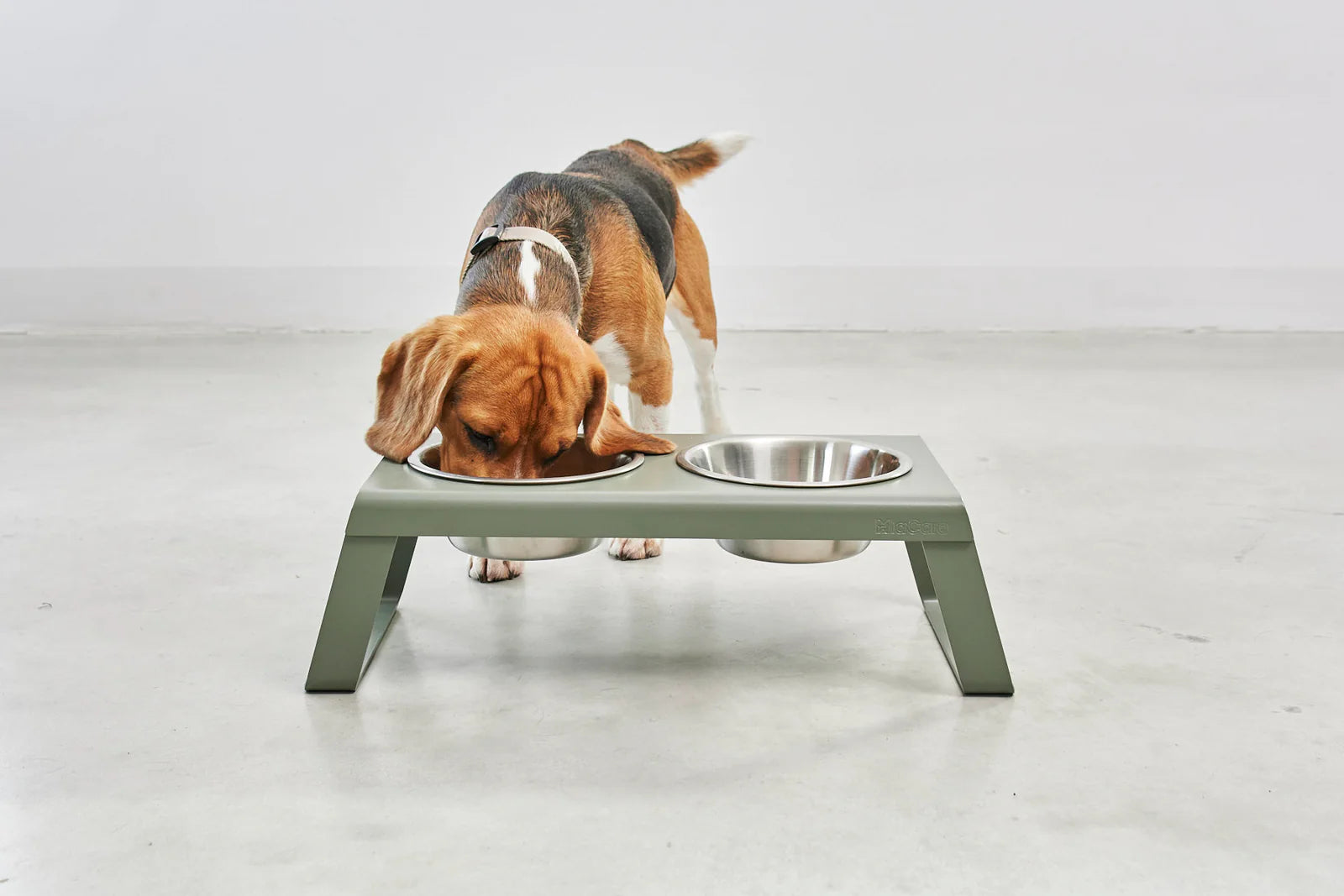
Feeding is a daily ritual that happens in a fixed spot. Done well, it becomes a quiet, composed corner of the kitchen or utility room. The feeding station sits in place, the bowls come out at mealtimes, and it all stays in order. Done without thought, it is a plastic mat, two bowls that slide across the floor, and a mess at the base of the cupboard.
An elevated feeding station addresses function and aesthetic at the same time. A substantial body of research suggests that raising the bowl to the correct height reduces the amount of neck bending during meals, which is widely associated with better posture and, over time, less strain on the neck, shoulders and spine. Many owners of older dogs with arthritis or stiffness report the improvement is particularly noticeable.
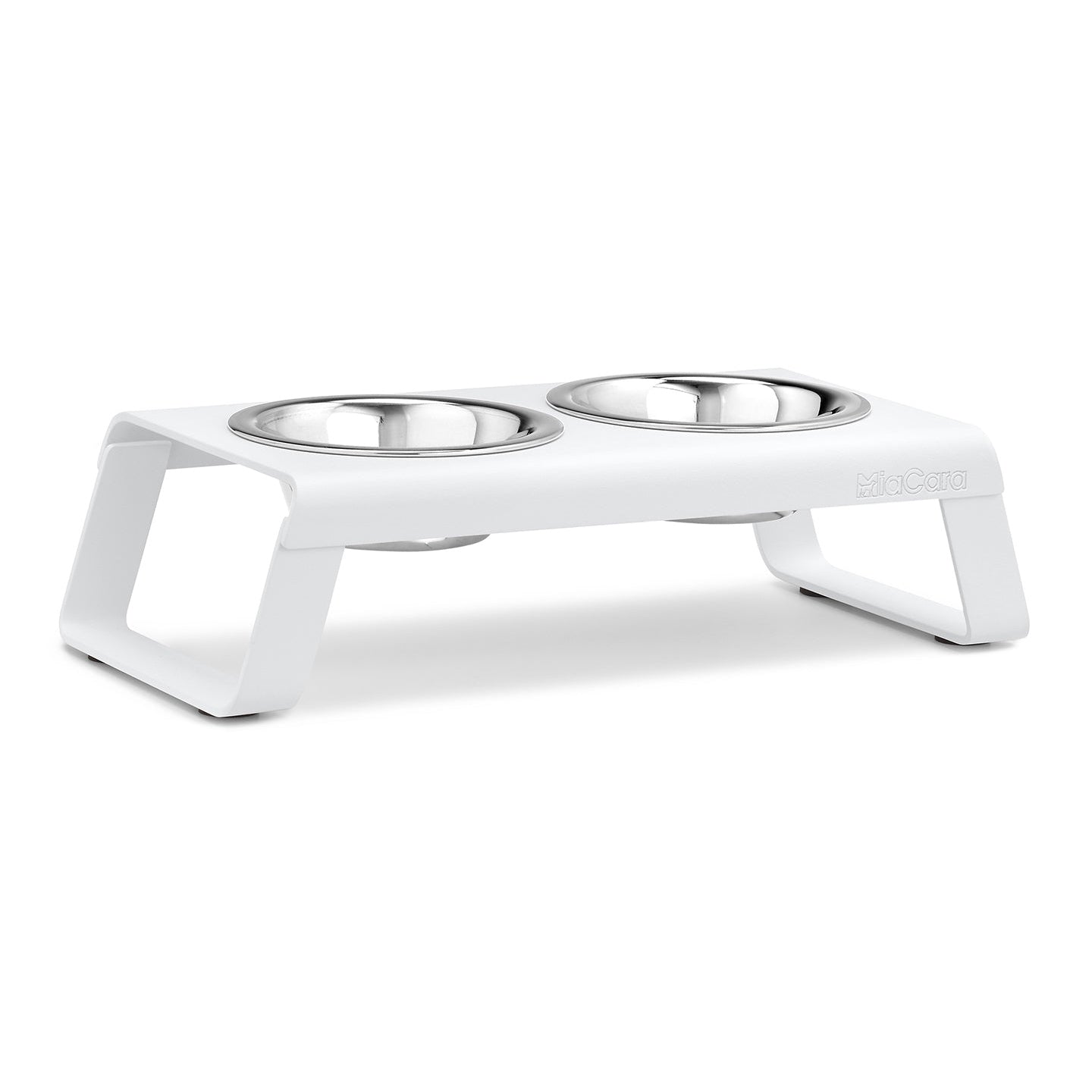
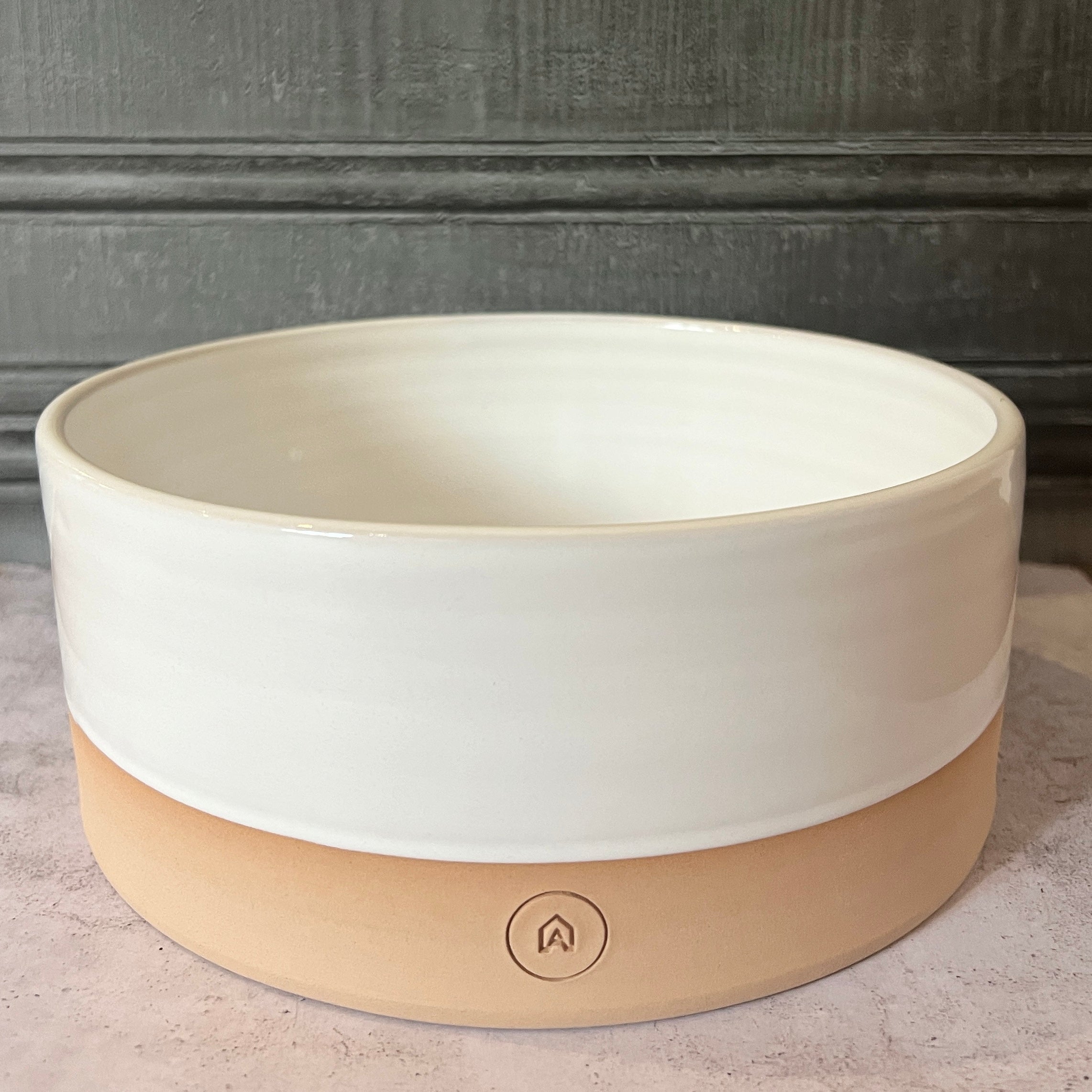
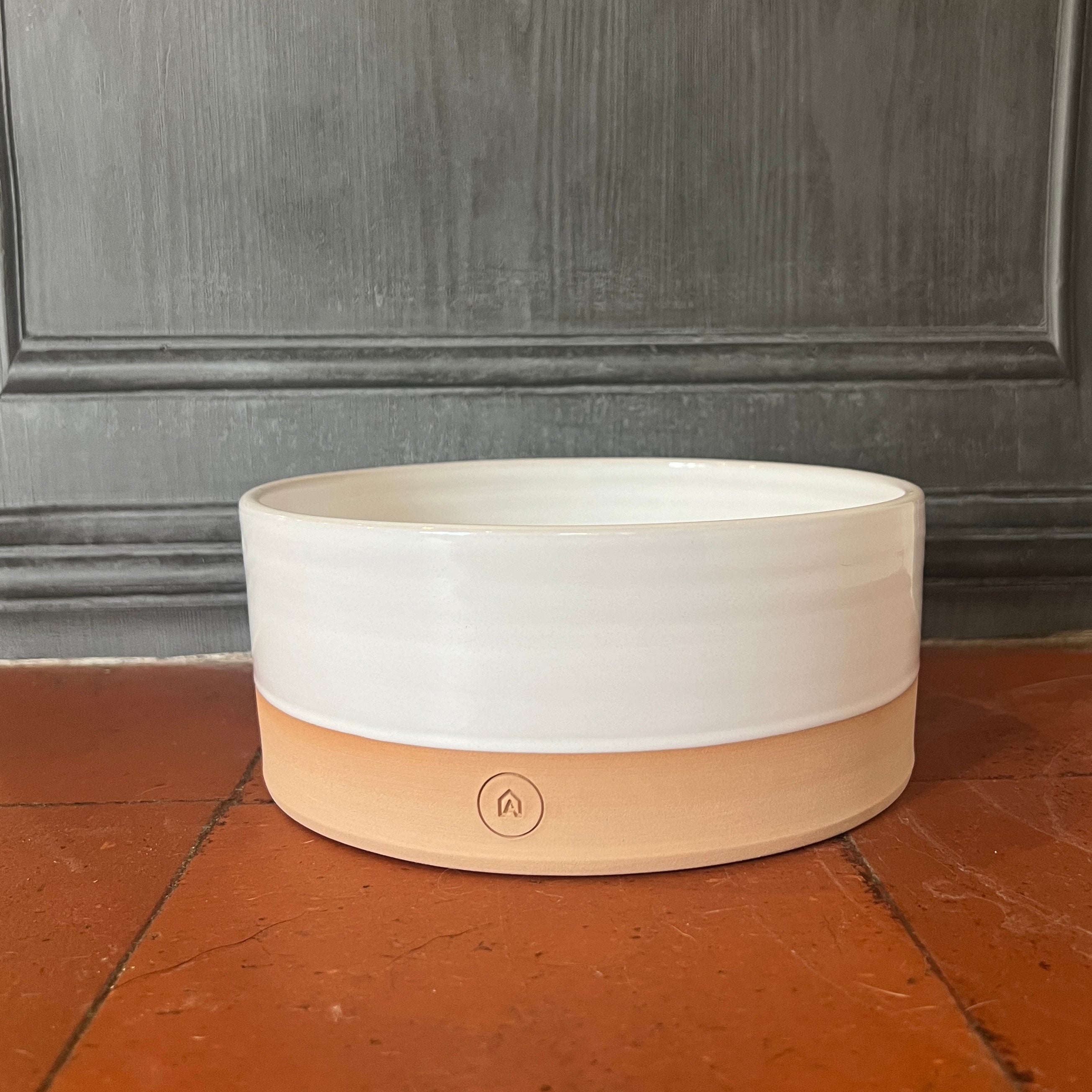
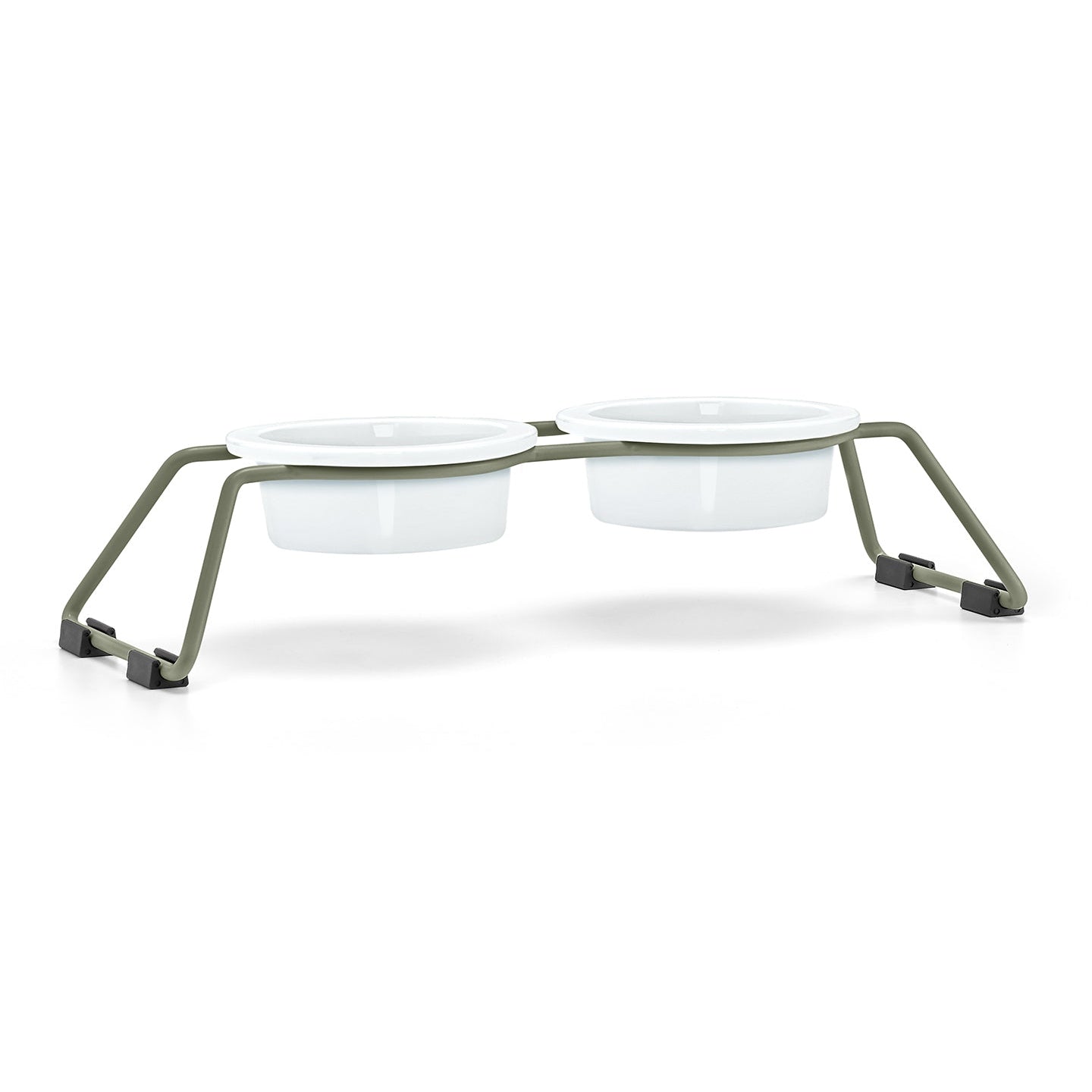
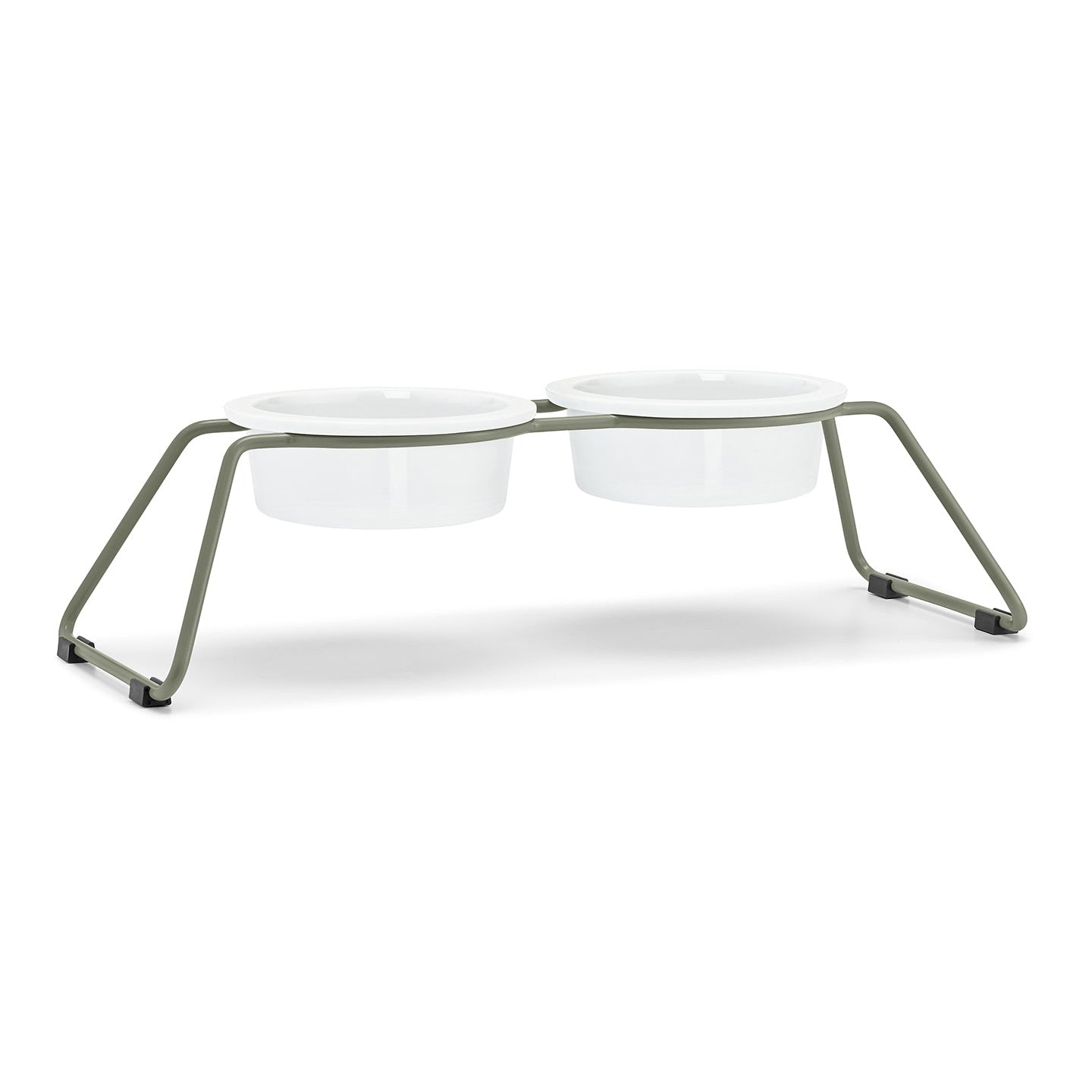
The MiaCara Desco, which took a German Design Award Special Mention in 2019, illustrates the approach. The frame is available in powder-coated aluminium, in White, Black, or Grolive, or in bent plywood with ash or walnut finish; the plywood versions come in S and M, while the full S, M, and L range is available in powder-coated aluminium. The bowls are porcelain or 18/10 stainless steel, both dishwasher-safe. The MiaCara Arco is a wall-mounted alternative: it positions the bowls at the correct eating height while clearing the floor entirely, and slides free of its wall bracket in seconds for cleaning.
For material decisions, our article on dog feeder materials covers ceramic, stainless steel, and wood in full, and our guide on dog food bowl height explains how to calculate the right height from your dog's shoulder measurement.
Shop Bowls & FeedersBowl Height by Build
Set the bowl rim at roughly the height of your dog’s elbow, measured from the floor with the dog standing naturally. Build decides this, not bodyweight: two dogs of the same weight can have very different leg lengths. These are starting points, and individual dogs may need minor adjustment. See Dog Food Bowl Height for the full method.
| Build | Example breeds | Bowl height |
|---|---|---|
| Small, short-legged | Dachshund, French Bulldog, Beagle, Corgi, Basset Hound | Floor level, or about 10 cm |
| Medium | Cocker Spaniel, Border Collie, Whippet, Cockapoo, Staffordshire Bull Terrier | About 15 to 17 cm |
| Large, long-legged | Labrador, German Shepherd, Setter, Greyhound, Labradoodle | About 20 to 24 cm |
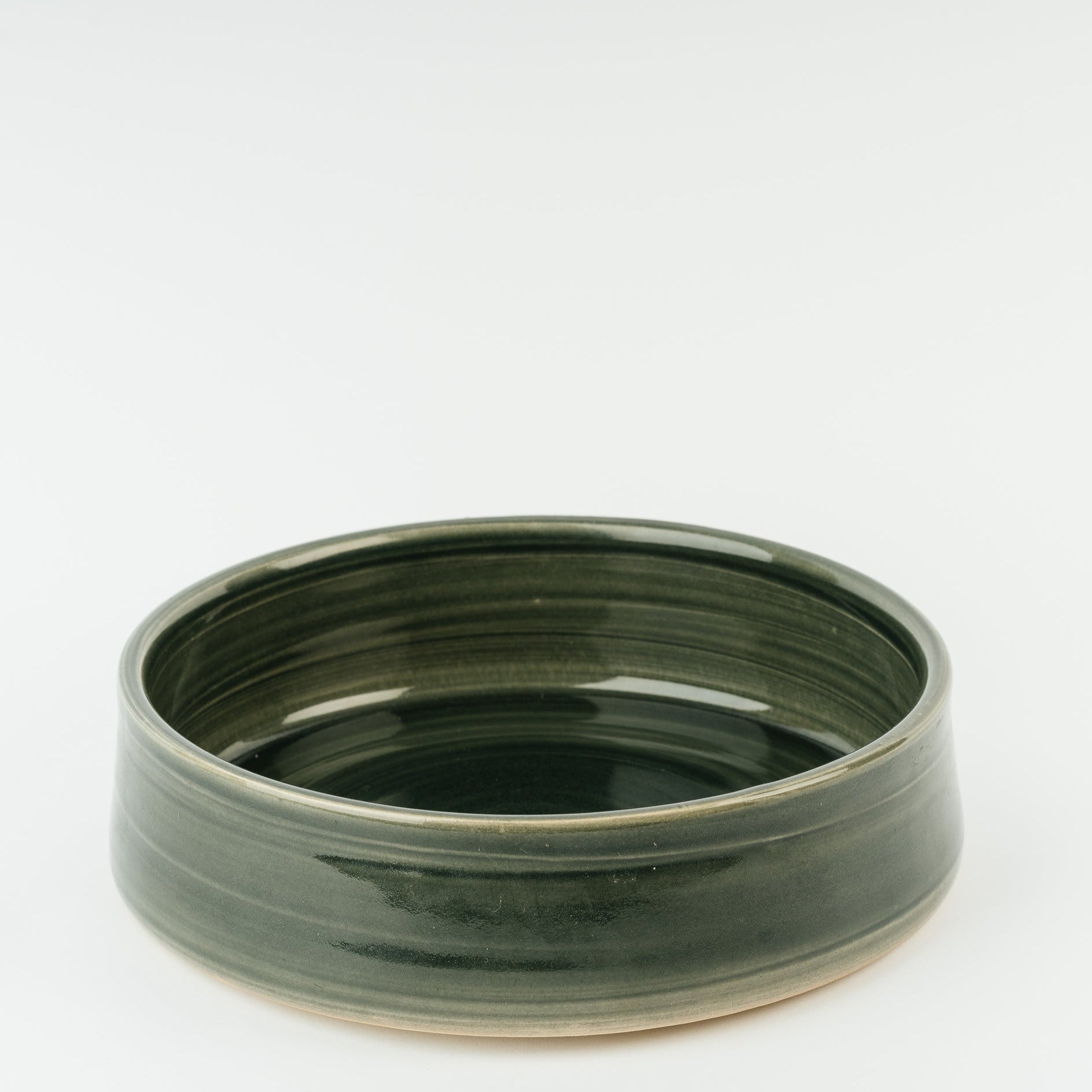
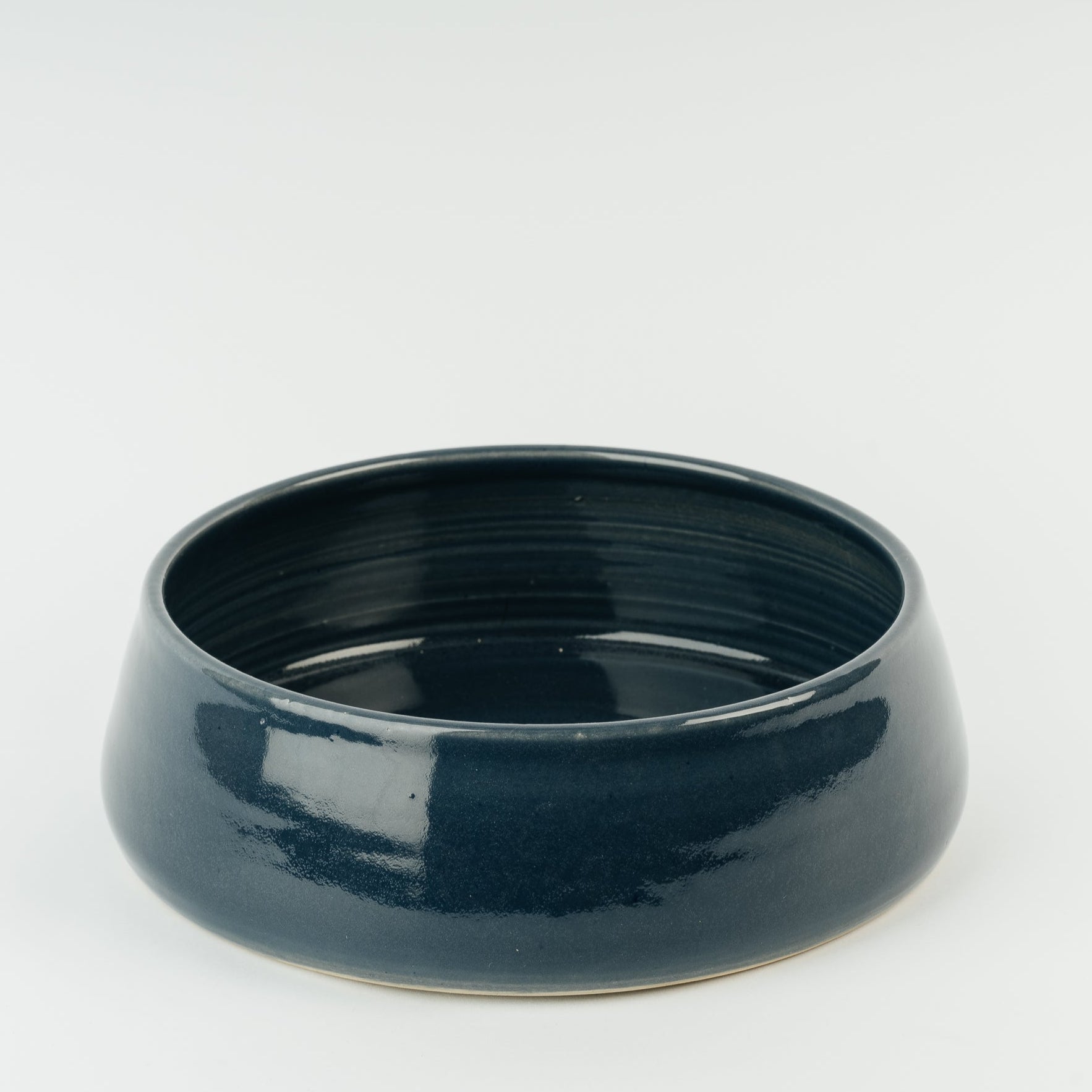
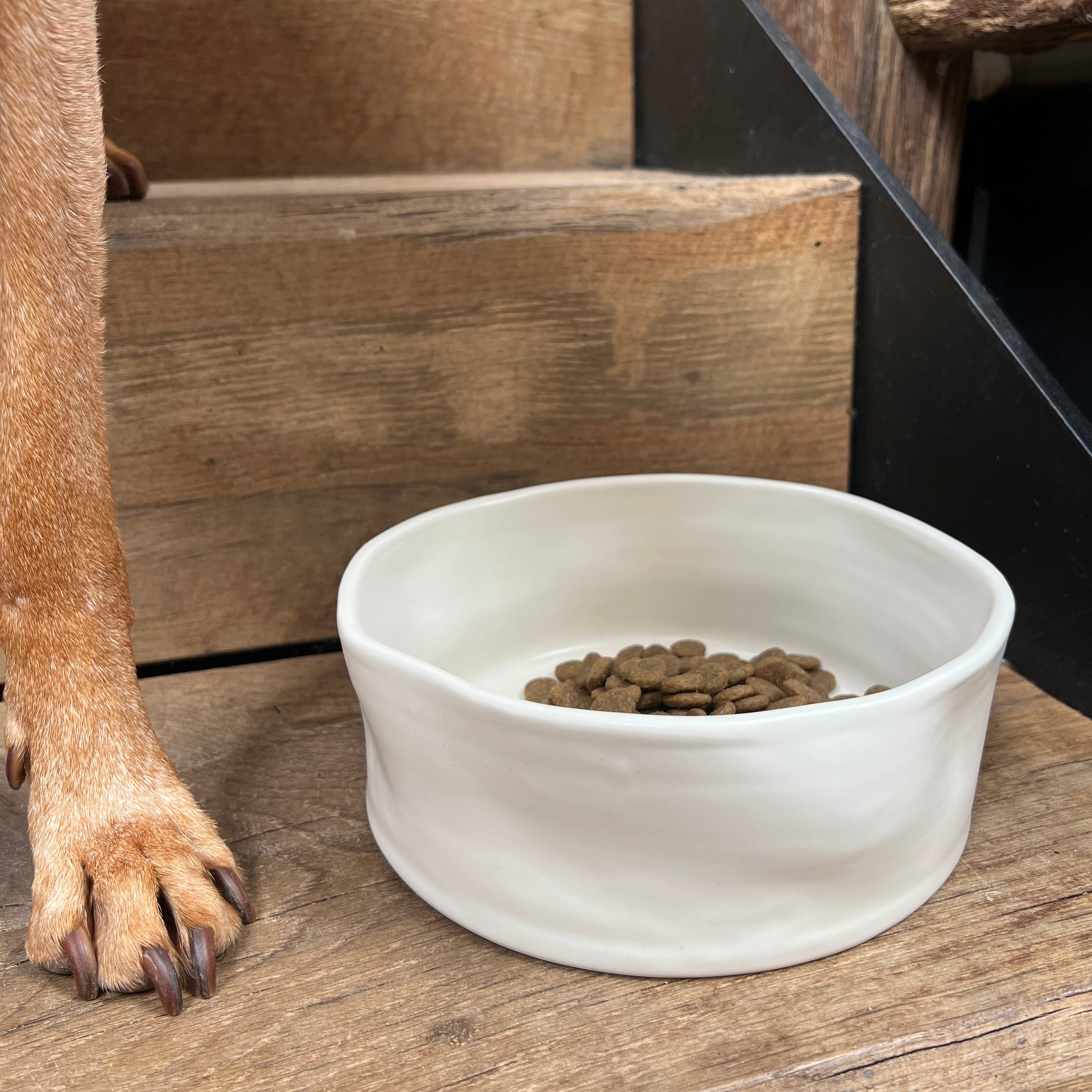
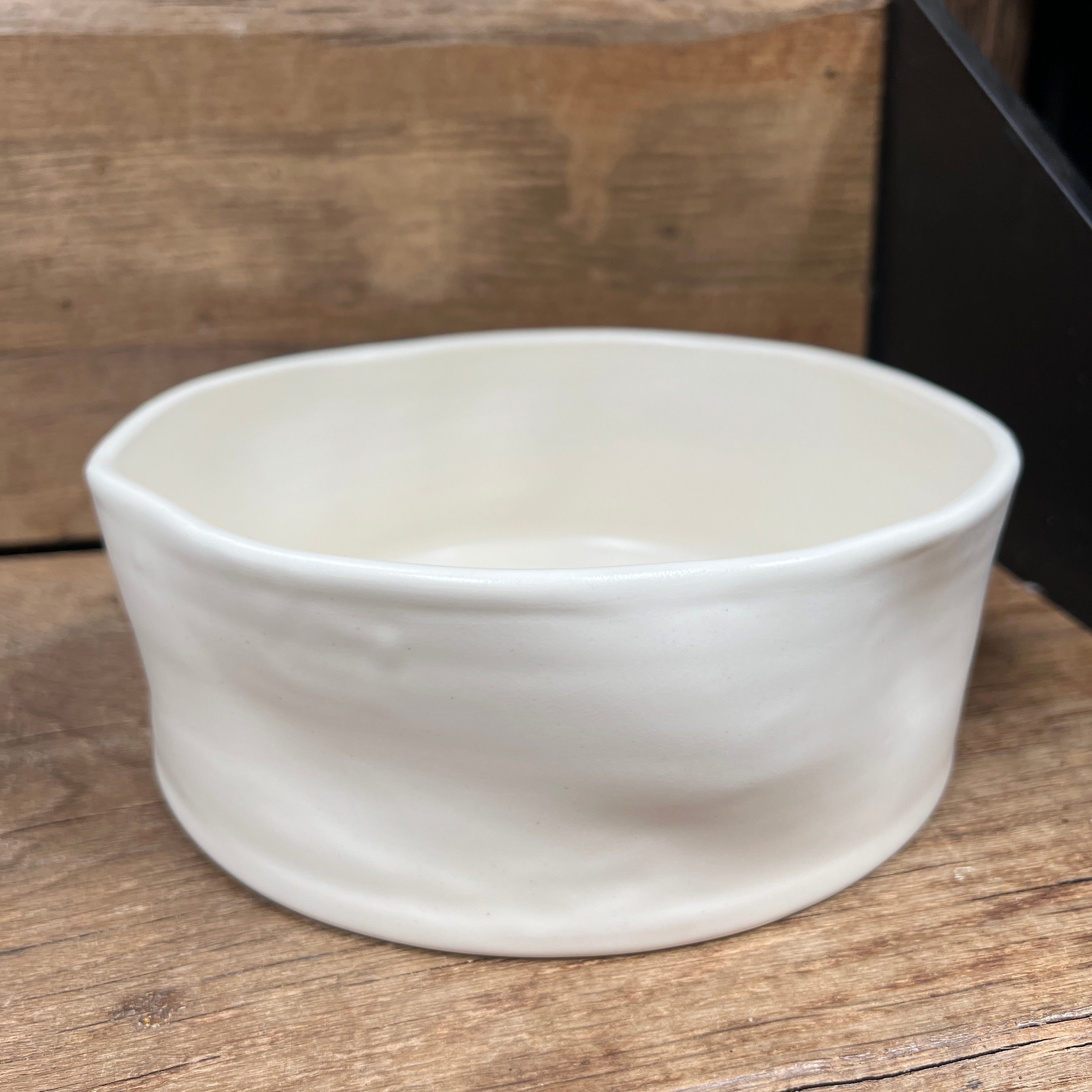
Dog Bowls & Feeders

6 colours available
6 colours available


7 colours available


7 colours available


2 colours available
Designer Dog Coats for Every Season
A dog coat is an often-underestimated part of the design picture. For many breeds, a coat is a practical necessity from September through April in the UK, which means it is visible, carried, stored, and handled as often as any other accessory in the house. Choosing one with the same attention you would bring to a piece of outerwear for yourself changes how the whole picture reads.
The coat needs to work: it must cover the right proportion of the dog's body, allow a full range of movement, accommodate a collar or harness underneath, and handle British weather. A well-made coat does all of this and then reads as a finished, considered thing, rather than a bright-coloured utility item left in a pile by the door.
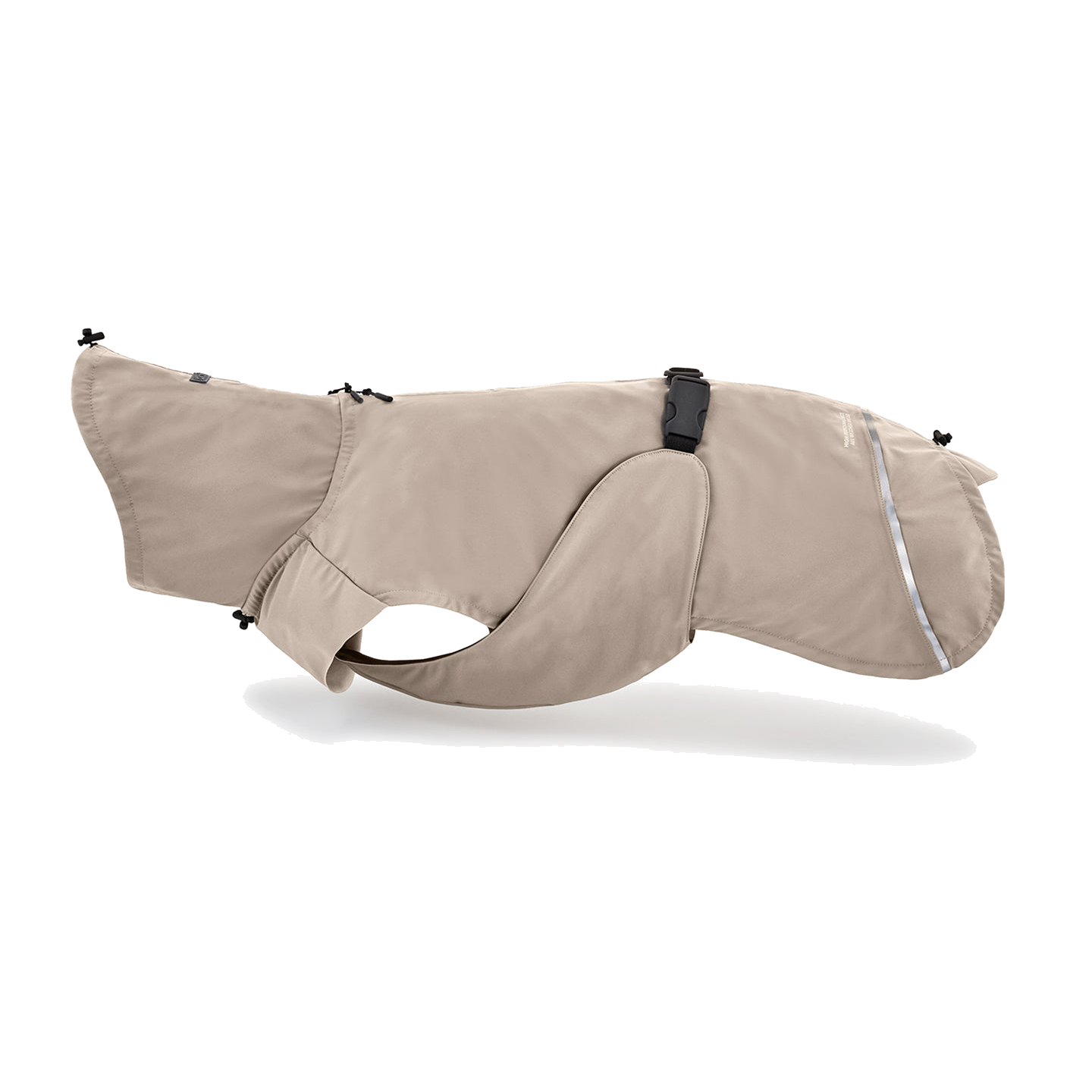
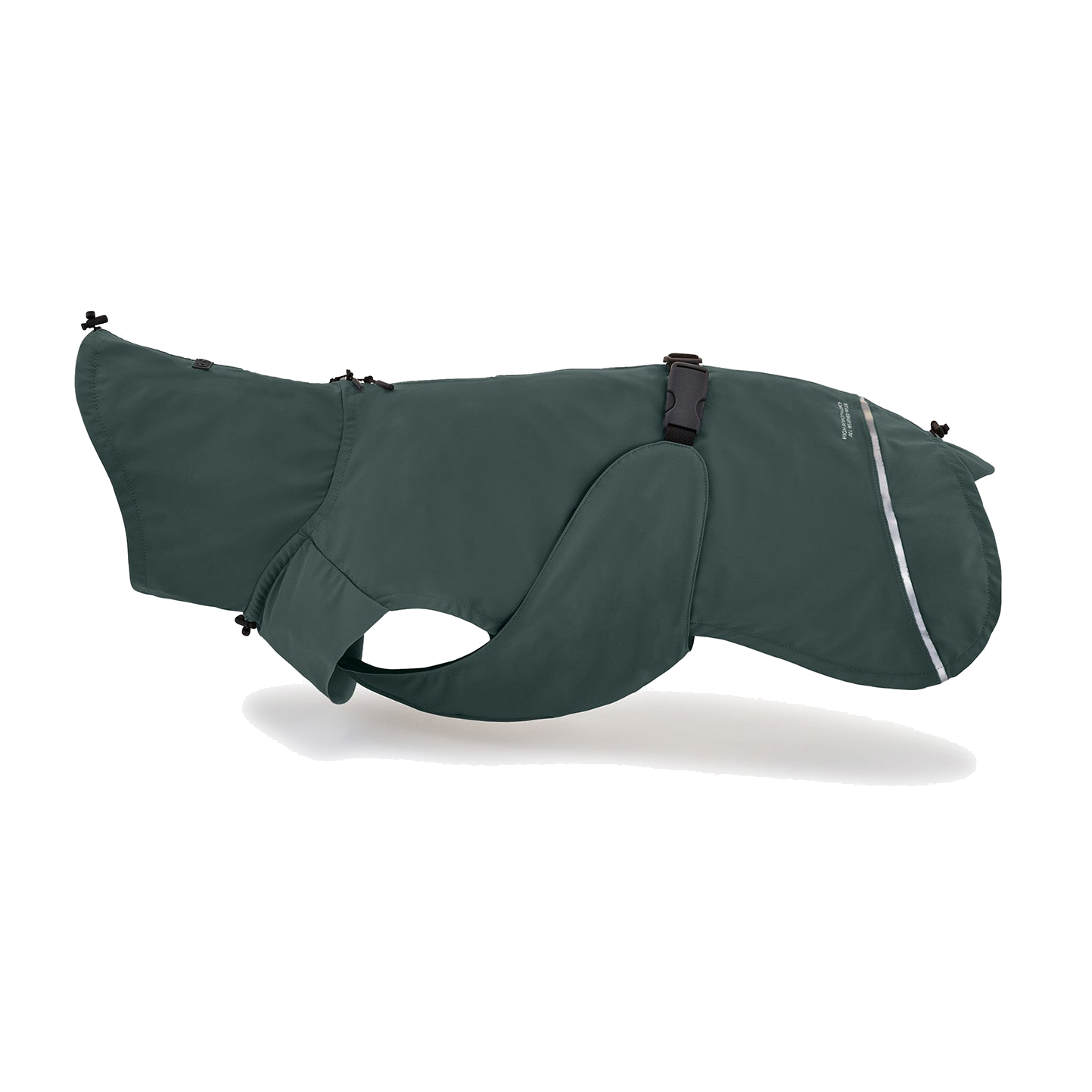
The MiaCara Emilia is a lightweight transitional coat suited to everyday use in changeable weather. The outer is structured bouclé in a soft wool blend; the breathable inner lining prevents overheating on active walks. A water-repellent finish handles typical UK drizzle without the stiffness of a fully waterproof shell. It is slightly elastic to move with the dog, and packs small enough to carry on longer outings. It comes in ten sizes covering back lengths from 25 to 73 cm, with an ergonomic leg cut, a double-adjustable zip that accommodates collars and harnesses underneath, an infinitely adjustable belly strap, and drawstrings at the neckline and tail.
Shop Dog Apparel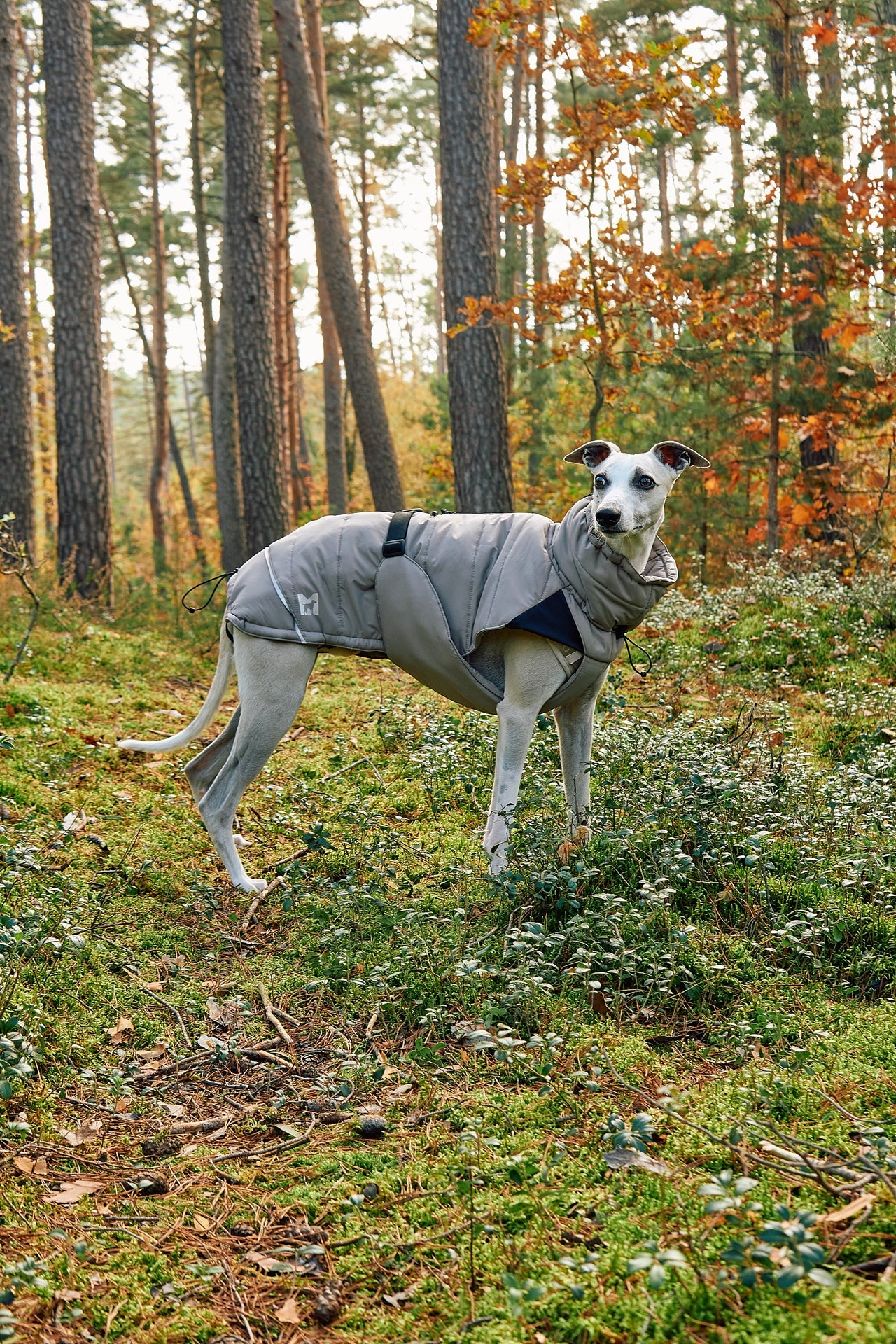
Dog Apparel
2 colours available


Materials and Craft: What to Look For
Across beds, feeders, and coats, material choice is where the difference between a well-made piece and a commodity product becomes most legible. Understanding what each material is actually doing gives a more reliable basis for comparison than price points alone.
Bed foam: layers matter more than single specifications. The better-made dog beds use three distinct foam types together, not one. A high-density moulded foam outer frame maintains the bed's silhouette against years of daily weight; this prevents the characteristic sag in the sides of cheaper beds. A memory foam mattress responds to body heat, moulds to the dog's shape, and distributes pressure across the joints rather than concentrating it at a few contact points. A closed-cell water-repellent foam layer resists moisture from within. No single foam type replicates the layered system; the distinction is most relevant for older dogs or breeds prone to joint stiffness.
Feeder frames: aluminium and plywood serve different rooms. Powder-coated aluminium is the practical choice for a kitchen in significant daily use: it resists moisture and scratching, wipes clean quickly, and holds its appearance without maintenance. Bent plywood in ash or walnut introduces natural grain and warmth, and sits better in a more design-led position, particularly alongside timber kitchen furniture. Worth knowing: plywood frames are available in S and M only, so for larger breeds the powder-coated frame is the right path.
Bowls: porcelain and stainless steel are both strong choices, for different reasons. Porcelain is heavier, non-porous, and holds temperature well; the surface does not retain smells and sits naturally alongside other ceramics. 18/10 stainless steel, the specification used in professional-grade kitchenware, is corrosion-resistant, food-safe over years of daily washing, lighter than porcelain, and suits modern fitted kitchens. Both are dishwasher-safe. The decision is primarily aesthetic and practical rather than one of quality or safety.
Outerwear fabrics: bouclé and wool blend are warm without adding bulk. Bouclé is a looped yarn that traps air in its construction, giving a strong warmth-to-weight ratio alongside its surface texture. A wool blend in the face fabric adds natural temperature regulation. A water-repellent finish handles typical UK drizzle without the stiffness of a full waterproof shell. For sustained heavy rain or very cold conditions, a dedicated waterproof or padded coat is the more appropriate choice; bouclé and wool blends sit in the transitional category, suited to everyday use in changeable British weather.
Designing for Dogs and Cats in the Same Home
Many households include both a dog and one or more cats, which means the same design thinking applies across both species at once. The underlying principles are similar: choose pieces made to the same standard as the rest of the room, use materials that clean easily and hold their form, and pay attention to how each piece relates to its surroundings.
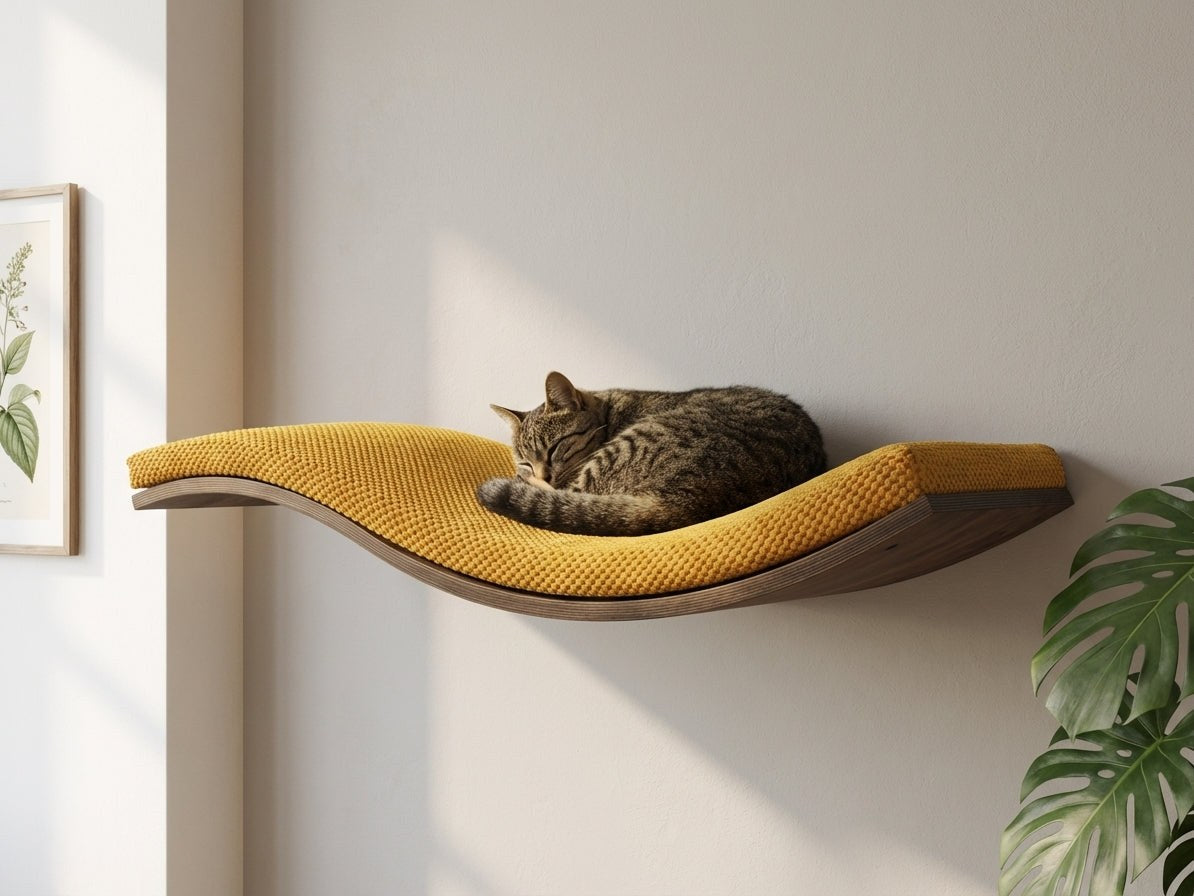
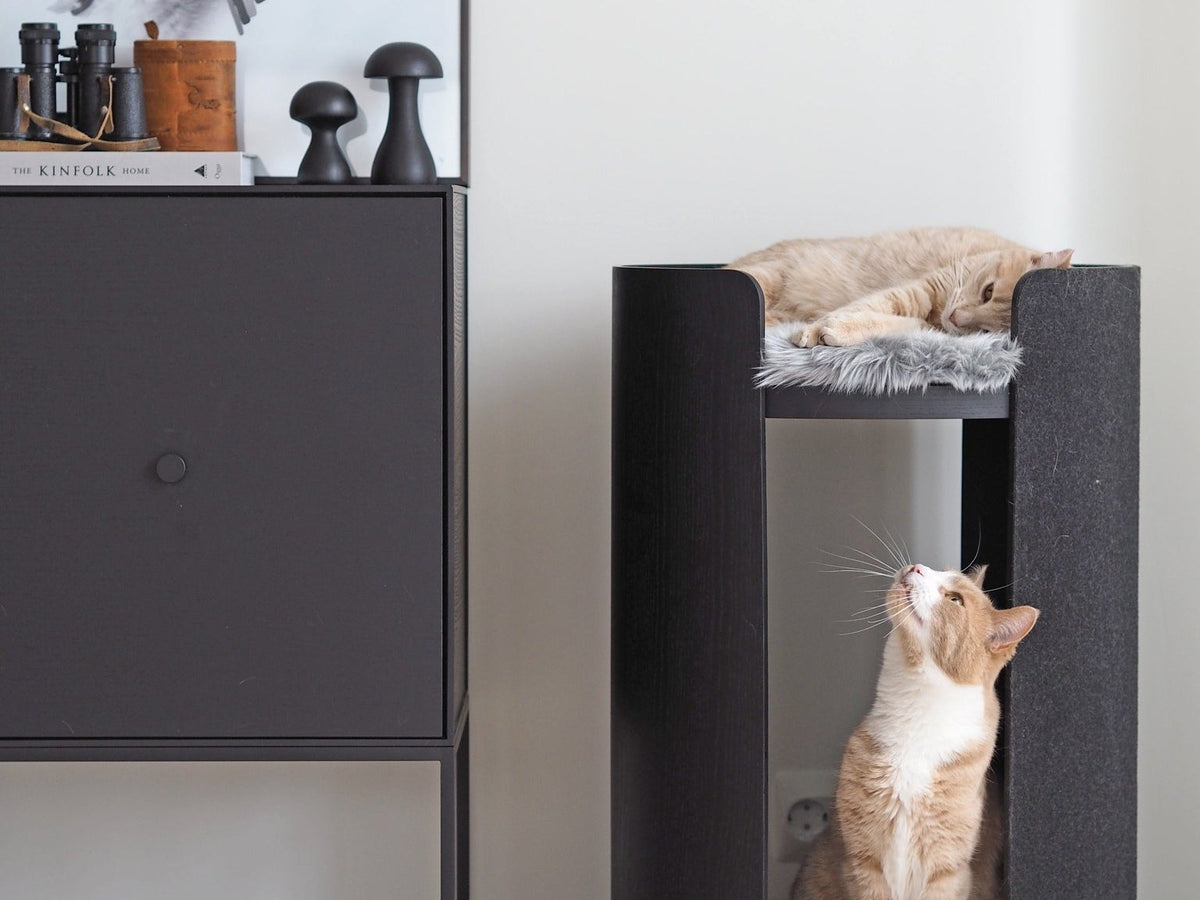
The specific requirements diverge by species. Dogs sleep at floor level and eat at height. Cats climb, perch, and want vertical space close to a window or a wall. A considered home with both will often have a designer dog bed as a settled floor anchor in the living room and a wall-mounted shelf system in a corner where the cat has clear sightlines. The two coexist without visual conflict when the materials and colours are chosen with the same hand.
The Luxury Cat Living guide covers the cat-specific design decisions: climbing furniture, shelf systems, and feeding stations, with the same level of depth as this page. For the whole-home view across both dogs and cats, the Luxury Pet Furniture guide is the starting point.
Frequently Asked Questions
Luxury dog living means designing the spaces around your dog with the same deliberate care you bring to the rest of your home. It starts with understanding what the dog actually needs: a properly supportive bed, a correctly proportioned feeding station, and outerwear that functions in real conditions. From there it becomes an aesthetic question, choosing pieces that belong in the room, made from materials that last, from makers who treat both craft and function as non-negotiable.
A layered approach gives the best result. A high-density moulded foam frame maintains structure over years and resists sagging. A memory foam mattress distributes body weight and relieves pressure at the joints, which is particularly important for senior dogs or breeds prone to hip and elbow issues. A water-repellent outer layer makes the bed practical to maintain. Covers should be removable and machine washable.
Set the bowl rim at roughly the height of your dog's elbow, measured from the floor with the dog standing naturally. The elbow is the joint where the front leg meets the body. Build decides this rather than bodyweight: small short-legged dogs suit floor level or around 10 cm, medium dogs around 15 to 17 cm, and large long-legged dogs around 20 to 24 cm. Above the shoulder is too high. Our article on dog food bowl height covers how to take the measurement.
Start with shape and colour. A bed with a neutral, structured silhouette, oval or rectangular with clean lines, works in more rooms than one with a busy print or an unusual colour. Slate, taupe, warm grey, and natural linen tones are the most versatile. Consider scale next: the bed should feel proportionate to the room. Once you have the right form, the foam specification determines how well the bed works for the dog.
Fit is the starting point. A coat should cover the back from the base of the neck to the base of the tail, sit level without bunching at the legs, and not restrict movement at the shoulders. Look for ergonomic leg cuts, a fastening system that works with a collar or harness underneath, and a face fabric that handles wind and rain without adding bulk. Machine washability is worth checking before buying.
Many breeds benefit from a coat between autumn and early spring, particularly shorter-haired, lean, and smaller breeds that lose body heat faster in cold and wet conditions. Working breeds with dense double coats often do not need additional coverage. If a dog is visibly reluctant to walk in cold weather or shivers outdoors, a well-fitted coat is a practical solution. The dog apparel collection includes options across weight classes and weather conditions.
About This Guide
This guide is written by Martin Goodwin and Danielle Lyner, the founders of Deluxe Pet Co. We built Deluxe Pet Co to bring design-led pet furniture from independent European makers together in one place, chosen against a single standard: a piece has to be genuinely well made, and it has to belong in a considered home rather than sit awkwardly in it. Every product featured here is one we have selected and assessed against that standard.
Deluxe Pet Co curates luxury and design-led pet accessories from independent European makers. The pieces featured here come from brands such as MiaCara, a German design house whose products are designed both in-house and in collaboration with independent European designers.
From the Journal
Senior Dog Comfort: Designing Age-Friendly Sleep Spaces — foam density, bed entry height, and what to prioritise for older dogs.
Dog Feeder Materials: Ceramic vs Metal vs Wood — how the three feeder materials compare on hygiene, durability, and looks.
Dog Food Bowl Height: The Science Behind Elevated Feeding — how to calculate the right feeding height from your dog's shoulder measurement.