Article: Dog Food Bowl Height: The Science Behind Elevated Feeding
Dog Food Bowl Height: The Science Behind Elevated Feeding
How high should a dog bowl be? As a rule of thumb, position the food bowl so the rim sits at roughly your dog's chest height when they are standing, so they can eat without craning their neck downward or stretching upward. In practice that means matching the bowl rim to the height of your dog's elbow, which is a question of leg length rather than bodyweight. The right height reduces strain on the neck, shoulders and spine at every meal, and the details below explain how to measure your own dog, who benefits most, and how to build a feeding station that looks considered rather than accidental.
The debate around elevated dog feeders has evolved over the past decade, with veterinary research providing clearer guidance on which dogs benefit most. Elevated feeders were once considered universally beneficial, but we now understand that the advantages vary considerably based on your dog's size, breed and individual health needs.
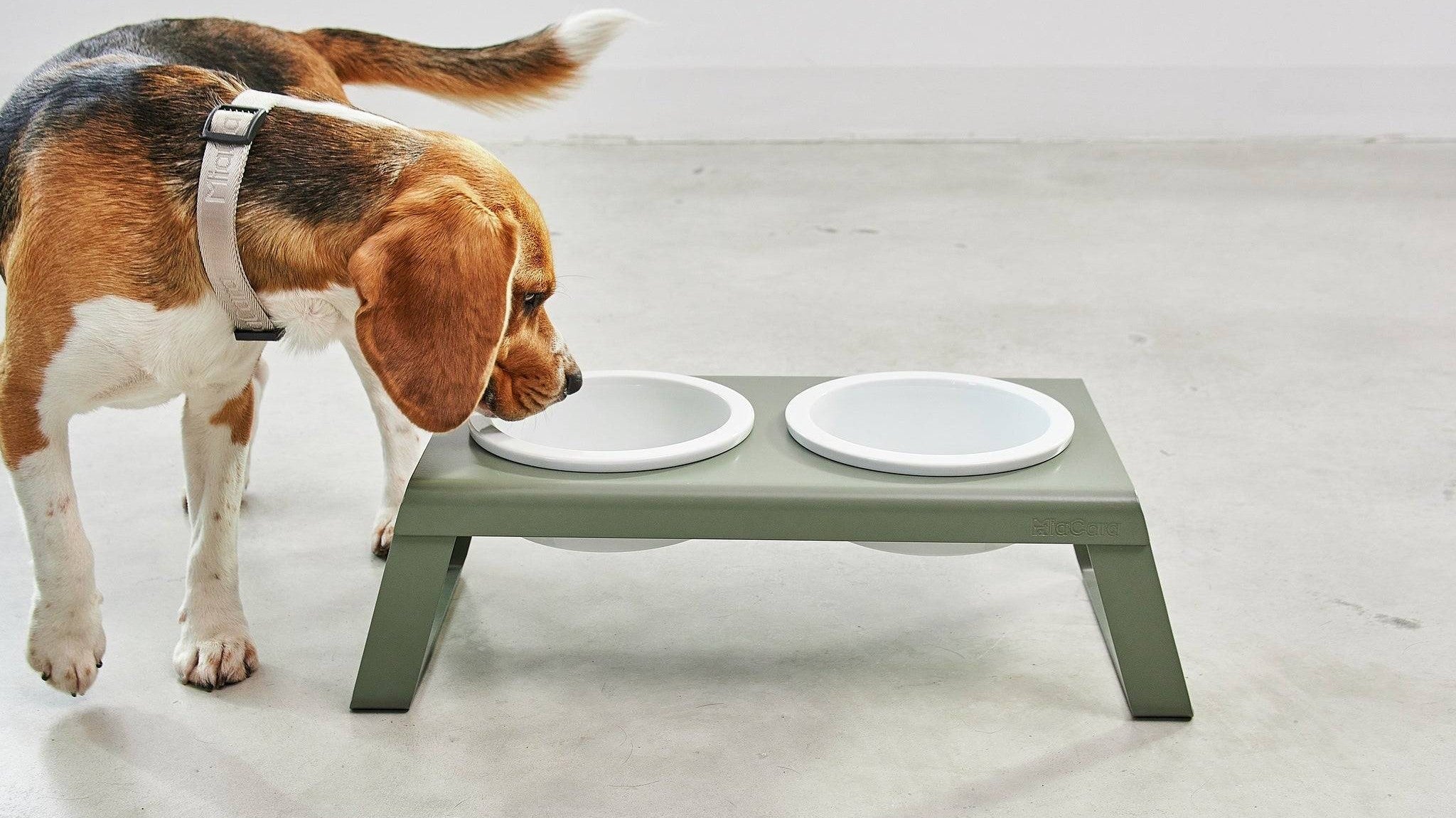
Not every dog needs an elevated food bowl. The clearest benefits, better posture and reduced strain on the neck, shoulders and spine, show up in tall, long-legged dogs and in senior dogs with arthritis or joint stiffness. Small and short-legged breeds usually need far less elevation, and many are perfectly comfortable eating from the floor. The measurement that decides it is the height of the elbow, not the dog's weight. That is also why adjustable designs earn their keep: the Desco Dog Feeder stands at three heights, 10, 17 and 24cm, so one feeder can be matched to almost any build.
Understanding the Health Benefits of Elevated Feeding
Elevated feeding offers several documented advantages for specific dogs, particularly larger breeds and senior pets. The primary benefit centres on improved posture during meals, which can reduce strain on the neck, shoulders and spine. Dogs eating from ground level must crane their necks downward, creating tension that accumulates over time. By raising food and water bowls closer to chest height, you create a more natural eating angle and allow gravity to assist swallowing.
For senior dogs with arthritis or joint stiffness, this postural improvement becomes crucial. Bending down grows increasingly uncomfortable with age, and a properly positioned feeding station lets your dog maintain a more natural alignment whilst eating. This can reduce discomfort and encourage better appetite in dogs who might otherwise avoid meals due to physical strain.
Digestive benefits also play a role, though these effects are more subtle than marketing claims sometimes suggest. The improved posture can facilitate smoother swallowing, and many owners report that elevated feeders reduce mess around the feeding area, as dogs are less likely to push bowls around or spill water. According to the PDSA, joint health is a key welfare consideration for many dogs, particularly larger and heavier breeds prone to arthritis as they age. An elevated feeder will not replace veterinary care, but it is a sensible daily habit that supports good posture over a lifetime of meals.
How to Measure the Correct Height for Your Dog
The goal is to bring the bowl up to meet the dog, so it can eat standing square without splaying its front legs or dropping its head below its shoulders. One measurement gets you there.
Measure from the floor to your dog's elbow while they are standing naturally. The elbow is the joint where the front leg meets the body, and you can find it by running your hand down the back of the foreleg until you feel the bend. Keep the bowl rim close to that height. Above the shoulder is too high.
Bodyweight on its own will mislead you here, which is why weight-based charts are worth ignoring. A stocky, short-legged dog and a leggy dog of the same weight want different feeder heights, because it is leg length and not mass that sets where the bowl should sit.
As a starting point by build:
- Small and short-legged (Dachshund, French Bulldog, Beagle, Corgi, Basset Hound): floor level, or around 10cm. A fixed floor bowl suits many of these dogs perfectly well.
- Medium (Cocker Spaniel, Border Collie, Whippet, Cockapoo, Staffordshire Bull Terrier): around 15 to 17cm.
- Large and long-legged (Labrador, German Shepherd, Setter, Greyhound, Labradoodle): around 20 to 24cm.
A few things to factor in beyond the measurement. Longer-necked breeds such as Greyhounds and Dobermanns often suit the upper end of their range, while stockier dogs are usually more comfortable slightly lower. Senior dogs, or those recovering from injury, should be moved up gradually rather than straight to the tallest setting. Puppies change quickly, usually reaching full size between 12 and 18 months depending on breed, so plan to reassess as they grow.
The Desco stands on the floor at three heights, 10, 17 and 24cm, so you can match the build rather than guess. The Cena reaches the same three heights in a single loop of powder-coated steel, and the Arco mounts on the wall at whatever height suits your dog. Testing a height over a few days helps confirm it: watch for relaxed shoulders, a steady eating pace and minimal neck extension. If your dog consistently avoids the setup, lower it and observe the response.
A starting point for a comfortable home, not veterinary advice. If your dog has a diagnosed condition affecting how it eats, your vet knows your dog and we do not.
Breed-Specific Considerations and Sizing
Different builds want different approaches. Brachycephalic breeds such as French Bulldogs and Pugs suit a slightly lower position that accommodates their shortened airways, and a wider, shallower bowl helps flat-faced breeds reach food more easily, whereas deep, narrow bowls suit longer-muzzled breeds. Working breeds with high energy tend to eat enthusiastically, which makes stability features such as non-slip bases and weighted designs particularly important so the feeder does not slide mid-meal.
Choosing the Right Elevated Feeder Design
Modern elevated feeders vary dramatically in construction quality, adjustability and aesthetic appeal. The most important considerations are stability, bowl material and height. Feeders that wobble or tip can create anxiety around mealtimes and cause spills, so look for precision-fitted joints and thoughtful weight distribution that keep the feeder steady even during vigorous eating.
Bowl material significantly affects hygiene and durability. Stainless steel offers superior bacteria resistance and is dishwasher safe, whilst porcelain and ceramic provide weight stability and an attractive appearance, resisting staining and odour retention far better than plastic. Both surpass plastic alternatives for cleanliness and longevity. The MiaCara Cena range shows how porcelain bowls can pair with hardwood bases for a feeder that handles like premium tableware rather than pet equipment.
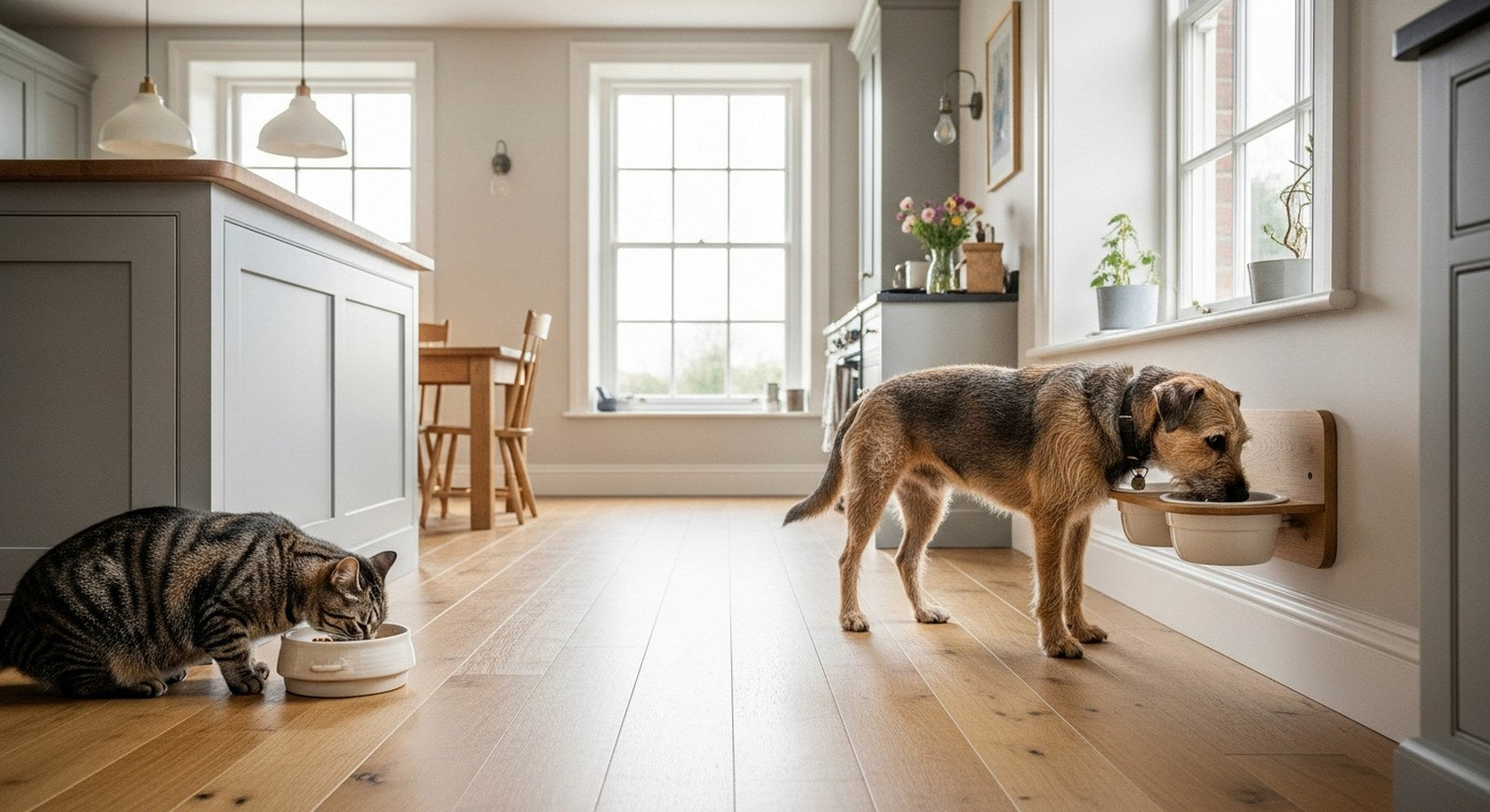
The Arco Dog Feeder brings a smooth curved arch in water-repellent laminate to the same elevated concept, well suited to interiors that lean towards clean, minimal lines. The Desco, with its powder-coated aluminium or bent-plywood frame and ceramic bowls, sits naturally in a modern kitchen without looking like a piece of pet equipment that wandered into the wrong room. We stock MiaCara, a German design house, because their height specifications are based on actual dog anatomy and the finishes are built to last. You will find their full range alongside our other elevated pet feeders. For mixed-species homes, the same design language extends to feline solutions: the Arco Cat Feeder and Cena Cat Feeder share the same architecture as their canine counterparts, so visually they belong together.
Designing a Feeding Station That Belongs in Your Home
Your dog's bowls probably live somewhere practical rather than somewhere considered, a corner of the kitchen floor nudged out of the way. It does not have to stop there. Many owners now treat the feeding area as part of the home's overall design.
Placement comes first. Dogs eat best in a calm, low-traffic spot, away from the bustle of a busy kitchen at rush hour. The PDSA recommends that dogs have a quiet, consistent space to eat, since unpredictable environments can create anxiety around mealtimes. In practice that usually means a corner or alcove rather than a central floor position. Against a wall, flanked by units or a low piece of furniture, the feeding area reads as a deliberate design moment rather than an obstacle, and it is easier to keep clean because splashes stay contained to one zone.
Materials should connect to what is already in the room. For homes leaning towards Scandinavian minimalism, light wood frames with matte ceramic bowls work well. For more traditional British interiors, a handmade ceramic bowl brings something a flat-pack plastic option cannot: Wirksworth Pottery, made in the Peak District of England, produces ceramic dog bowls that sit naturally alongside heritage materials and, because they are weighty and stable, stay put during enthusiastic mealtimes. Pairing a handmade Wirksworth bowl with an elevated MiaCara frame is one of the more straightforward ways to get a cohesive setup: the bowl provides warmth and character, the frame provides structure and lift.
A few finishing details make the difference. A washable, non-slip mat beneath the station defines the feeding zone and catches drips; choose a colour that picks up either the bowl glaze or the frame finish. Wipeable surfaces such as stone, tile or sealed hardwood underneath keep the feeder stable and spills easy to clean, and matching food storage nearby, a ceramic canister or a simple steel tin, keeps the visual language consistent.
Multi-Pet Households and Placement
Households with multiple dogs need strategic feeding station placement. Adequate spacing prevents food-guarding behaviours whilst allowing each dog comfortable access to their own bowl. Different-sized dogs benefit from separate feeders at appropriate heights: a Great Dane and a Cocker Spaniel have very different requirements, and feeding them from the same floor-level bowl does neither any favours. Two feeders, correctly sized and placed a comfortable distance apart, is the practical answer, and each dog soon develops a positive association with their own spot.
If you share a home with both a dog and a cat, remember that cats eat from bowls on the floor. The way to keep meals separate is spatial separation, not putting the cat's food at height: use a different room, a baby gate, or a consistent routine where they are not in the same space at the same time. This works reliably without any permanent change to your kitchen layout.
Making the Transition Natural
Most dogs adapt to elevated feeding within a few days, but a gradual introduction ensures the smoothest transition. Start by raising your dog's existing bowls slightly using stable books or platforms, then increase the height over a week until you reach the target level. Introduce the new feeder during a calm mealtime and let your dog investigate before adding food, using a favourite treat to create a positive association.
Monitor eating behaviour closely during the first week. Some dogs initially eat more cautiously with elevated bowls, which is normal, while others eat faster due to improved comfort, in which case a slow-feeder bowl within the setup helps maintain a healthy pace. If your dog seems reluctant, check the height and stability first, and keep feeding times regular so the new setup becomes part of a settled routine.
Maintenance and Long-Term Care
Dogs using properly positioned elevated feeders often show improved mealtime behaviour over weeks or months. Previously picky eaters may show renewed interest, and dogs with mild arthritis often appear more eager for meals, reflecting the cumulative benefit of reduced physical strain. Regular maintenance keeps things hygienic: weekly deep cleaning of both bowls and the feeder structure prevents bacteria build-up, and mild soap is enough for most materials. Check stability monthly, as joints can loosen with use. With proper care, quality elevated feeders last many years.
How to measure the correct bowl height for your dog: step by step
- Find the elbow. With your dog standing naturally, run your hand down the back of a front leg until you feel the joint where it meets the body.
- Measure from the floor to that point. That figure is your target bowl-rim height. Above the shoulder is too high.
- Cross-check against build, not weight. Small and short-legged dogs suit floor level or about 10cm, medium dogs about 15 to 17cm, and large long-legged dogs about 20 to 24cm. Two dogs of the same weight can want different heights.
- Adjust for build and life stage. Longer-necked breeds such as Greyhounds and Dobermanns often suit the upper end of their range, while stockier dogs may prefer slightly lower. Move senior or recovering dogs up gradually, and reassess a growing puppy.
- Test and refine over a few days. Watch for relaxed shoulders, a steady eating pace and minimal neck extension as signs of comfort. If your dog consistently avoids the setup, lower it and observe the response.
Frequently Asked Questions
How high should a dog bowl be?
Set the bowl rim at roughly the height of your dog's elbow when they are standing naturally. Find the elbow by running your hand down the back of a front leg until you feel the joint where it meets the body, then measure from the floor to that point. As a starting point by build: small and short-legged dogs suit floor level or around 10cm, medium dogs around 15 to 17cm, and large long-legged dogs around 20 to 24cm. Bodyweight is a poor guide, because two dogs of the same weight can have very different leg lengths. Above the shoulder is too high.
Are elevated dog feeders safe for all breeds?
For most dogs, yes, provided the height is set correctly. The bowl rim should sit at about elbow height so the dog can eat standing square, rather than craning up or stooping down. Short-legged and flat-faced breeds often do best at floor level or only slightly raised. If your dog has a diagnosed condition that affects how it eats, your vet knows your dog and is the right person to ask.
Can I use the same feeder for a puppy as they grow?
It depends on the design. Fixed-height feeders may need replacing as your puppy develops, since their wither height changes significantly in the first year. If you are buying for a dog that is still growing, a feeder available in several heights, or one with adjustable settings, gives you more flexibility and avoids having to repurchase before they reach adult size.
How do I choose the right bowl size for my dog?
Match bowl diameter and depth to your dog's breed and muzzle shape. Deep, narrow bowls suit longer-muzzled breeds; wider, shallower bowls work better for flat-faced dogs like French Bulldogs. A bowl should hold a full meal comfortably without overflowing, but not be so oversized that your dog has to stretch their neck down into it.
What is the best flooring for a dog feeding station?
Wipeable, non-slip surfaces work best. Stone, tile or sealed hardwood are ideal because spills clean up without staining and the feeder stays stable. If your kitchen has carpet or unprotected wood nearby, place a washable mat beneath the station to define the zone and protect the floor.
Does a dog need an elevated stand for a food bowl?
Not automatically. It depends on build far more than on size or weight. A tall, long-legged dog eating from the floor has to splay its front legs or drop its head below its shoulders to reach the bowl, and raising it to about elbow height removes that stretch. Senior dogs with joint stiffness often find it more comfortable for the same reason. A short-legged dog does not have the stretch in the first place, so floor level is usually fine.
Which dogs benefit most from a raised food bowl?
Tall, long-legged dogs benefit most, because eating from the floor makes them splay their front legs or drop their head below their shoulders to reach the bowl. Labradors, German Shepherds, Setters, Greyhounds and Labradoodles are the clearest candidates. Senior dogs with joint stiffness often find a raised bowl more comfortable too. Small and short-legged dogs generally need little or no elevation.
Do small dogs need an elevated food bowl?
Not in the way larger dogs do. A Dachshund, French Bulldog, Corgi or Basset Hound has a short distance to reach in the first place, so floor level or around 10cm is usually plenty. The point of raising a bowl is to remove a stretch, and a small short-legged dog does not have one.
How do I know if my dog would benefit from an elevated food bowl?
Watch them eat from the floor. If they splay their front legs, stoop so the head drops below the shoulders, or shift their weight around mid-meal, the bowl is too low for their build. A dog eating at the right height stands square with a steady pace and relaxed shoulders.
Elevated feeding is a valuable tool for enhancing your dog's mealtime comfort and, for the right candidates, supporting better health outcomes. By focusing on proper height selection, quality construction, thoughtful placement and gradual introduction, you can create a feeding station that works for your dog's body and looks like it belongs in your home.