
Article: Why Cats Need Vertical Space: The Benefits of Cat Shelves and Climbing Furniture
Why Cats Need Vertical Space: The Benefits of Cat Shelves and Climbing Furniture
Your cat isn't being difficult by choosing the top of your wardrobe over their expensive ground-level bed. This preference for height is deeply ingrained in feline DNA, inherited from wild ancestors who relied on elevated vantage points for survival. Today's domestic cats retain these same instincts, making vertical space for cats an essential component of their wellbeing. Cat shelves and climbing furniture don't just satisfy your cat's natural behaviour, they transform your home into a three-dimensional playground that supports physical health, reduces stress, and creates harmony in busy households.
The Science Behind Feline Height Preferences
Cats are hardwired to seek elevated positions for fundamental biological reasons. In the wild, height provides safety from predators, optimal hunting vantage points, and temperature regulation. Your domestic cat experiences the same psychological benefits from perching high above their territory.
From elevated positions, cats can survey their environment whilst feeling secure. International Cat Care puts it plainly: cats are natural climbers, and need to be able to rest and watch over their surroundings from high places, as this is where they feel safe.
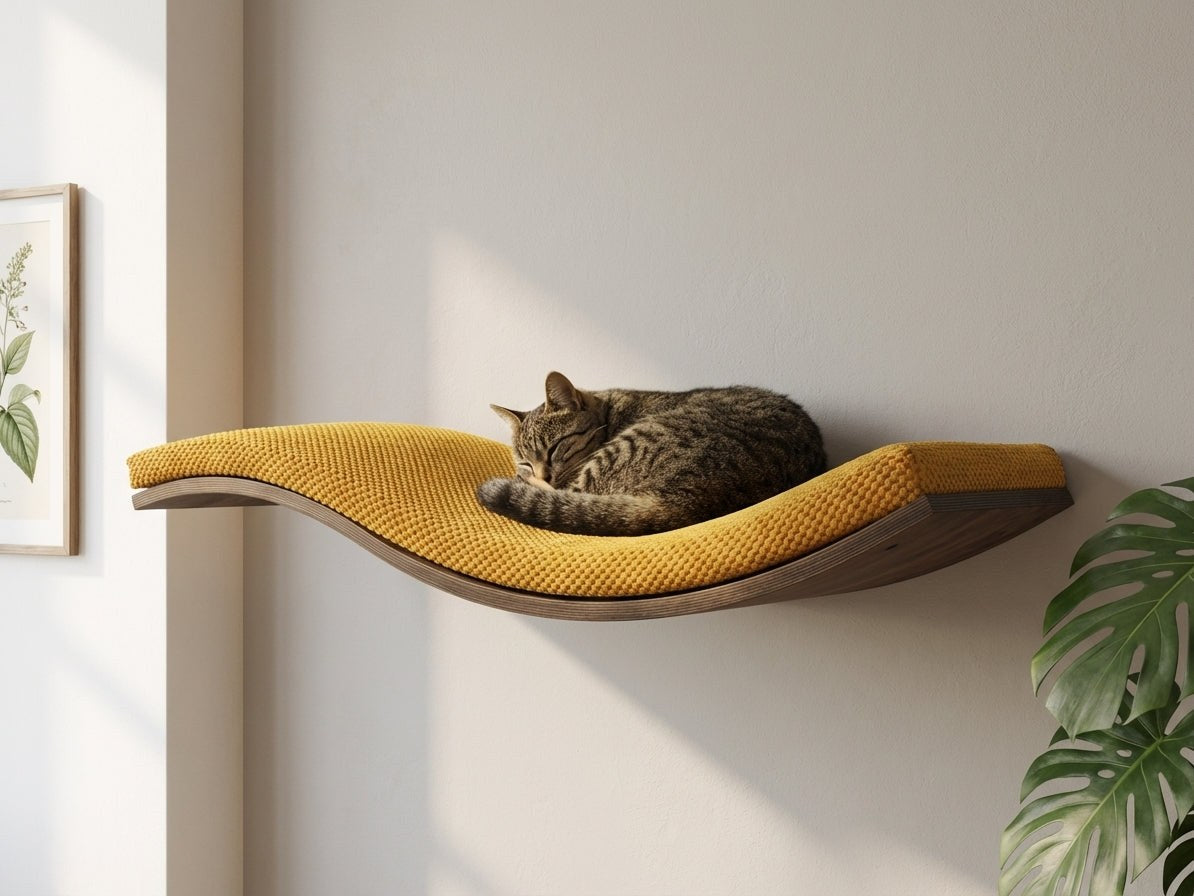
Cat climbing furniture also supports their natural exercise patterns. Cats are burst athletes, designed for short, intense activity periods. Vertical movement engages their core muscles, improves flexibility, and provides the physical challenge their bodies crave. A Softly Shaped Cat Wall Shelf or the MiaCara Alto Wall-Mounted Cat Climber positioned at an appropriate height can become an integral part of their daily fitness routine. The MiaCara Parete wall system offers the same kind of route, built from separate step and scratching-panel elements.
Temperature regulation plays a surprising role too. Warm air rises, making elevated spots naturally cosier during cooler months. This explains why cats gravitate towards high windowsills and top shelves, especially during Britain's chilly winters.
Vertical space for cats: quick answers
What is vertical space for a cat? Vertical space for a cat is any usable area above floor level: wall-mounted shelves, perches, a cat tree, or a window platform. Cats seek it out because height gave their wild ancestors safety from predators, a strong vantage point for spotting prey, and warmth from rising heat. In a home, a connected route of shelves or perches lets a cat climb, rest and observe its surroundings, which is why vertical space is now considered a core part of feline enrichment, not an optional extra.
Why do cats need vertical space? Cats need vertical space because climbing is instinctive, not optional. Height once meant safety from predators and a good view for hunting, and that instinct still drives cats to seek out shelves, perches and high resting spots today. Cats given regular vertical space show lower stress and calmer behaviour than cats limited to the floor, and climbing also works their core muscles in the short, intense bursts of activity cats are naturally built for.
How much vertical space does a cat need? Most rooms need three to five connected elements, such as steps and shelves, to build a full climbing route from floor to a high perch. Space each element 20 to 30cm apart for easy climbing, or 20 to 25cm for kittens, senior cats and heavier cats. Include a mix of heights: low launch points up to about half a metre, mid-level perches between 0.5 and 1.5 metres, and high vantage spots above 1.5 metres with enough headroom to sit comfortably.
Do cats need vertical space at home? Yes. Vertical space is one of the most important things a cat's environment can offer, alongside food, water, a litter tray and scratching options. Cats are natural climbers, and being able to move upward off the floor reduces stress, prevents boredom, and gives more territory to work with in multi-cat homes where floor space is limited. Even a single cat living alone benefits from having somewhere to climb and perch.
What are the benefits of vertical space for cats? Vertical space lets cats exercise in the short, intense bursts they are built for, strengthening core muscles as they climb. It reduces stress by giving cats a safe, elevated place to retreat to and observe a room from above. In homes with more than one cat, it also reduces conflict, since cats can rest at different heights instead of competing for the same floor space.
Territorial Benefits and Multi-Cat Harmony
Vertical space fundamentally changes how cats perceive and utilise their territory. Rather than competing for limited floor space, cats can establish separate kingdoms at different heights, dramatically reducing conflict in multi-cat households.
Each cat can claim their preferred elevation level based on their confidence and social standing. More assertive cats typically choose higher positions, whilst shy cats might prefer mid-level perches that still provide security without challenging the household hierarchy.
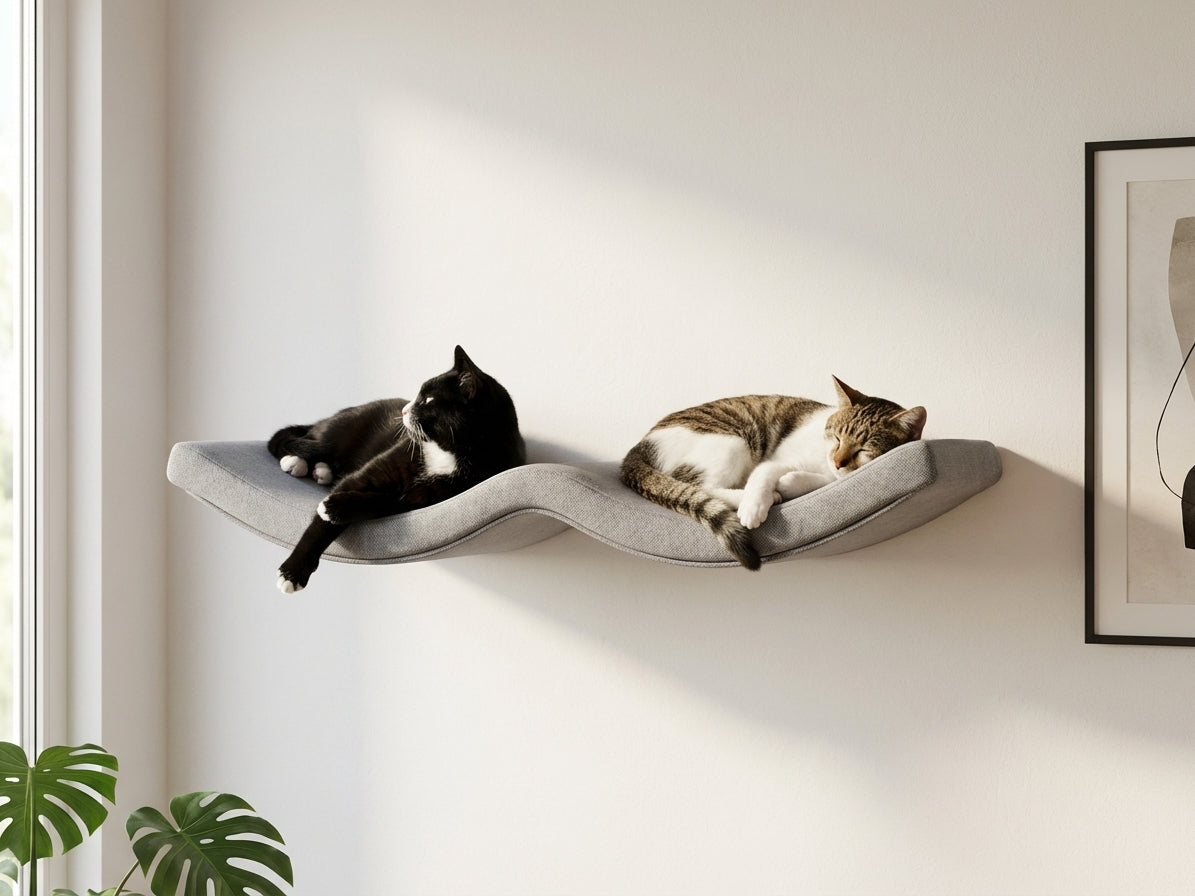
This vertical segregation is particularly valuable in smaller homes where floor space is limited. Cat wall furniture effectively doubles or triples your cat's useable territory without sacrificing human living space. Wall-mounted solutions like the Arcing Haven Cat Wall Shelf create private retreats where each cat can observe household activity whilst maintaining their own space.
Even single-cat households benefit from vertical options. Cats need variety in their environment to prevent boredom and behavioural issues. Multiple elevation choices provide mental stimulation and prevent your cat from becoming territorial over one favourite high spot.
Designing Safe and Effective Vertical Spaces
Creating effective vertical territory requires thoughtful planning that considers both feline needs and home safety. Start by mapping potential pathways from floor to ceiling. Cats need intermediate stopping points, with gaps no larger than 60-75cm between surfaces for healthy adult cats. Senior cats or those with mobility issues may require closer spacing of 45cm or less. The MiaCara Gradino Cat Climbing Step is designed as exactly this kind of intermediate step, bridging the gap between floor and a higher shelf for older or smaller cats.
Safety must be paramount throughout installation. Ensure all wall-mounted furniture is professionally installed with appropriate fixings for your wall type. UK homes typically feature either solid brick walls requiring masonry fixings or stud walls needing appropriate wall anchors. Position climbing furniture away from fragile items or potential hazards, and consider landing zones with adequate clearance below each perch.
Window areas deserve special attention in British homes. Cats adore window perches for the entertainment value and natural light, but always ensure windows are secure and consider safety screens if you live in an upper-floor flat. Regular inspection ensures your vertical playground remains safe long-term. Check mounting points monthly for any loosening or wear, and keep surfaces clean and appealing.
How to Plan Your Cat's Climbing Route
Once you understand why your cat wants height, the next question is almost always a practical one: where do you actually put the shelves? A single perch is easy. A proper route, one your cat can climb confidently from a standing start and use every day, needs a bit more thought. Here is how to plan one properly.
Start from the floor
The most reliable route is one that starts at floor level and needs no furniture at all: a short run of steps leading up to a perch. This matters even if you do have a sofa or sideboard your cat could launch from, because a floor-start route works in every room, for every cat, and doesn't rely on furniture staying exactly where it is. Think of furniture-assisted routes as a bonus option layered on top of a floor-start route, not a substitute for one.
Think of the wall in three bands
Cats don't want one high shelf; they want a choice of heights and an easy way to move between them. It helps to picture the wall in three bands. A low launch band, up to about half a metre off the floor, is the step-on and step-off point. A middle travel band, roughly half a metre to a metre and a half, is the climbing route itself. And a high vantage band, about a metre and a half and above, is the destination: a resting perch with a clear view across the room. Aim to give access to all three, with a top perch that still leaves enough clear headroom for your cat to sit up and turn comfortably.
How far apart should shelves and steps be?
For the everyday climbing route, space each stepping shelf around 20 to 30cm apart vertically. That is an easy step rather than a jump, which is what keeps a wall comfortable to use several times a day and gentle on the joints over the years. A fit, healthy adult cat can manage a larger gap, up to around 45cm, between two secure and generous shelves, but treat that as the exception rather than the plan. For kittens, senior cats, or heavier cats, keep every gap to 20 to 25cm and simply add more, closer steps rather than fewer, bigger ones. When in doubt, build the gentler staircase.
How many steps do you need?
Most rooms need somewhere between three and five elements (steps and shelves together) to build a route from the floor up to a perch at head height or above, once you're working to that 20 to 30cm spacing. Fewer than that and the gaps get too big for a comfortable, repeatable climb; many more and the route starts to dominate the wall rather than sit within it. A short run of Cat Wall Steps building up to a floating shelf like the Wave is a good default shape for most UK rooms.
The one rule: don't stack steps directly on top of each other
There is really only one thing to avoid: fixing steps in a straight vertical line, directly on top of one another. A cat climbing a "ladder" of stacked steps has nowhere to place its paws off to the side and no natural pivot point, so the climb feels awkward rather than fluid. Beyond that, you have a free hand: arrange the steps diagonally, in a diamond, in a triangle, or staggered from side to side, whatever suits your wall and looks right in the room. All of those give the cat a comfortable, natural line up.
Placing a shelf near a window
A window is one of the most popular spots in the house for a shelf, and it's easy to see why: the view and the natural light make it a favourite perch for most cats. Mounting a shelf alongside a window, at a height your cat can comfortably look out from, gives them a warm, changing outlook to watch the world from. It's one of those small touches that turns a shelf into your cat's favourite place in the room.
Choosing a shelf shape for a resting point
Where the route ends in a proper lounging spot rather than a stepping stone, a concave shelf is the most popular choice. The Arcing Haven is built around a single continuous dip along its length, so a cat settles down into the curve and stays put. A flat shelf gives a generous, open surface a cat can stretch right out on, so it comes down to the look you want and how your cat likes to rest. Either makes a proper destination at the top of a route. Our wall-mounted cat beds bring the cushioned shelves and wall nests together in one place.
Planning for two cats
In a multi-cat household, give each cat its own way up rather than a single shared route with one chokepoint. Two cats forced to pass each other on a narrow step, or queue for the one route to the favourite perch, is a common source of tension. Where space allows, build two separate routes to two separate resting spots, even if one is shorter than the other, so neither cat has to negotiate past the other to reach height.
Fixing it up
Every Cat's Atelier shelf and step comes with concealed fixings and full fitting instructions included, and mounts securely to a solid masonry wall or to a plasterboard wall with studs, so it works in most homes. The shelves are built to hold a real working load, up to 40kg on pieces like the Wave, which is many times any cat's weight, so even the largest, most enthusiastic jumper can use them with complete confidence. Just follow the included guidance for your wall type as you fit them, and give the fixings an occasional check once they're up.
Cat climbing route: frequently asked questions
How high should a cat wall shelf be? Cats want a choice of heights rather than one fixed shelf. Give access to a low launch point up to about half a metre, a middle climbing band between roughly half a metre and a metre and a half, and a high vantage perch at about a metre and a half or above with a clear view across the room, leaving enough headroom for your cat to sit up comfortably.
How far apart should cat shelves be? For the everyday route, space stepping shelves about 20 to 30cm apart vertically so each move is an easy step rather than a jump. A fit adult cat can manage up to about 45cm between two secure shelves, but that's the exception, not the plan. For kittens, senior cats, or heavier cats, keep every gap to 20 to 25cm and add more steps.
How many cat shelves or steps do I need for a full climbing route? Most rooms need three to five elements (steps and shelves together) to build a comfortable route from the floor up to a perch at head height or above.
Can cat shelves go on a stud or plasterboard wall? Yes. Every Cat's Atelier shelf and step includes concealed fixings and full fittings and mounts securely to a plasterboard wall with studs, as well as to solid masonry. Just follow the included guidance for your wall type.
Do cat steps have to be staggered? No. The only thing to avoid is stacking steps in a straight vertical line directly on top of each other. Beyond that you can arrange them however suits your wall, diagonally, in a diamond, in a triangle, or staggered from side to side.
Modern Cat Furniture for Contemporary Homes
Today's cat furniture has evolved far beyond utilitarian scratching posts. Modern designs complement contemporary interiors whilst serving feline needs perfectly. Quality manufacturers focus on materials and finishes that enhance rather than detract from your décor.
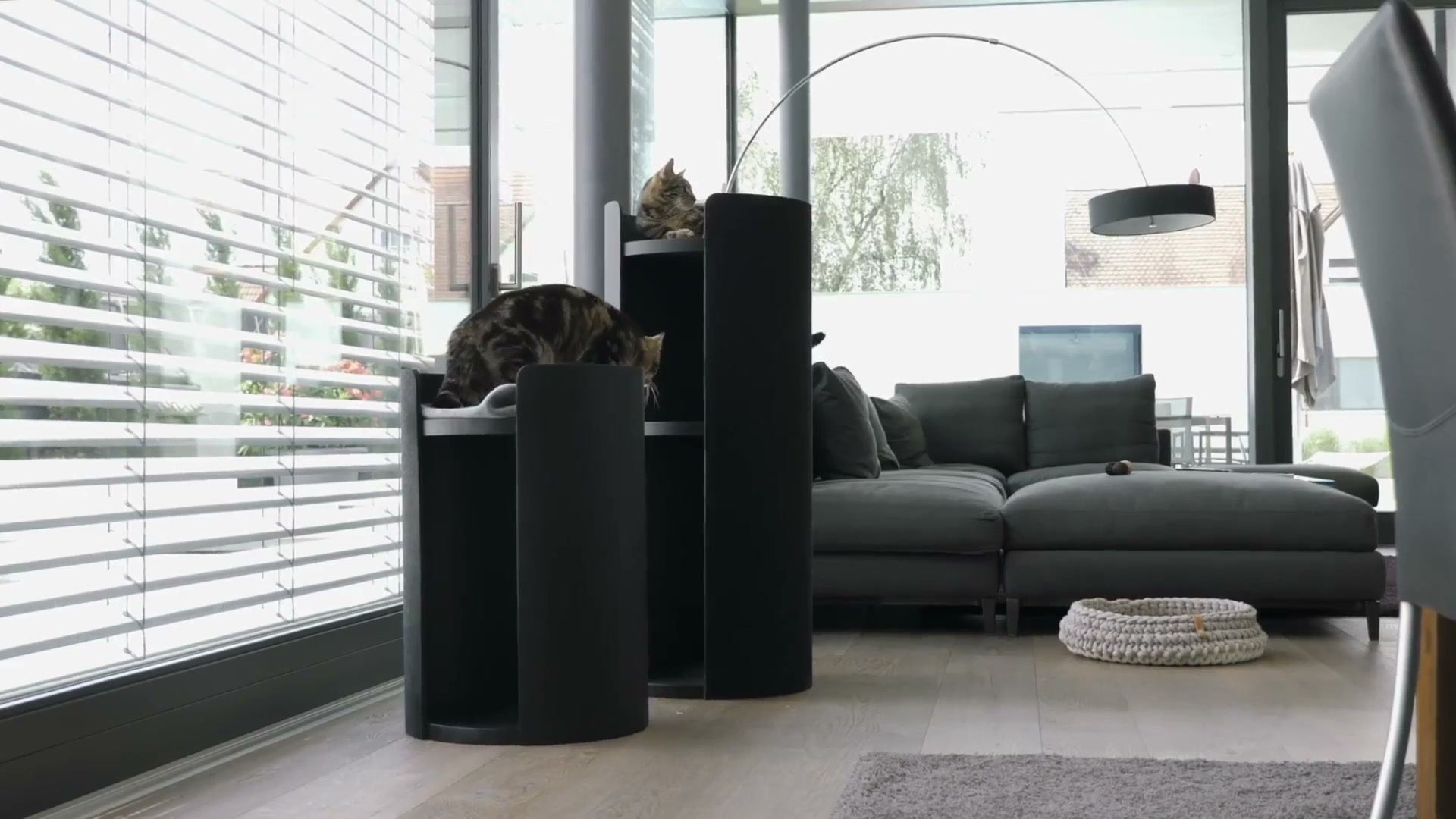
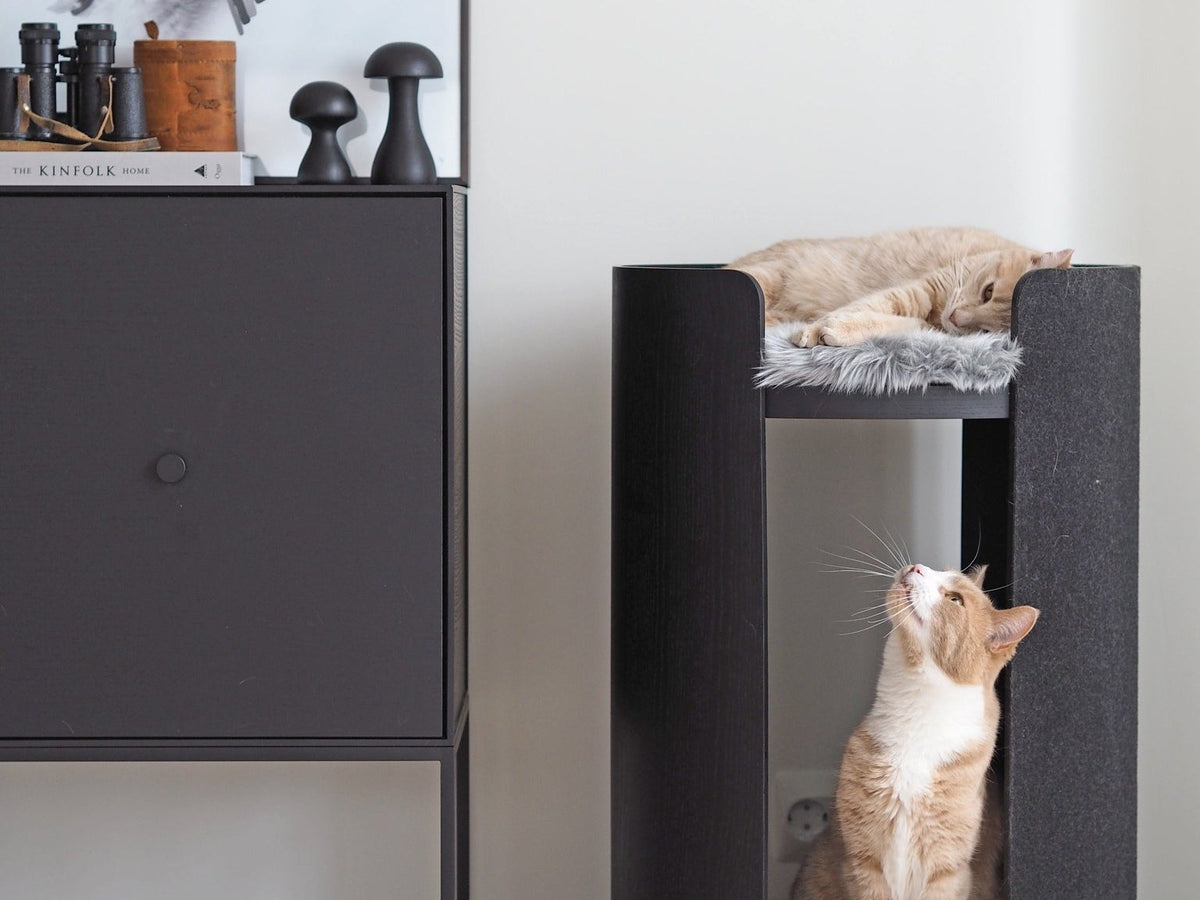
Choose pieces that match your home's aesthetic. Natural wood finishes suit Scandinavian or rustic themes, whilst sleek designs complement minimalist spaces. The Cat House and the MiaCara Torre Cat Tower both demonstrate how functional cat furniture can serve as an attractive interior feature that guests might not immediately recognise as pet furniture.
Consider the visual flow of your climbing route throughout the room. Well-planned vertical furniture should feel intentional and integrated, not haphazardly attached to walls. Position pieces to take advantage of natural light sources, which cats prefer for their daytime resting spots.
Solutions for Compact UK Properties
Britain's housing stock includes many compact properties where every square metre counts. Small flats and terraced houses needn't compromise on vertical territory. Strategic use of wall space can provide extensive climbing opportunities without cluttering living areas.
Focus on unused vertical real estate throughout your home. The space above doorways, corners, and alcoves often goes unnoticed but offers excellent potential for cat furniture. Hallways can accommodate climbing routes that connect different rooms, creating an elevated highway system for your cat.
Rental properties present unique challenges common across the UK housing market. Many tenancy agreements restrict wall modifications, but solutions exist for renters. Tension-pole cat trees require no wall mounting, whilst some systems use removable adhesive fixings designed for rental properties. Always check your lease terms before installation.
Consider seasonal adjustments that work with Britain's changing daylight patterns. Summer positioning might favour cooler elevated spots, whilst winter arrangements could prioritise areas near radiators or south-facing windows. Victorian houses with high ceilings offer particular opportunities for dramatic vertical installations that would overwhelm smaller rooms.
Understanding your cat's need for vertical space transforms how you view their behaviour and your living environment. Cat shelves and climbing furniture aren't luxuries, they're essential components of feline wellbeing that support natural instincts whilst enhancing household harmony. Start with one well-positioned piece and build your cat's vertical kingdom gradually, always prioritising safety and your pet's individual preferences.
Related guide: Designer Cat Furniture: Luxury Wall Shelves & Towers
For more on planning a considered home for cats, see our luxury cat living guide.