

Luxury Cat Living
Luxury cat living is the practice of designing a home around a cat's genuine needs with the same intention you bring to everything else in it: choosing pieces with the height, the sightlines, and the material quality to belong in the room rather than sitting awkwardly at the edge of it.
The idea begins with the cat's requirements. Cats spend the majority of each day in your home, moving between a limited number of chosen spots: an elevated resting place near a window, a quiet enclosed space, a perch from which the whole room is visible. The furniture and layout that shapes those moments can either work against a considered interior or become part of it. Luxury cat living means choosing with the same care you bring to the rest of the room, from makers who treat both what cats need and what good furniture looks like as equally important.
Vertical Space
Cats are drawn to height. The preference is instinctive: elevated positions provide clear sightlines across the full room, a sense of security from a vantage point that feels out of reach, and access to the warmest air in the space. It is not an optional feature; it is one of the more fundamental ways cats experience a home. A cat without access to vertical space will usually find its own solutions, which are rarely the ones you would choose. Our article on why cats need vertical space covers the specific benefits in detail, including the difference it makes in multi-cat households and smaller living spaces.
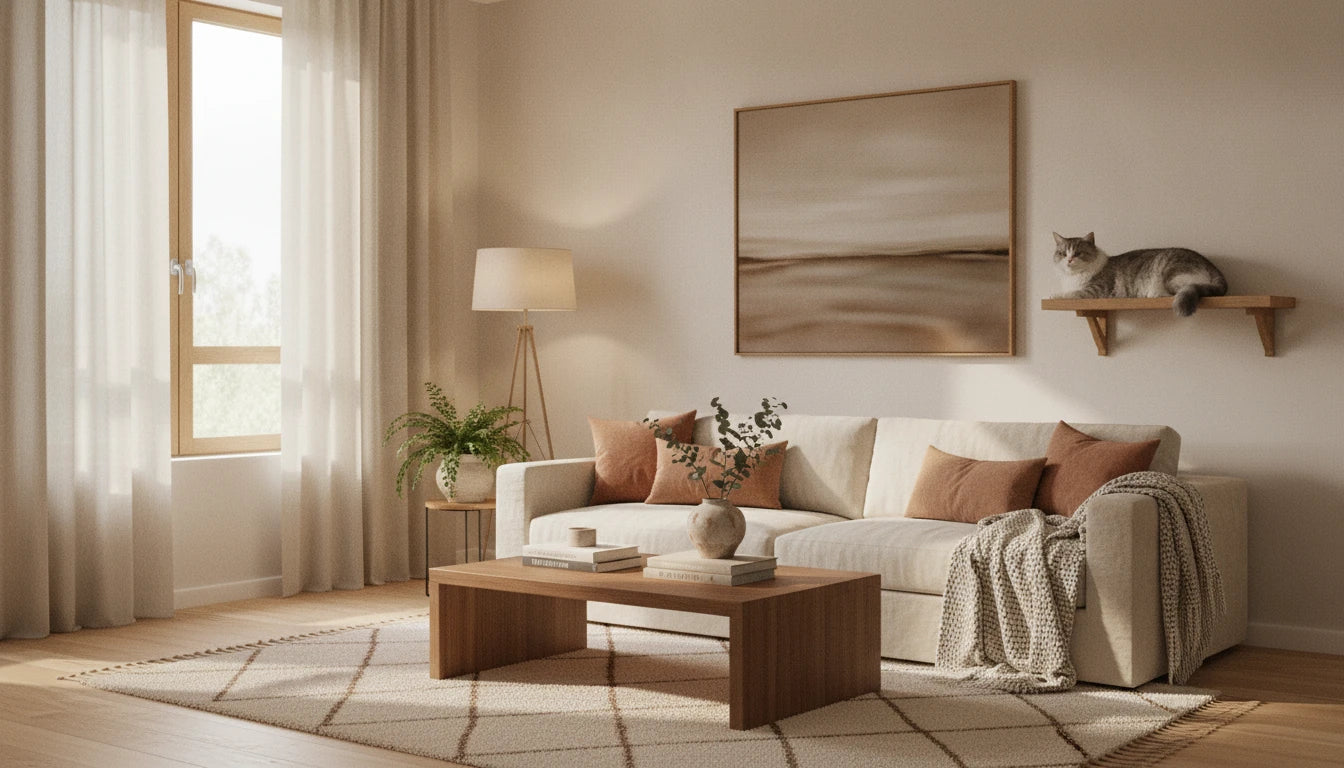
Wall-mounted cat shelves bring height into a room without using floor space. For cat wall ideas that work with a considered interior, the practical question is how the shelf integrates with the wall rather than whether it belongs there. The better-designed pieces from Cat's Atelier, a maker of handcrafted wall-mounted cat furniture based in Poland, use concealed fixings: no visible bracket or hardware. The shelf reads as a considered wall object from across the room rather than a pet accessory applied to a finished interior.
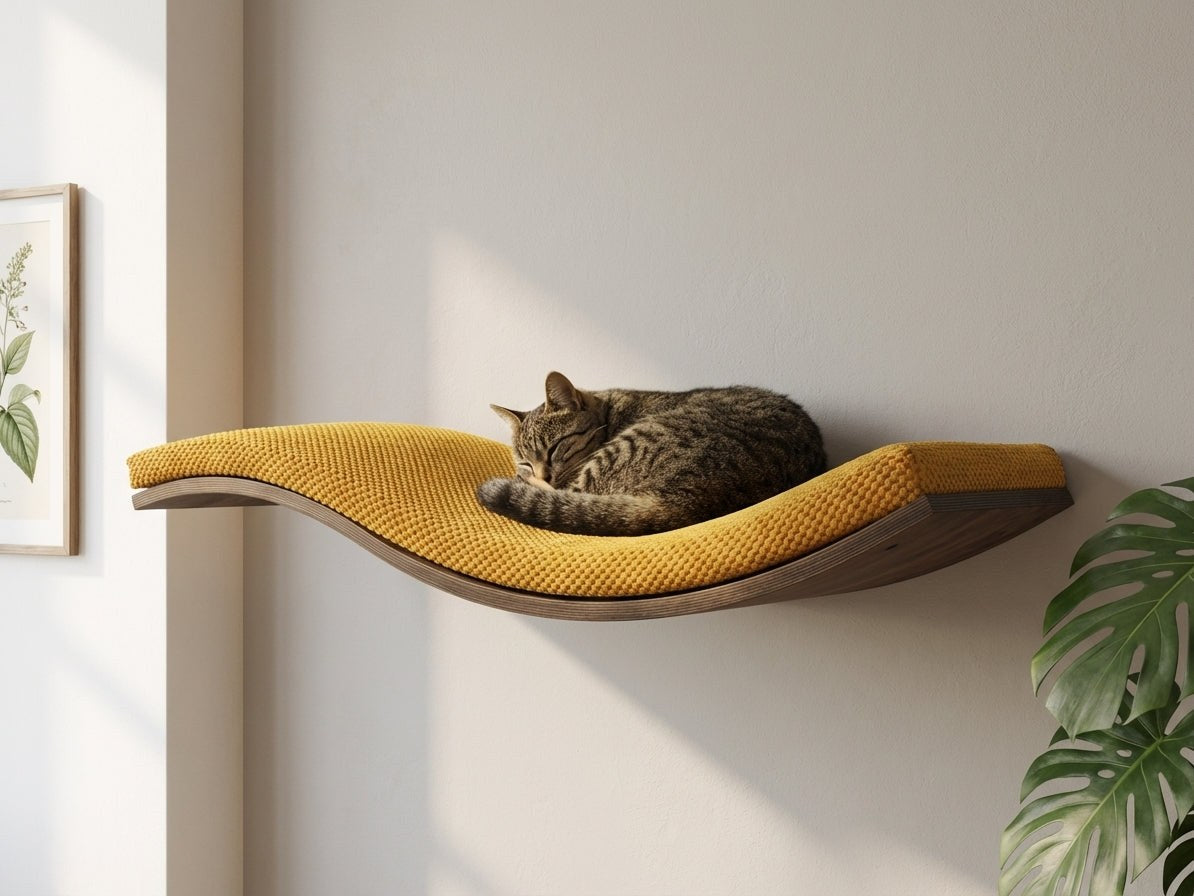
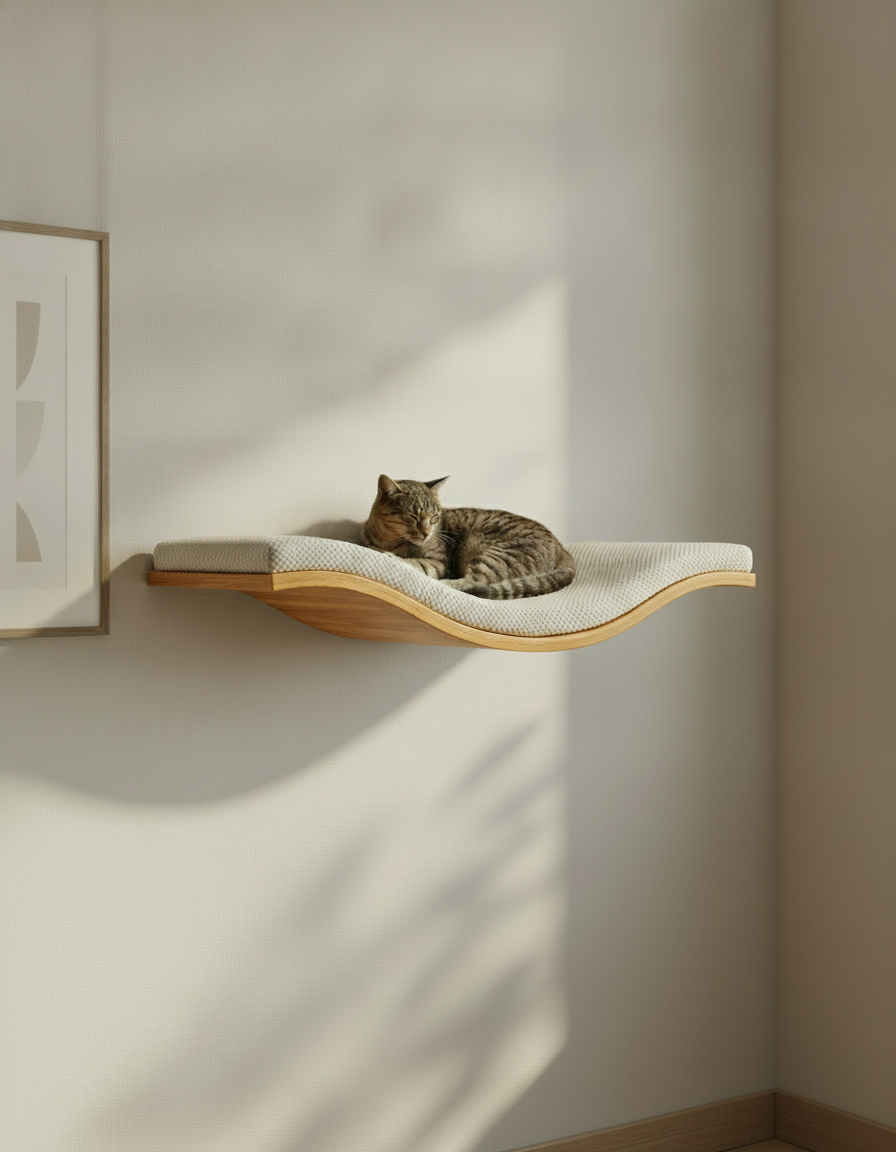
The Arcing Haven is an arc-shaped wall shelf available in three sizes: 60, 75, and 95 cm. The arc form creates a natural cradle shape without the shelf reading as standard pet furniture. The Wave, available in 75 or 95 cm, has a curved profile that dips in the centre, giving the cat a shaped resting position while the wall gains a clean, intentional line. The Double Arch Haven, at £165, provides a larger resting area with a two-arch form suited to statement wall placements or households with more than one cat sharing a spot. All three are made by Cat's Atelier in Poland with a 2-year frame warranty, and come with cushions in seven colour choices.
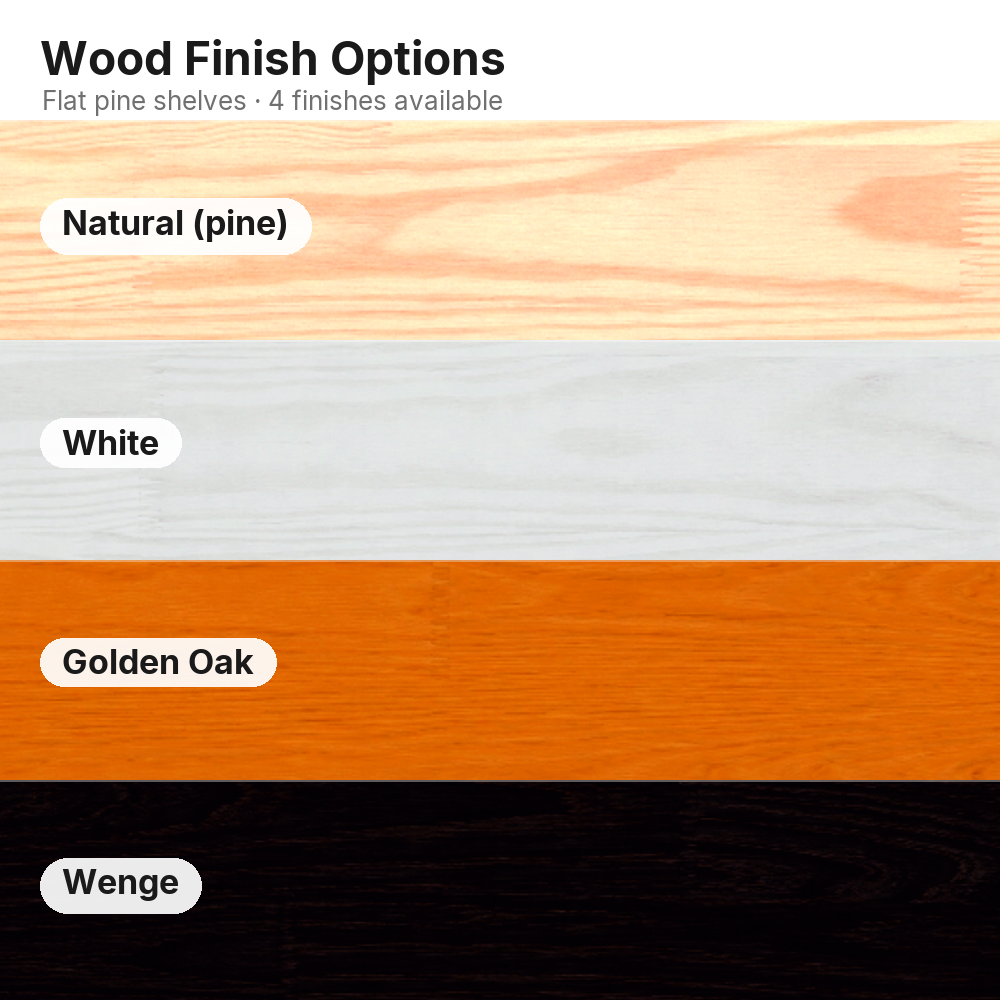
For rooms where timber is the dominant material, Cat's Atelier's wood shelves carry the same concealed-fixing approach in pine and beech. The Cozy Nook is a flat pine shelf with a full-length cushion, available in 60 and 75 cm, finished in natural pine, white, golden oak, or wenge. The Wavey Retreat is a 95 cm beech plywood shelf with a gentle wave form and four finish options. The choice between a metal-frame and a timber shelf is primarily aesthetic: which material belongs on the wall it is going on, and which reads as part of the room rather than separate from it.
For cat climbing wall ideas that use a run of wall rather than a single spot, a series of steps leading up to a shelf creates a continuous route the cat can travel between, rather than one resting point. The principle is to position the steps and shelf at intervals and heights the cat can move between comfortably. Our complete guide to arranging a cat wall covers placement, spacing, and sightlines in full.
The full collection of wall-mounted cat shelves and climbing furniture is at Cat Shelves and Climbing.
Shop Cat Shelves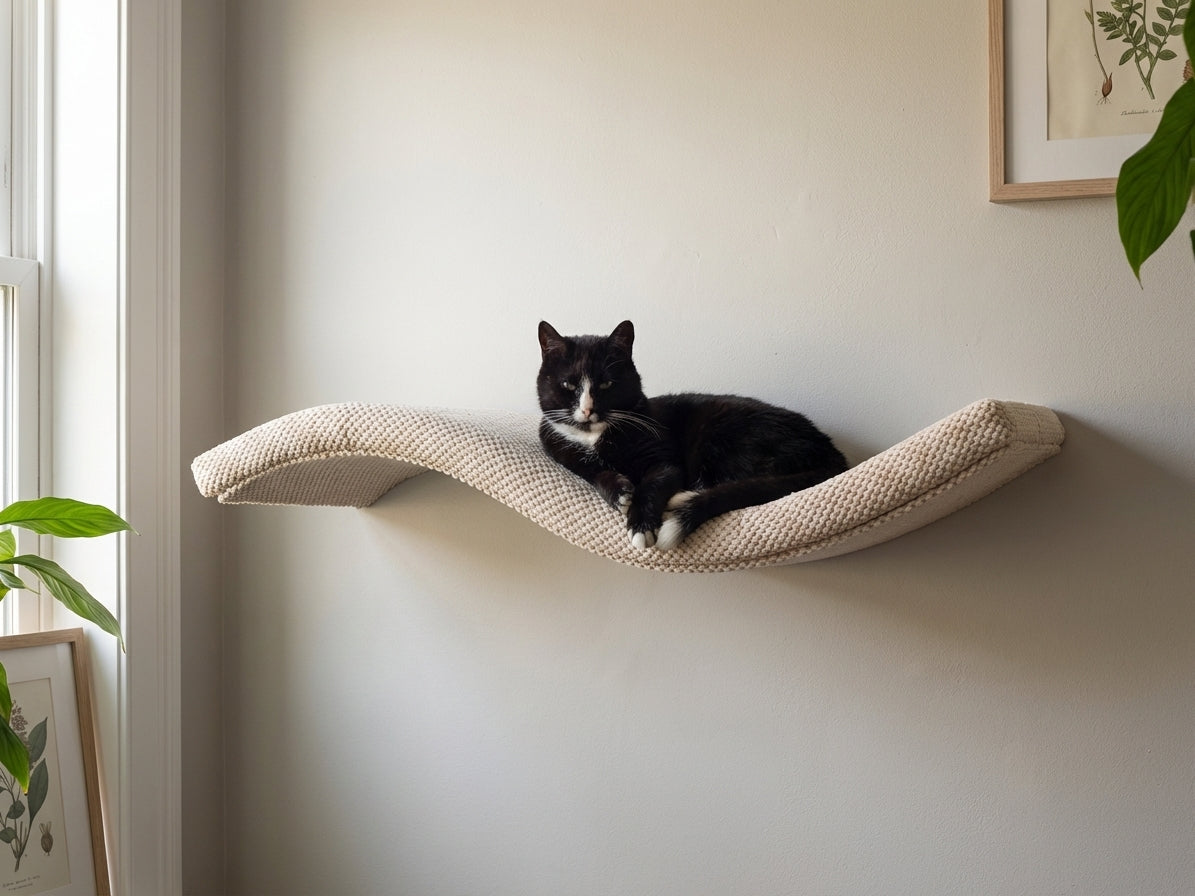
Cat's Atelier Wall Shelves: Metal and Wood at a Glance
Sources: Cat's Atelier's own product data and specifications, cross-checked against each product's materials detail metafield, last checked 2026-08-12. All pieces handcrafted by Cat's Atelier in Poland.
| Model | Material | Sizes available | Best suited to |
|---|---|---|---|
| The Arcing Haven | Metal frame, fabric cushion | 60, 75, 95 cm | Rooms with metal, glass, or minimal detailing; a single statement resting shelf |
| The Wave | Metal frame, fabric cushion | 75, 95 cm | A clean curved wall feature; rooms where the shelf becomes part of the composition |
| The Double Arch Haven | Metal frame, fabric cushion | See product page | Larger resting area; statement or two-cat household placement; double-arch form |
| The Cozy Nook | Pine wood, fabric cushion | 60, 75 cm | Natural or warm interiors; four wood finishes including natural pine and wenge |
| The Wavey Retreat | Beech plywood, fabric cushion | 95 cm | Design-led rooms; four finish options; a considered wave form on a feature wall |
Cat Shelves & Climbing


7 colours available

7 colours available


7 colours available

7 colours available

2 colours available


7 colours available


7 colours available


Cat Furniture as Part of the Room
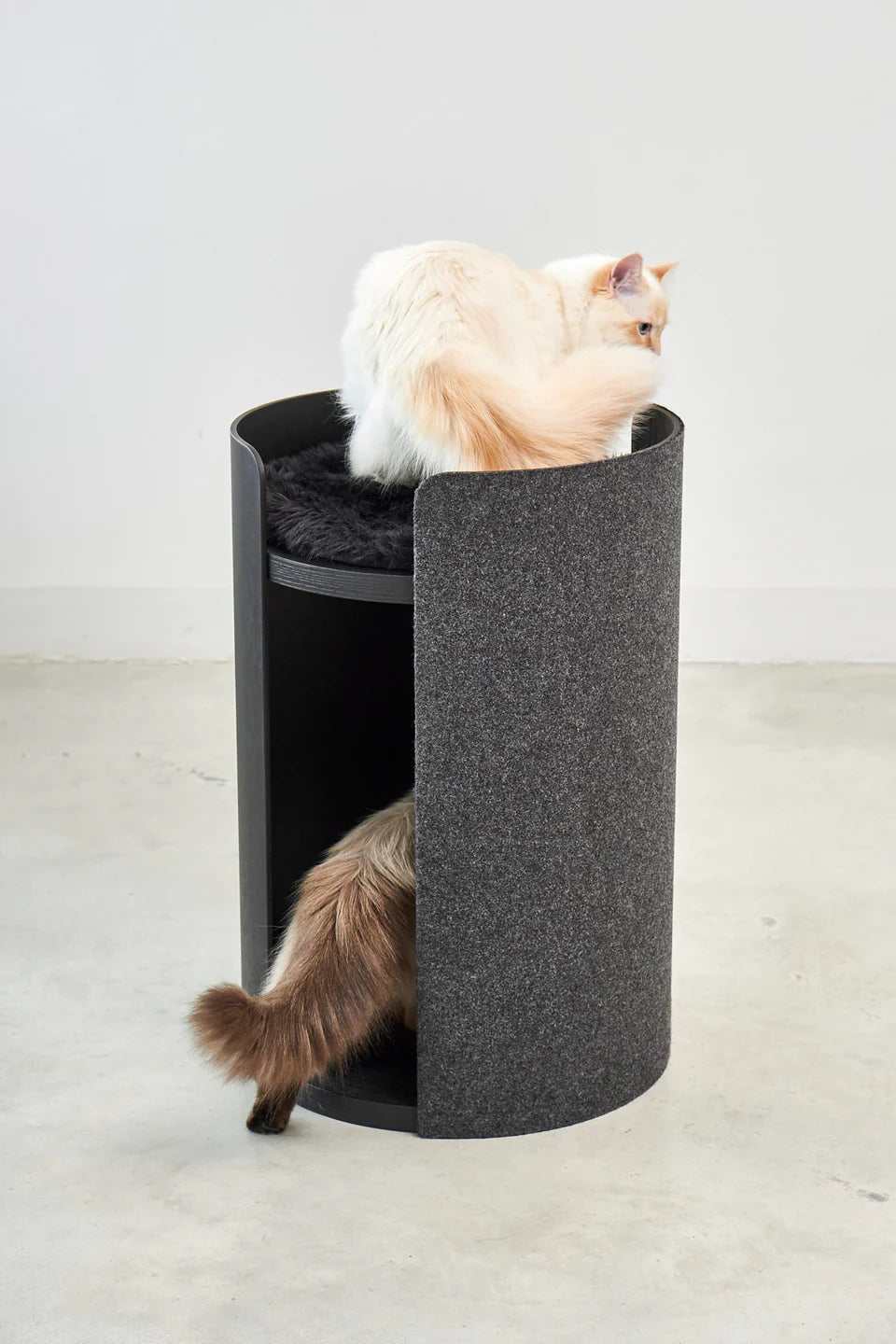
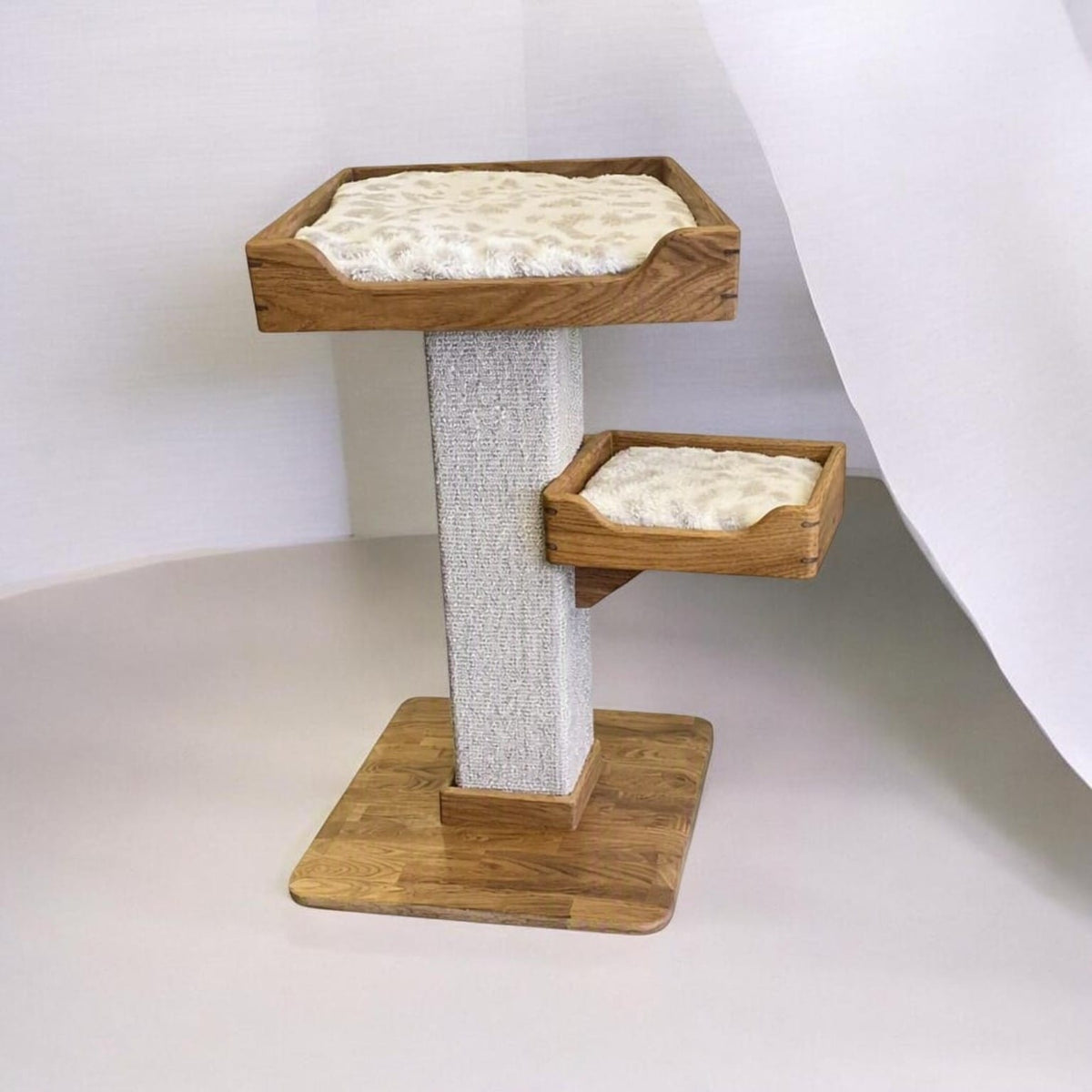
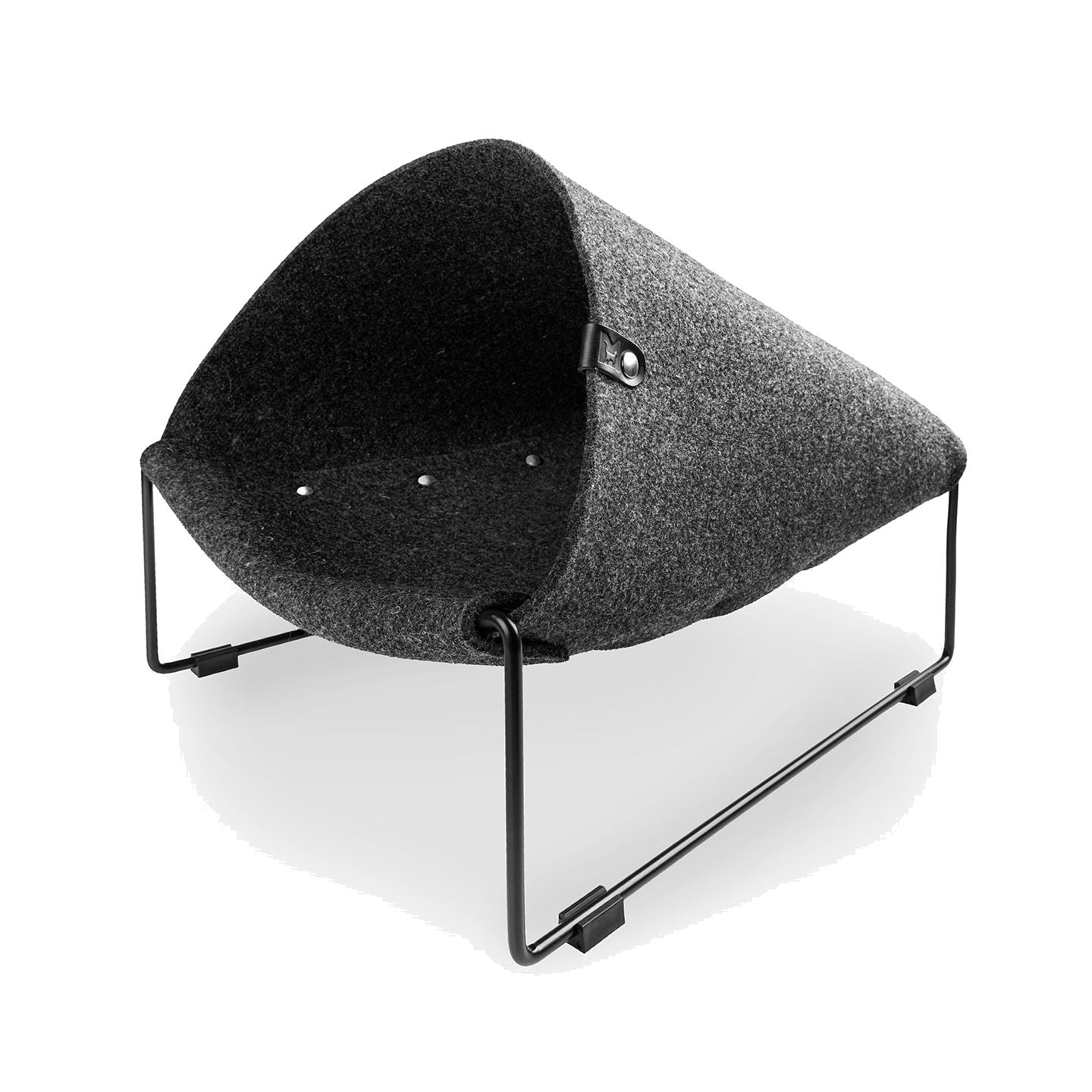
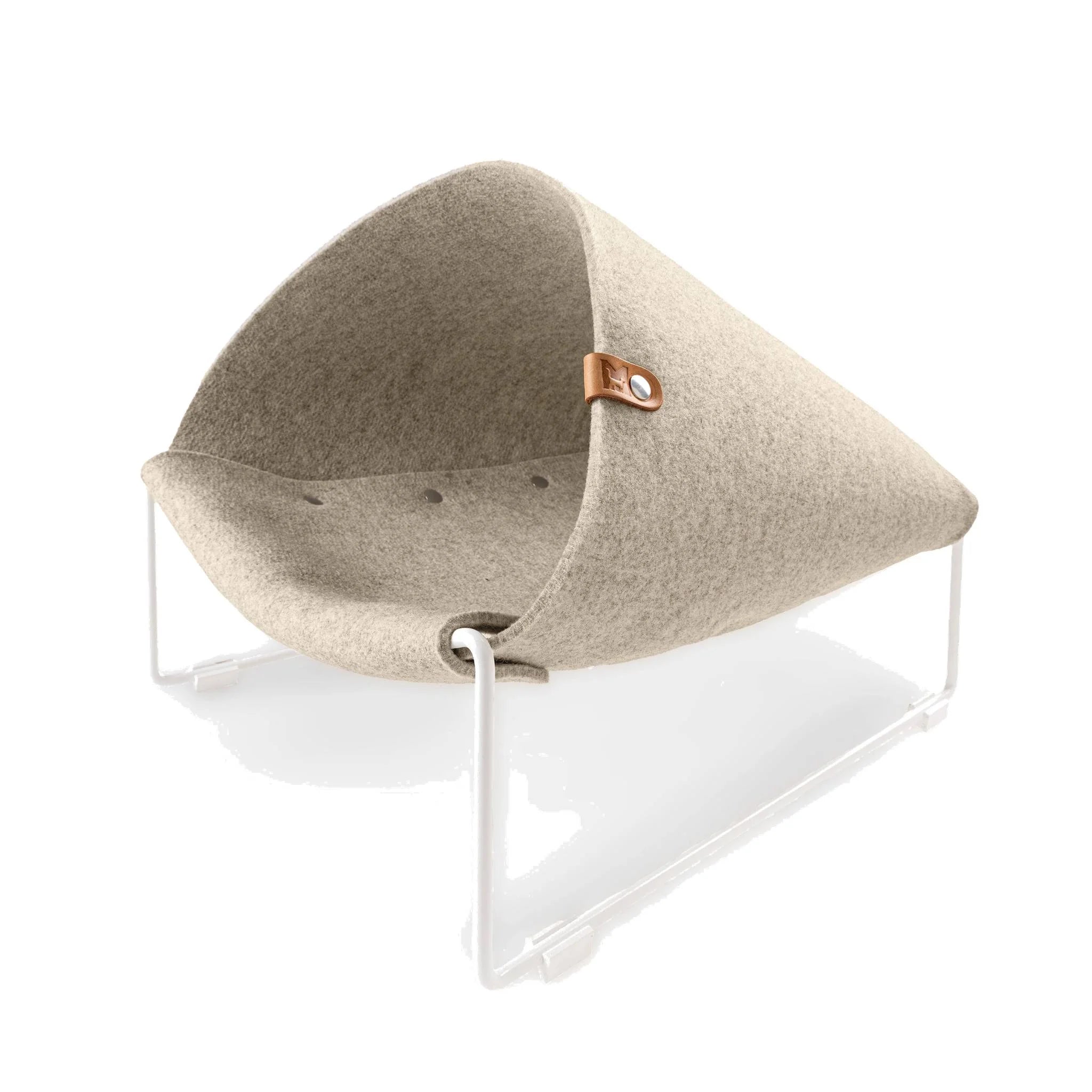
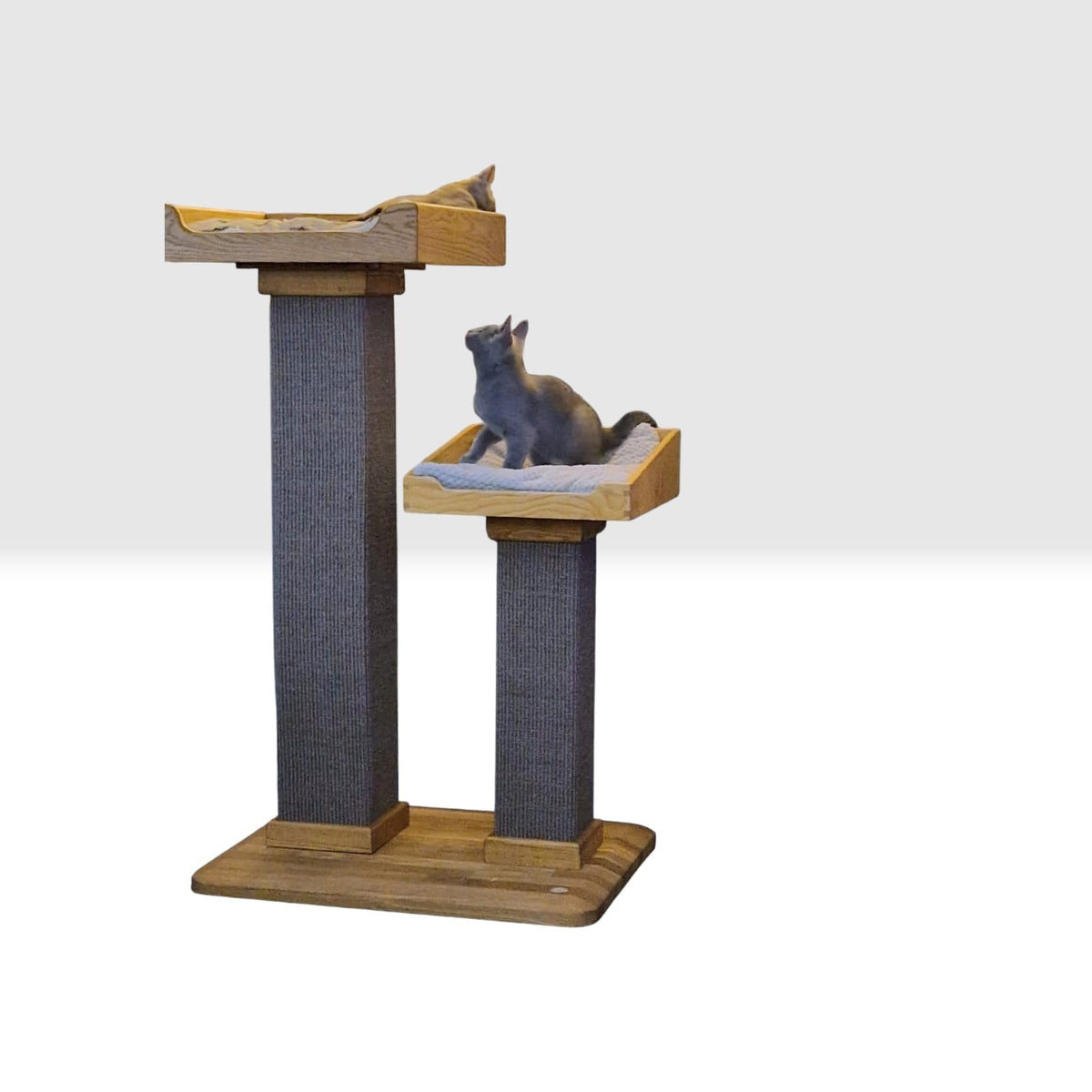
Beyond wall-mounted shelves, the broader category of cat furniture covers towers, perches, enclosed sleeping spaces, and cat beds. The design challenge in this category is more visible than in most: cat furniture has a long tradition of looking like exactly what it is, a tall, carpeted structure in a corner, regardless of what else is in the room around it. The better-made pieces start from the opposite premise. They begin with what a well-considered piece of furniture should look like in the room, and then ensure the cat has everything it needs.
The range of designer and luxury cat furniture at Deluxe Pet Co, covering wall shelves, perches, towers, and beds, is at Cat Furniture. For a practical buying guide covering what to look for across types, including material and placement decisions, our article on how to choose designer cat furniture covers the specific criteria in detail. For the full picture of how to furnish a home around a cat's natural behaviours, including the balance between enclosed and open spaces, our guide on creating a cat paradise is the starting point.
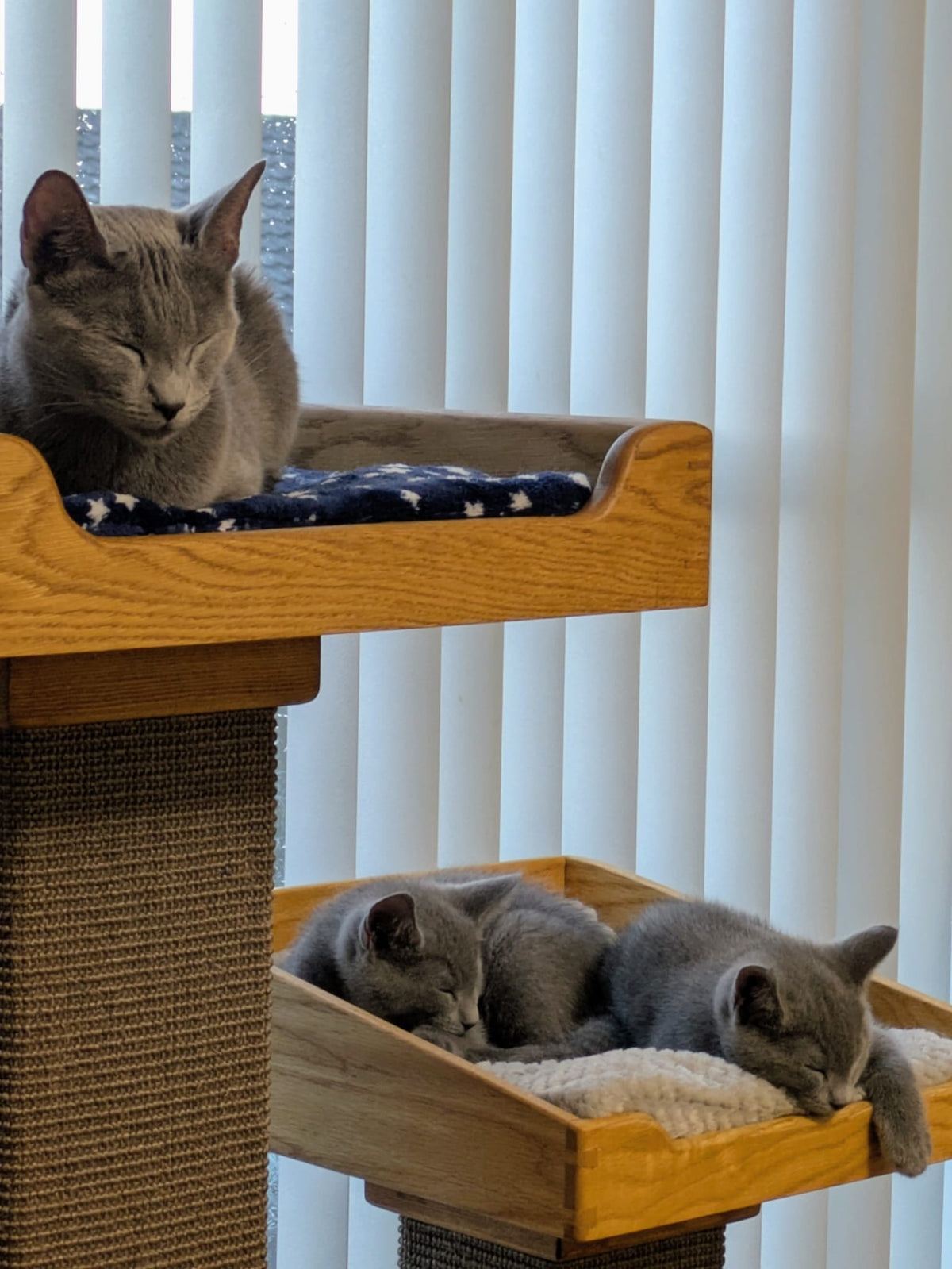
Window perches represent the point where a cat's two strongest instincts, height and natural light, overlap. A shelf or perch positioned near a window gives the cat a warm, well-lit elevated spot with a view that changes throughout the day. This is frequently the spot a cat will return to in preference to any other piece of furniture in the room, which makes it worth placing and designing deliberately.
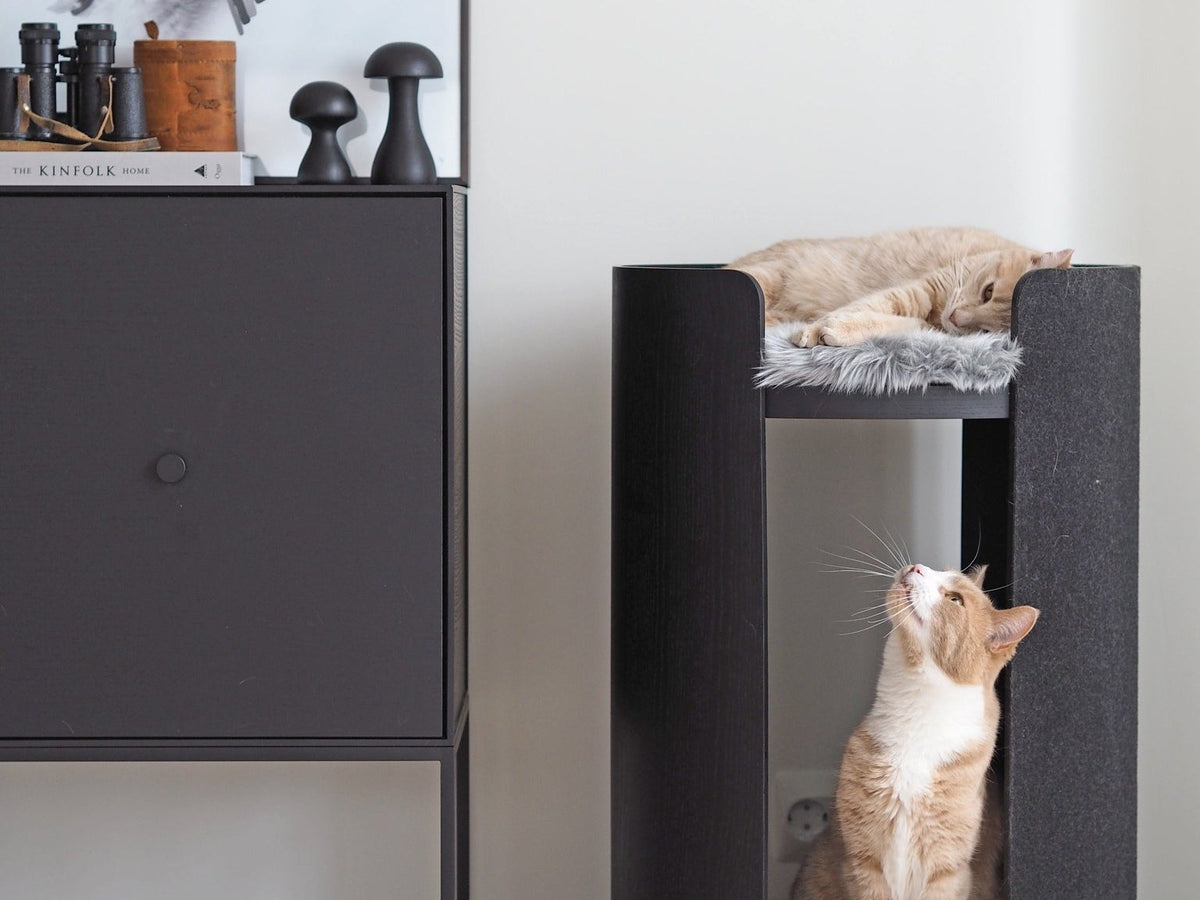
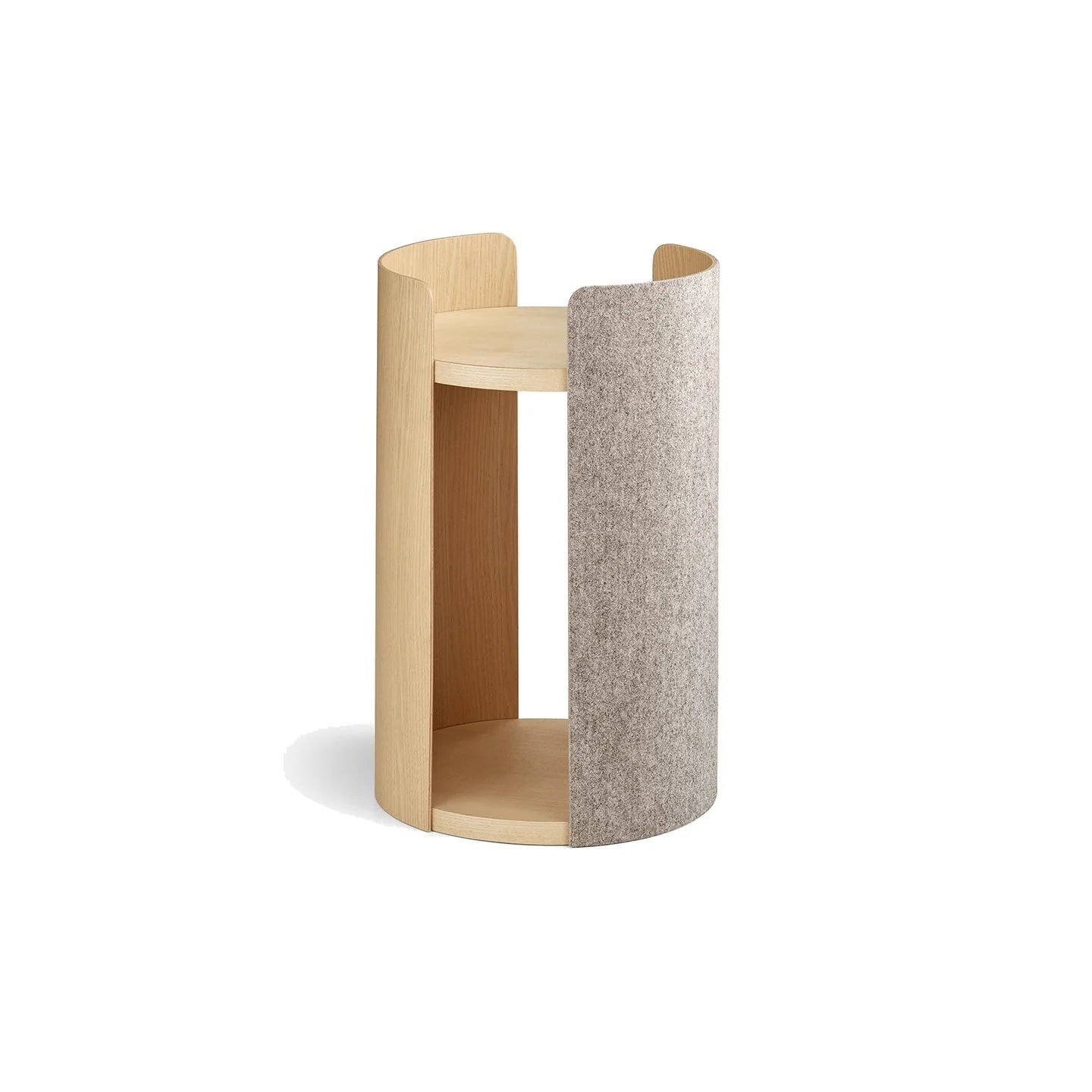
Cat towers sit in a different category: floor-standing and self-contained, they bring significant height into a room without wall fixings, and are the appropriate choice where drilling into a wall is not possible or where the room layout does not suit a wall-mounted arrangement. The MiaCara Torre, from the German design brand, combines bed, scratching post, and climbing tower in one piece. Available in two sizes, S (45 x 45 x 70 cm) and M (45 x 45 x 110 cm), the Torre is built around a shaped plywood structure wrapped in design felt (90% wool, 10% polyester), with ash-veneered platforms. The overall silhouette reads as a considered object in the room rather than a typical cat structure.
The placement of a cat tower within the room makes a significant difference to how it reads and how often the cat actually uses it. Our guide on cat tower placement covers the specific decisions involved, including natural light, room flow, and how the tower relates to other furniture in the space.
Cat towers and freestanding cat furniture are in the Cat Furniture collection.
Shop Cat FurnitureMatching Cat Furniture to What the Cat Actually Needs
Sources: Cat's Atelier and MiaCara product data; Why Cats Need Vertical Space. Torre dimensions from the live MiaCara Torre product page, confirmed 2026-07-01.
| Cat need | Furniture type | Confirmed examples |
|---|---|---|
| Height and clear sightlines | Wall-mounted shelf at 1.5 m or above | Cat's Atelier Arcing Haven (60/75/95 cm), Wave (75/95 cm) |
| Warmth, light, and an outdoor view | Window perch or shelf positioned near glazing | Cat's Atelier window perch range; see Cat Shelves and Climbing collection |
| Active climbing and exploration | Cat tower, or multiple shelves at staggered heights | MiaCara Torre: S (45 x 45 x 70 cm) or M (45 x 45 x 110 cm) |
| Security and enclosed resting | Cat bed or enclosed sleeping space at a lower height | Cat beds collection; see Cat Furniture collection |
Cat Furniture
7 colours available
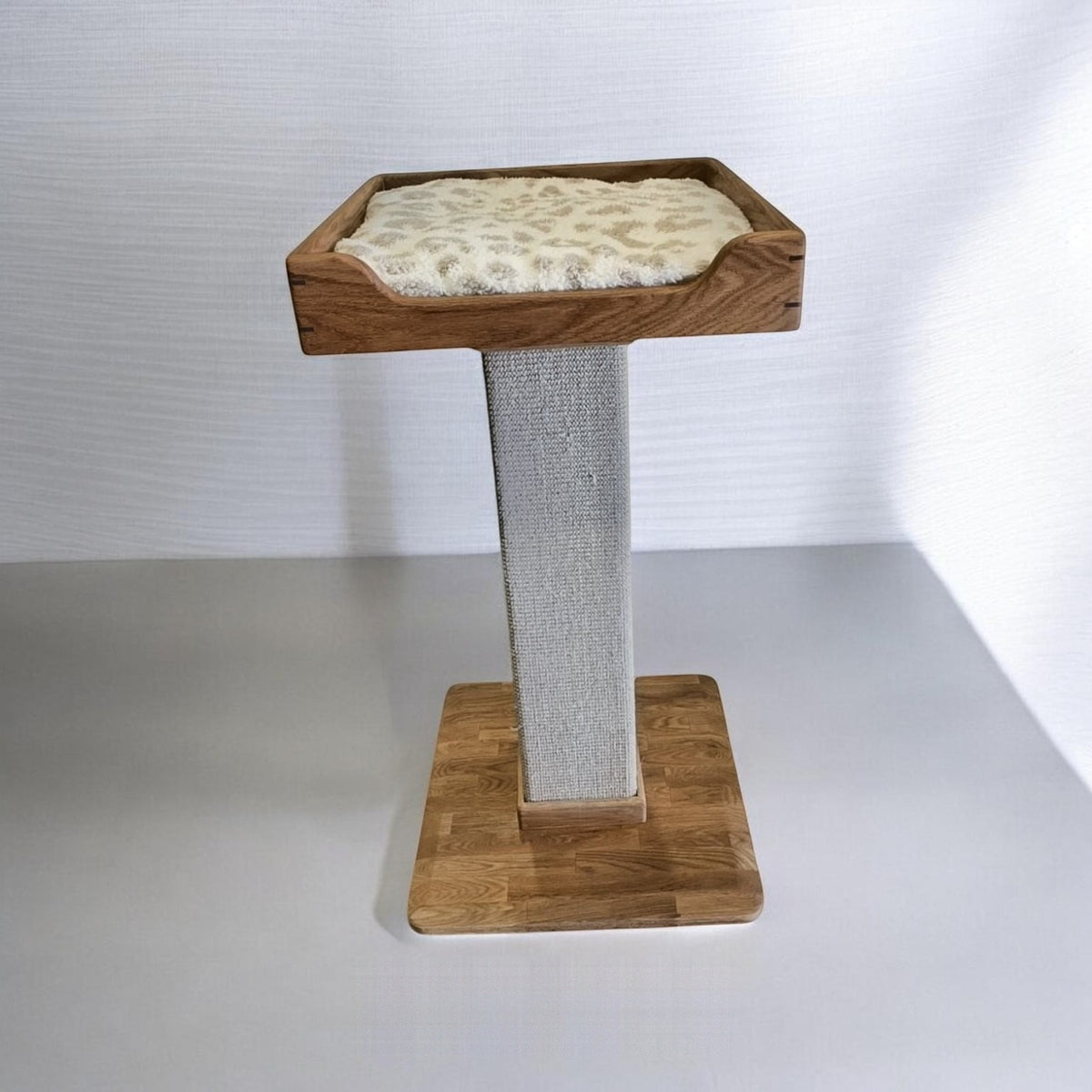
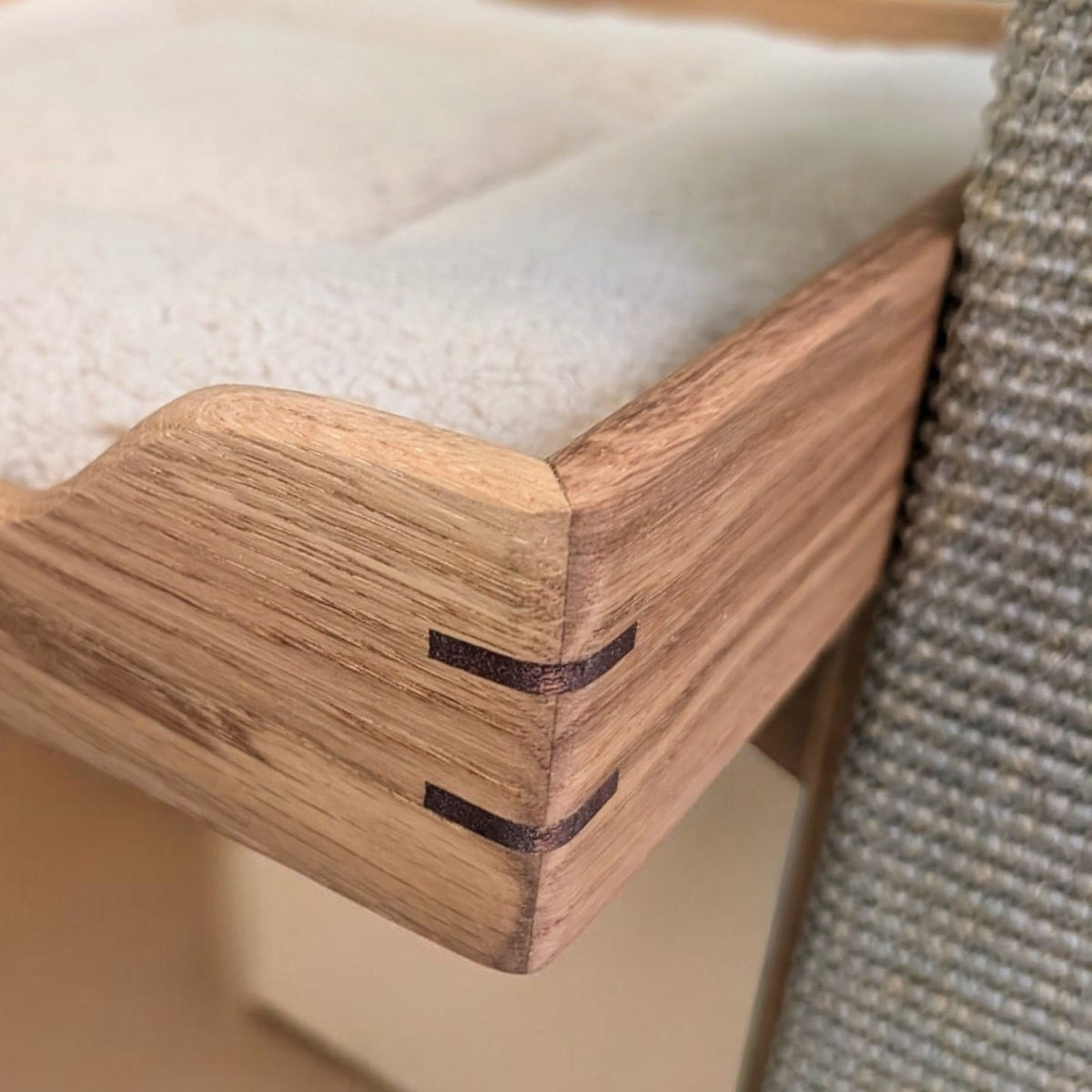
2 colours available
7 colours available
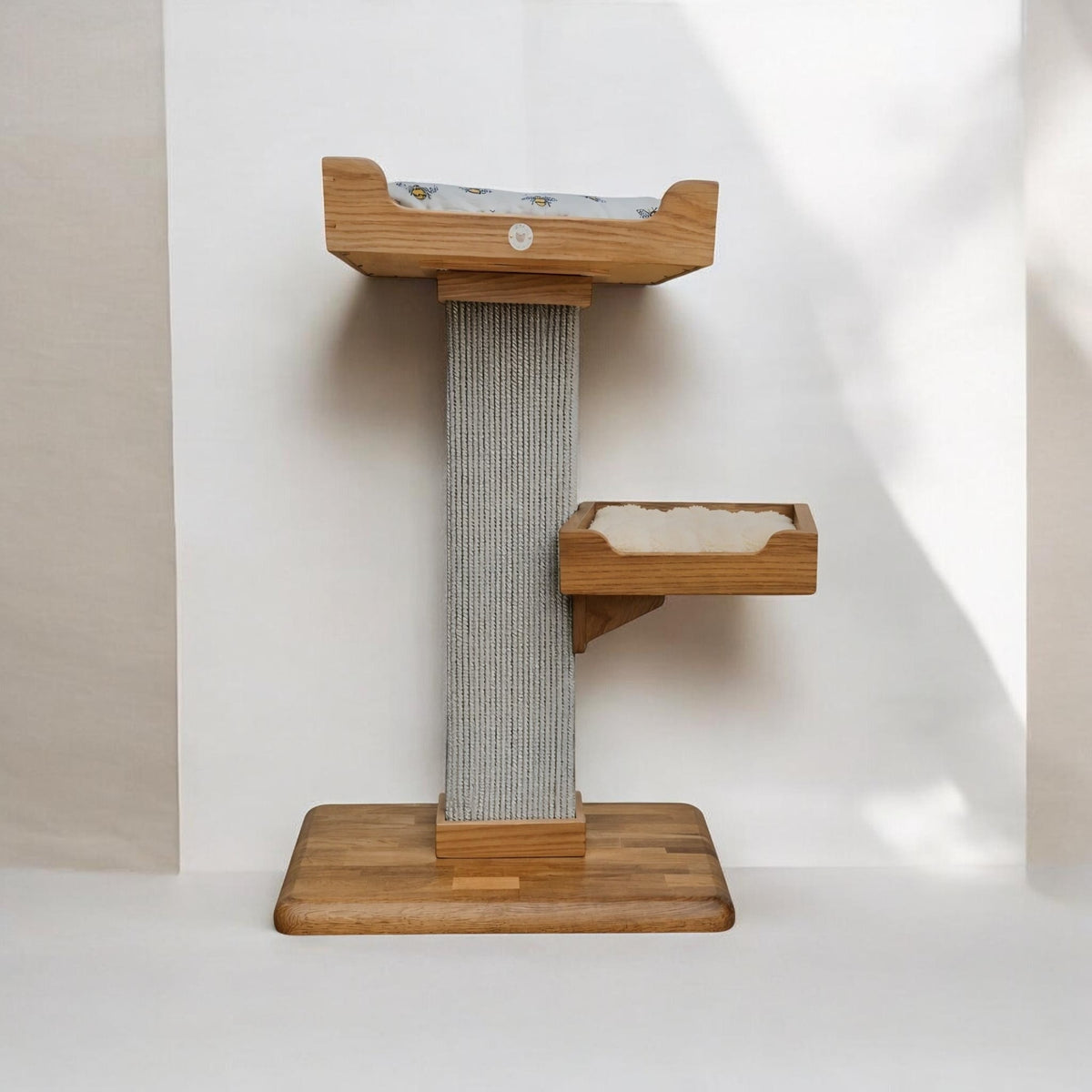
2 colours available
7 colours available
Feeding and the Rest of the Room
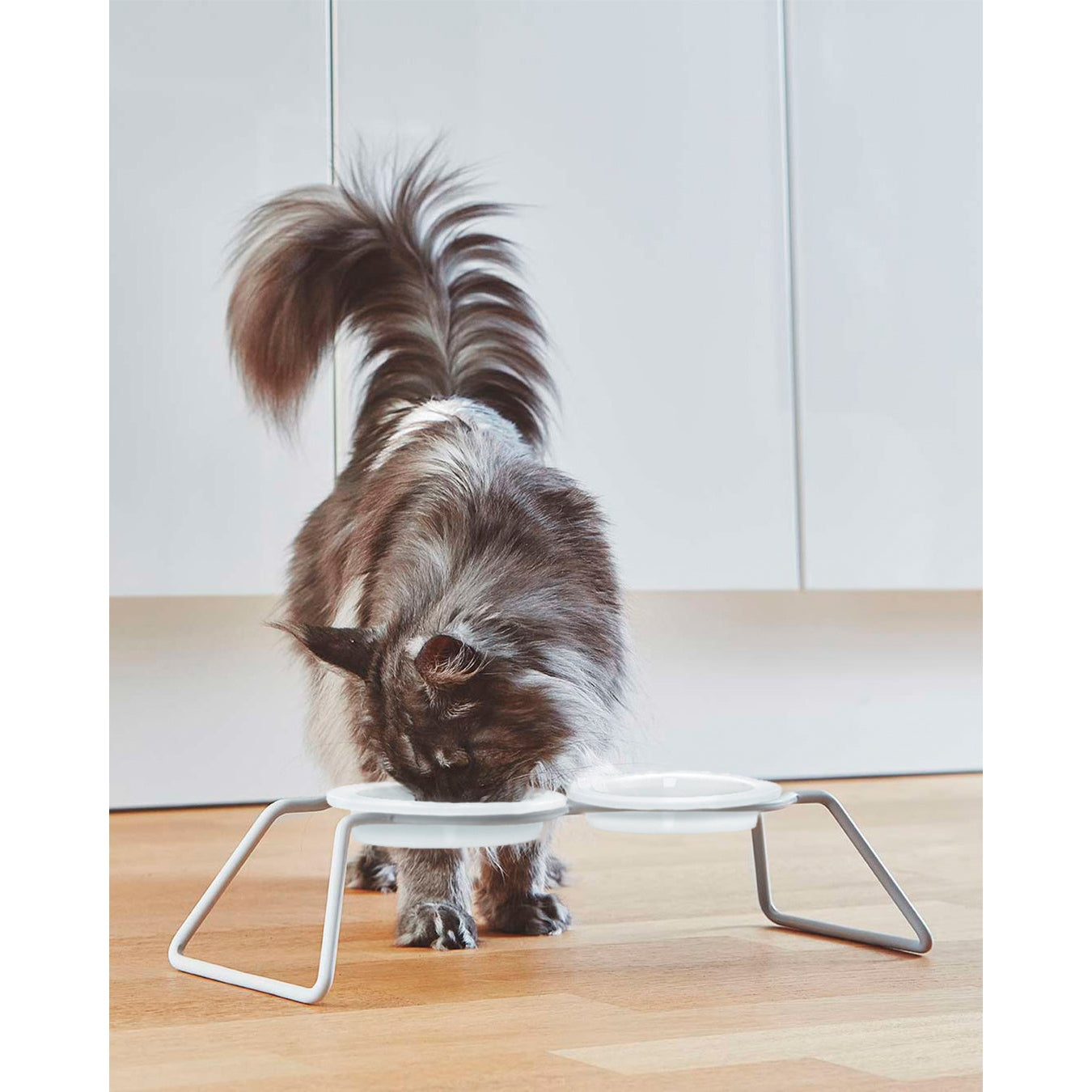
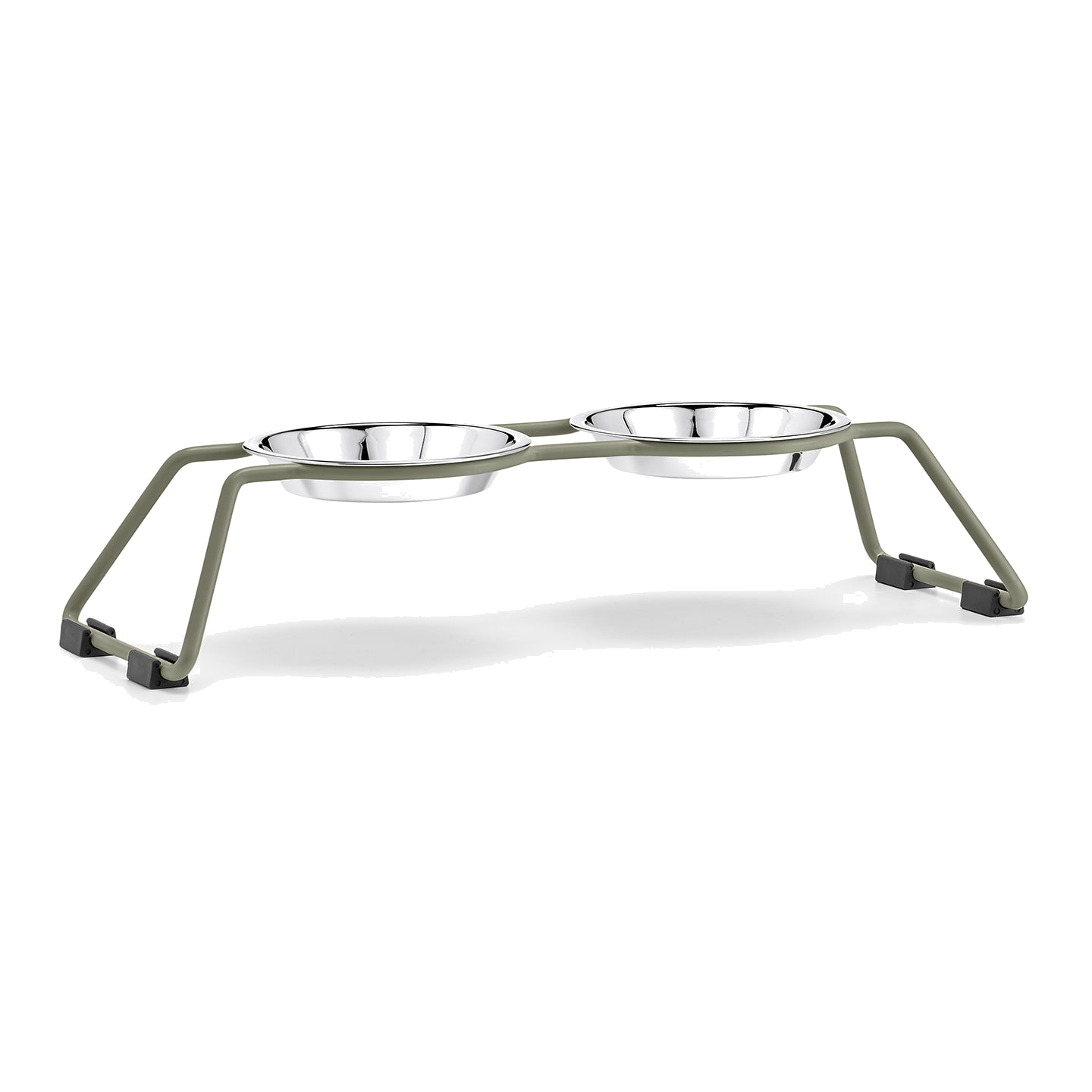
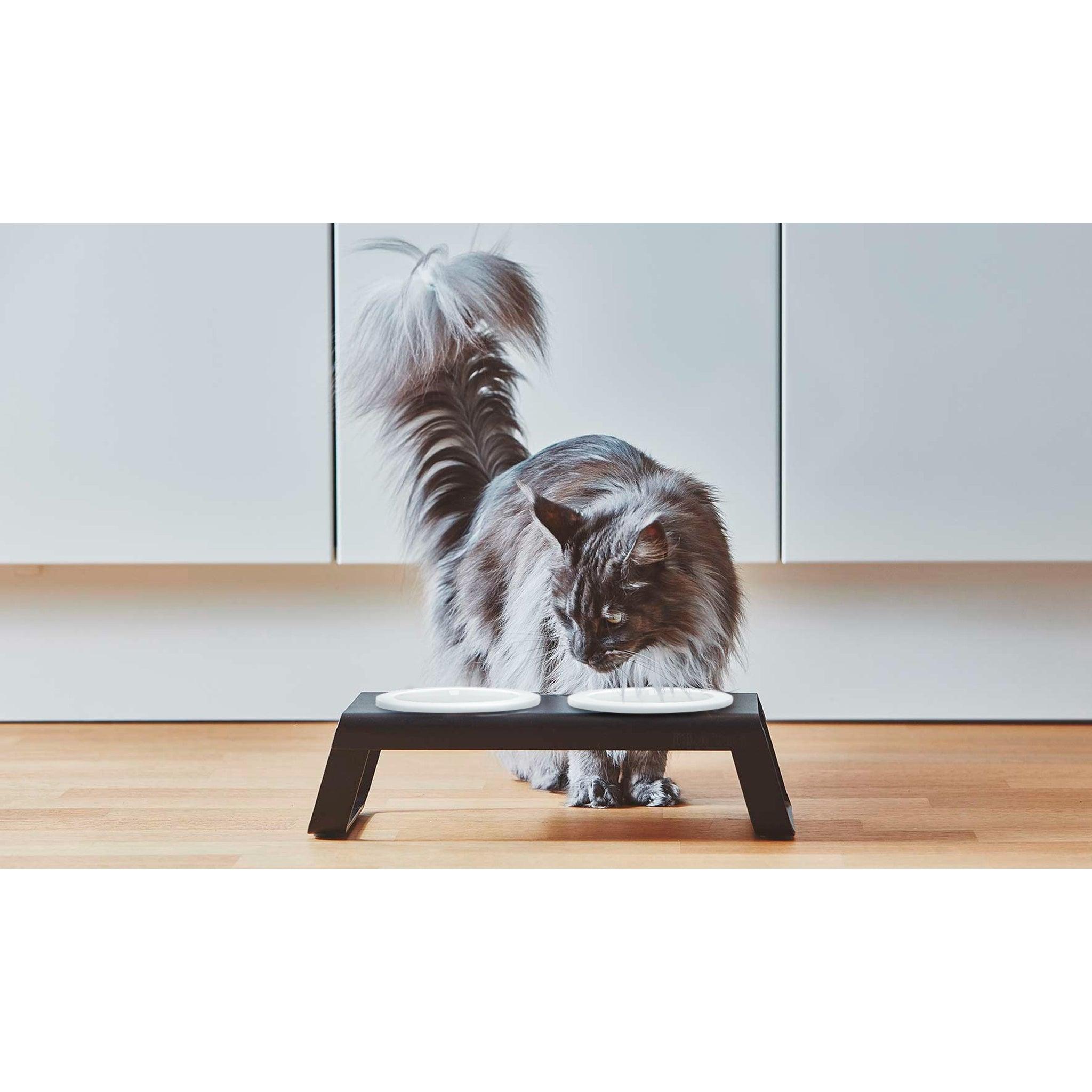
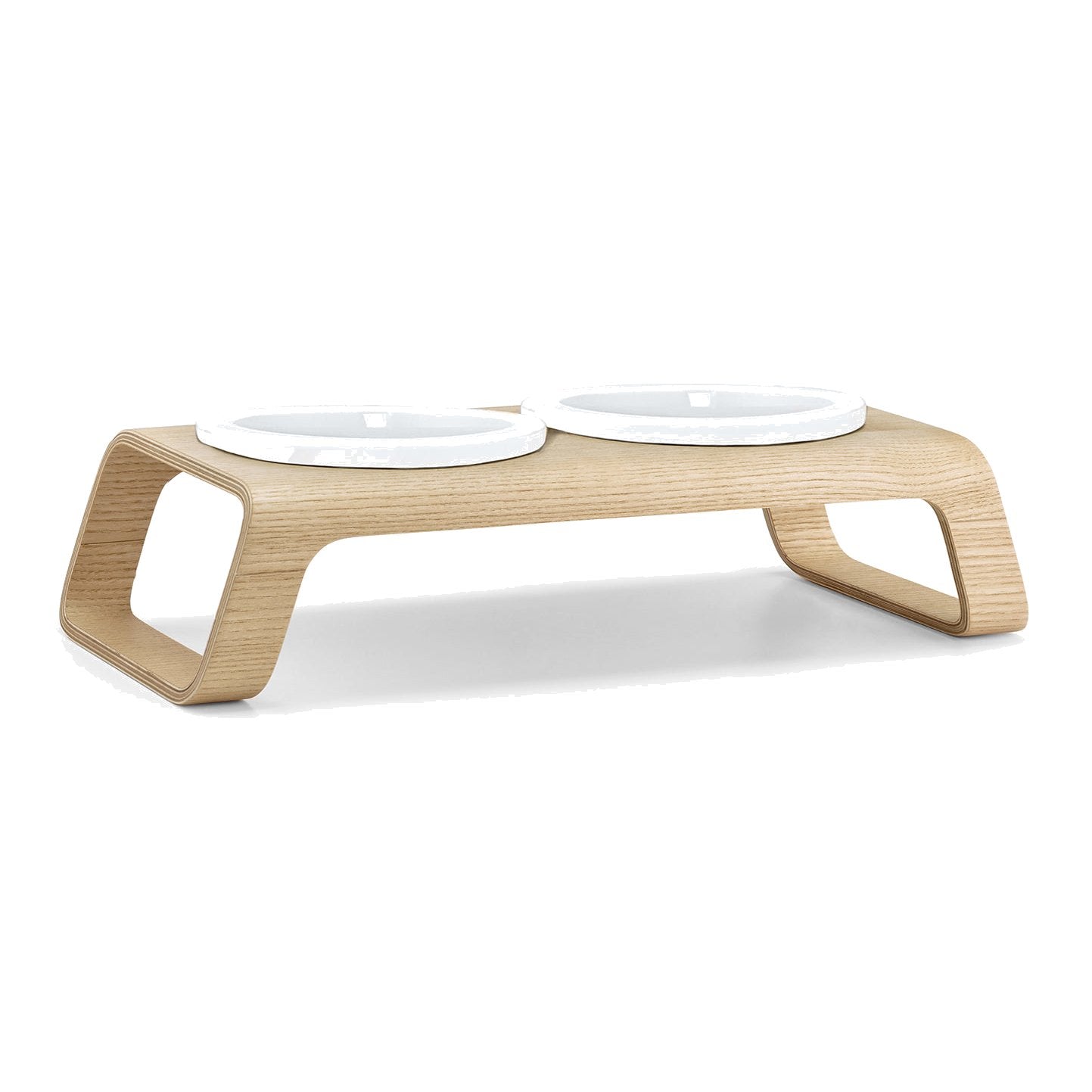
A cat's feeding station is a daily-use fixed point. It sits in a specific spot, in the kitchen, utility room, or a corner of the living space, and it is in view at mealtimes and between them. Choosing a bowl and stand that suit the room as much as the cat is a small decision with a noticeable effect on how composed the overall space feels.
Cats are generally more comfortable eating from a slightly raised position than from floor level, as it reduces neck extension and allows a more natural eating posture. The bowl material, ceramic or stainless steel, determines both the aesthetic and the cleaning routine. Neither is a hygiene compromise; the decision is primarily about which material belongs in the room alongside everything else.
The full range of cat bowls and feeders is at Cat Bowls and Feeders.
Shop Cat Bowls & Feeders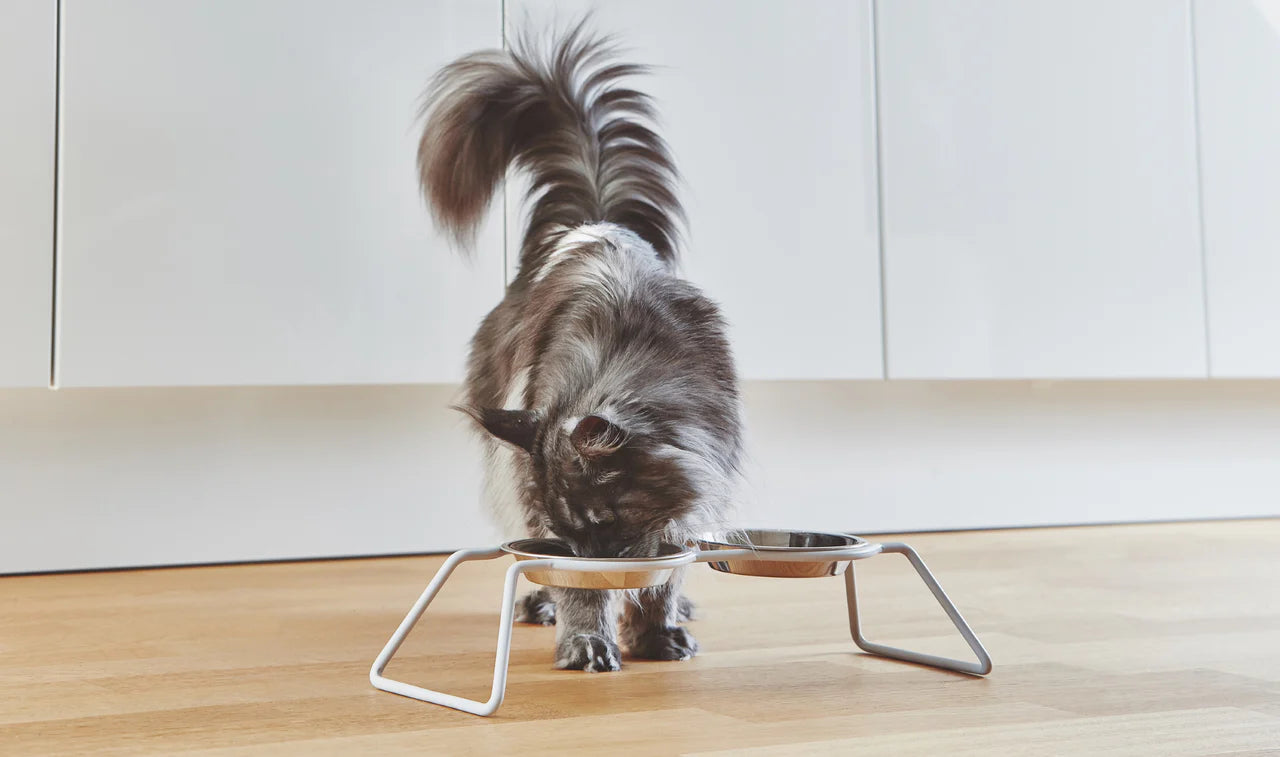
Cat Bowls & Feeders
6 colours available


2 colours available


2 colours available
Designing for Cats and Dogs in the Same Home
Many homes include both a cat and one or more dogs, which means the same design thinking applies across both species at once. The underlying principles are similar: choose pieces made to the same standard as the rest of the room, use materials that clean easily and hold their form over years, and pay attention to how each piece relates to its surroundings.
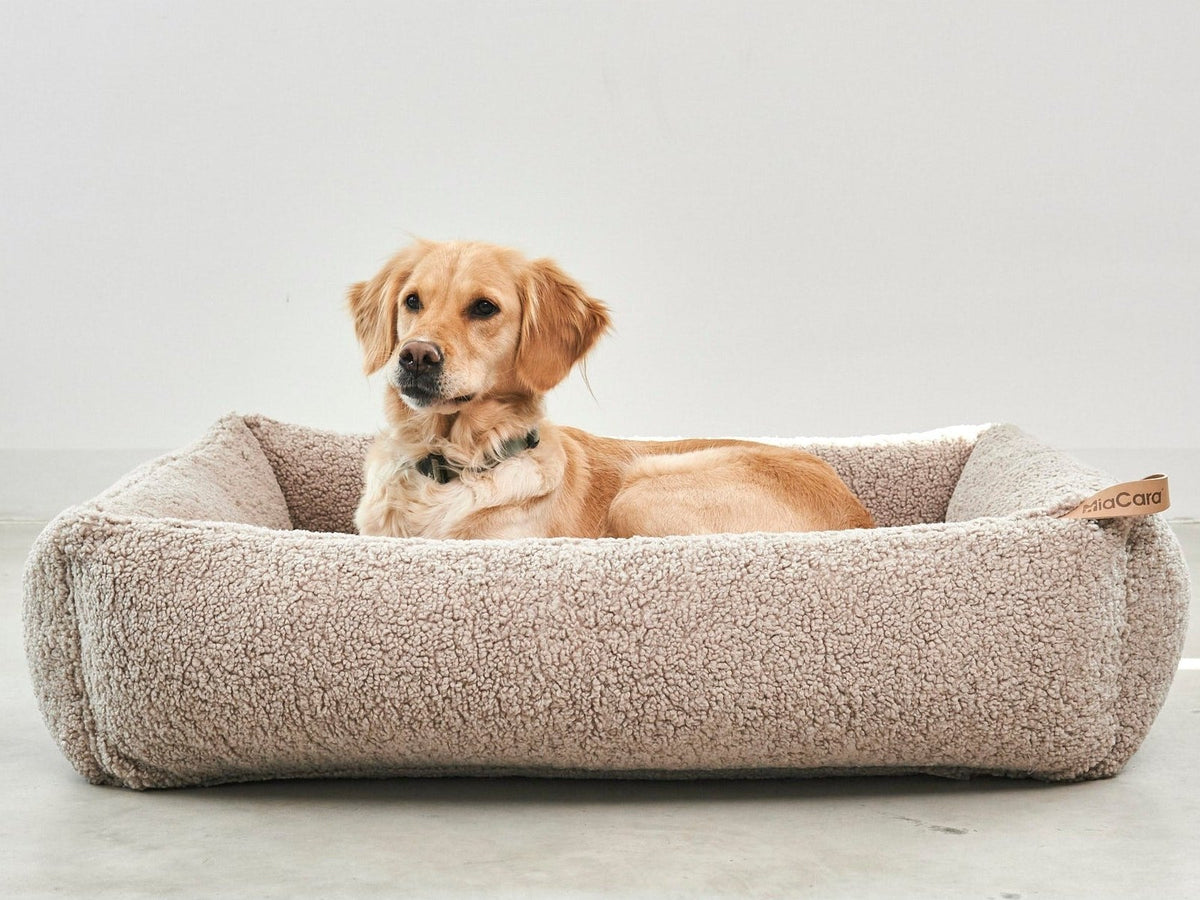
The specific requirements diverge significantly by species. Dogs sleep at floor level and eat at height. Cats climb, perch, and want vertical space with clear sightlines across the room. A considered home with both will often have a floor-level sleeping space for the dog and a wall-mounted shelf arrangement that keeps the cat above the activity of the room. The two coexist without visual conflict when the materials and finishes are chosen with the same hand across both.
The Luxury Dog Living guide covers the dog-specific design decisions: sleeping spaces, elevated feeding stations, and outerwear, with the same level of depth as this page. For the whole-home view across both dogs and cats, the Luxury Pet Furniture guide is the starting point.
Frequently Asked Questions
Luxury cat living is the practice of designing a home around a cat's genuine needs with the same deliberate care you bring to the rest of your home. It starts with understanding what the cat actually requires: access to height, clear sightlines, security in a chosen resting space, and furniture chosen for how it works in the room rather than for how it looks in isolation. From there it becomes an aesthetic question: choosing pieces that belong in the space, from makers who treat both what cats need and what good design looks like as non-negotiable.
Start with the wall. Wall-mounted cat shelves with concealed fixings give the cat the vertical access it needs while using wall space that a floor-standing piece would not, and they read as considered wall objects rather than additions applied to a finished room. From there, choose floor-standing furniture, beds, towers, and feeding stations from the same material palette as the rest of the room. A consistent finish across metal, timber, or textile brings the picture together regardless of what each piece is for.
The most consistently used positions are near a window, for warmth and a changing view; at the end of a sofa or chair where the cat can step down easily; and along a wall that gives a sightline across the main activity of the room. Our complete guide to arranging a cat wall covers placement, spacing, and sightlines in full.
A cat wall shelf mounts to the wall using fixings, uses no floor space, and provides one or more elevated resting positions at a chosen height. A cat tower is freestanding, self-contained, and can be repositioned without any wall work. Wall shelves are the better choice where the layout suits them and drilling is possible; towers are more practical in rented homes or where a freestanding piece fits the room better. Both serve the cat's need for height; the decision is logistical and spatial.
The decision is about which material belongs on the specific wall and in the specific room. Metal-frame shelves read as minimal and contemporary and suit rooms with metal hardware, glass, or a pared-back aesthetic. Timber shelves bring warmth and suit rooms where wood is already the dominant material. Both use concealed fixings and carry a 2-year frame warranty from Cat's Atelier. The cat's preference is for height and a comfortable cushion; the material choice is for the room.
Yes, with the right choices. Wall-mounted cat shelves require fixings into the wall, which may need landlord permission for certain wall types. Freestanding cat towers require no fixings at all and can be moved at the end of a tenancy. For rented spaces where full wall mounting is not possible, a freestanding tower alongside a single low-mounted shelf is a practical approach that still gives the cat the height and variety it needs.
About This Guide
This guide is written by Martin Goodwin and Danielle Lyner, the founders of Deluxe Pet Co. We built Deluxe Pet Co to bring design-led pet furniture from independent European makers together in one place, chosen against a single standard: a piece has to be genuinely well made, and it has to belong in a considered home rather than sit awkwardly in it. Every product featured here is one we have selected and assessed against that standard.
Deluxe Pet Co curates luxury and design-led pet accessories from independent European makers. The pieces featured here come from Cat's Atelier, a maker of handcrafted wall-mounted cat furniture based in Poland, and MiaCara, a German design brand whose products are designed both in-house and in collaboration with independent European designers.
From the Journal
Why Cats Need Vertical Space — the benefits of height and clear sightlines, and the difference it makes in multi-cat households and smaller living spaces.
How to Choose Designer Cat Furniture — what to look for across shelves, towers, and perches, including material and placement decisions.
Cat Tower Placement: Interior Design Tips — natural light, room flow, and how a tower relates to the other furniture in the space.