Article: Designer Cat Furniture: A Buying Guide to Luxury Wall Shelves, Towers & Perches
Designer Cat Furniture: A Buying Guide to Luxury Wall Shelves, Towers & Perches
Choosing furniture for your cat involves balancing their natural instincts with your home's aesthetic. Unlike dogs, cats spend up to 16 hours a day resting and surveying their territory from elevated positions. Modern cat furniture has evolved far beyond carpeted towers and plastic accessories. Today's Wave Cat Wall Shelf and similar pieces marry feline behaviour with considered design, creating furniture that enhances your interior whilst providing genuine enrichment for your cat.
Understanding Your Cat's Vertical Territory Needs
Cats aren't just being aloof when they seek height. They're following millions of years of evolution that programmed them to feel secure when they can observe their surroundings from above. According to International Cat Care, suitable high resting places give cats an additional sense of security, and vertical space is a genuine part of a cat-friendly home alongside floor-level territory. Your cat needs multiple levels to patrol, rest, and retreat.
Quality cat furniture acknowledges this behaviour rather than fighting it. A well-planned vertical environment reduces stress, particularly in multi-cat households where elevated spaces provide natural hierarchy solutions. Your cat will instinctively choose the highest secure perch available, so providing purpose-built options prevents them claiming your wardrobe or kitchen shelves instead.
The key difference between functional and truly excellent cat furniture lies in understanding these natural preferences. Height alone isn't enough. Your cat needs stability, easy access routes, and surfaces that feel secure underfoot.
Wall Shelves vs Cat Towers: Finding the Right Solution
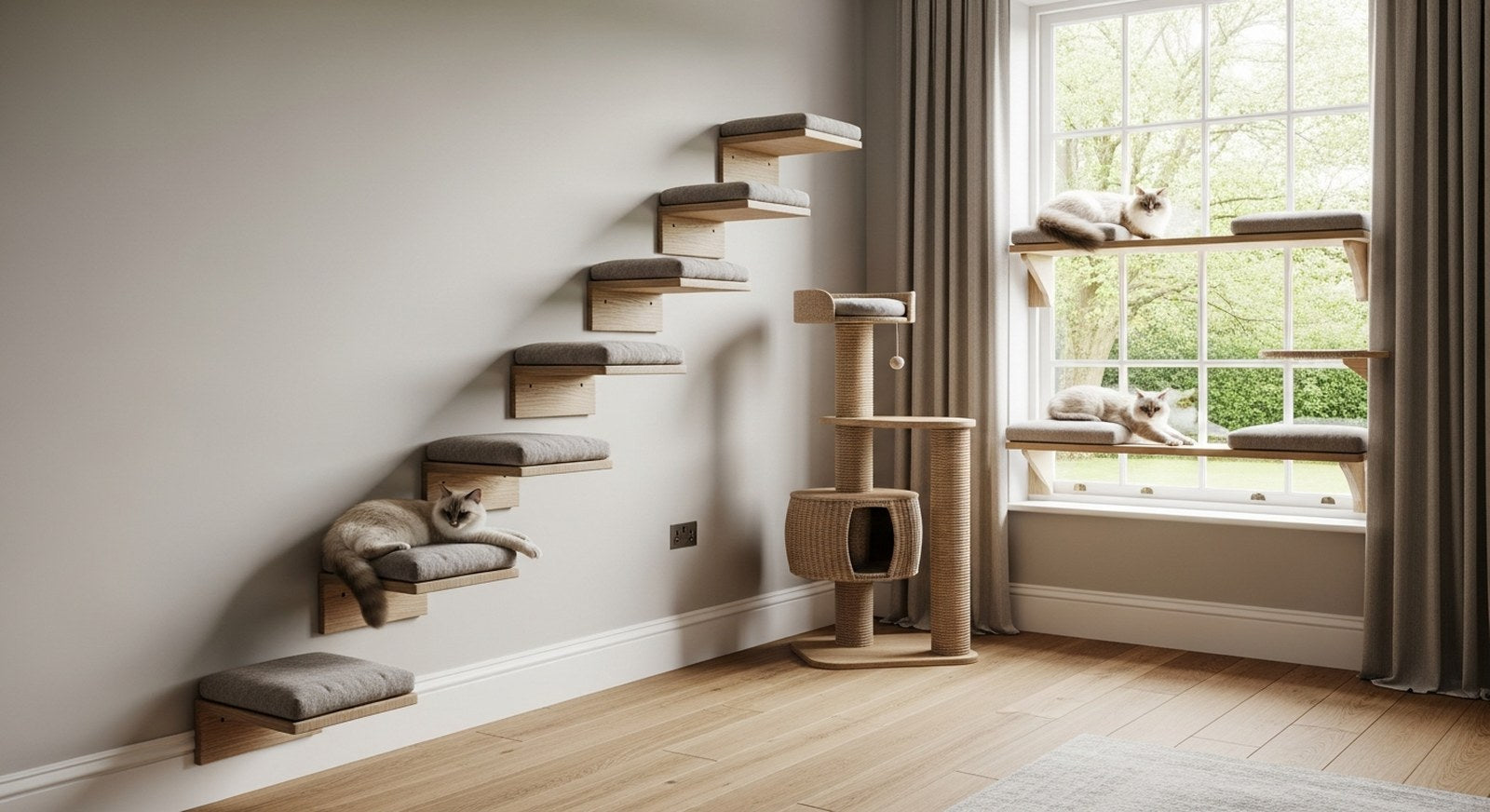
Cat wall shelves offer flexibility that traditional towers can't match. They create vertical pathways without consuming floor space, particularly welcome in homes where every square metre counts. Unlike standalone towers, wall shelves allow you to design custom routes that work with your room's layout and your cat's personality.
The Arcing Haven Cat Wall Shelf exemplifies this approach. Its flowing design provides secure footing whilst complementing modern interiors. The gentle curves aren't purely aesthetic, they create natural stopping points that encourage your cat to pause and survey their domain.
Cat towers excel where you need an immediate, complete vertical solution. They're ideal for introducing vertical space to cats unfamiliar with climbing, as the structured levels provide obvious stepping stones. Towers also offer built-in variety including different textures, hiding spots, and perching options all in one footprint.
Consider your cat's age and mobility. Younger, more agile cats might relish the challenge of well-spaced wall shelves. Older cats or those with joint concerns often prefer the graduated levels of a tower with closer spacing between platforms.
Material Choices: Wood, Metal, and Hybrid Designs
Material selection affects both longevity and your cat's comfort. Solid wood shelves provide natural grip and temperature regulation. Wood also absorbs vibration better than metal, creating a more stable feel when your cat lands. The natural texture appeals to cats' preference for organic surfaces they can grip with their claws.
Metal frameworks offer exceptional strength-to-weight ratios, crucial for installations. They're also easier to clean thoroughly, important for households dealing with allergies or multiple pets. However, metal surfaces can feel cold and slippery to cats, which is why the best designs pair a strong frame with a comfortable, removable cushion.
Look for removable cushions or replaceable surface materials. Even the most careful cat will occasionally have accidents or shed heavily during seasonal changes. Furniture that allows you to refresh surfaces without replacing entire units provides long-term value.
Quality joinery matters more than material choice. Poorly constructed wooden furniture can develop dangerous wobbles, whilst well-engineered metal pieces remain stable for years. We chose Cat's Atelier for their attention to structural integrity, it's why you'll find their work alongside only a handful of other makers on our site.
Placement and Styling Considerations
Thoughtful placement transforms good cat furniture into territory your cat will actually use. Position primary perches where your cat can observe key areas, typically near windows for outdoor viewing, or overlooking main walkways. Avoid placing high perches directly above seating areas where your cat might feel tempted to launch surprise attacks on unsuspecting humans.
Create escape routes from every elevated position. Cats feel trapped if they can only access a perch via one route. The Cozy Nook Cat Wall Shelf works beautifully as a stepping stone between larger perches, creating the multiple pathway options cats prefer.
Window perches deserve special consideration. Cats naturally gravitate towards windows, but standard sills rarely provide adequate space for comfortable lounging. Purpose-built window furniture expands this prime real estate whilst supporting your cat's weight safely.
Think about sight lines from human eye level too. Well-positioned cat furniture should enhance your room's visual flow rather than creating awkward interruptions. The best pieces work as sculptural elements that happen to serve feline needs, not obviously 'pet furniture' that dominates your décor.
Assessing Quality and Cat-Friendly Features
Genuine cat-friendly design goes beyond appearance. Test stability by applying downward pressure, good furniture shouldn't flex or wobble under a 6kg cat landing with momentum. Wall installations need secure fixings rated for dynamic loads, not just static weight.
Surface texture affects your cat's confidence using the furniture. Completely smooth surfaces can feel unstable, whilst overly rough textures might catch claws uncomfortably. Look for subtle textures that provide grip without creating snag points.
Size matters more than you might expect. Platforms need adequate depth for your cat to turn around comfortably, minimum 25cm for most cats, though larger breeds need correspondingly bigger spaces. Height between levels allows natural jumping distances, typically 30-60cm apart depending on your cat's mobility.
Consider maintenance requirements honestly. Beautiful fabric cushions might complement your décor, but they'll need regular washing. Hard surfaces are easier to clean but might need additional comfort elements. The best designs balance practicality with your cat's comfort preferences.
Creating Multi-Level Environments
The most successful vertical environments offer variety at different heights. Ground level remains important for feeding, playing, and initial access to climbing routes. Mid-level perches around human waist height provide comfortable observation posts without feeling too exposed. High-level perches satisfy your cat's need to survey their entire territory.
Space these levels to match your cat's natural jumping ability. Most cats comfortably manage vertical jumps of 120-150cm from standing, though they prefer shorter hops of 60-90cm for regular use. Multiple route options prevent territorial disputes in multi-cat homes and give single cats the choice they crave.
Temperature zones matter too. Cats seek different comfort levels throughout the day. Morning sun spots, afternoon shade, and evening warmth near radiators all appeal at different times. A well-planned designer cat furniture layout acknowledges these patterns.
Frequently asked questions
How do I know if my cat will use new wall shelves?
Start by observing where your cat naturally likes to perch. If they already seek height by jumping onto furniture, they'll likely embrace purpose-built alternatives. Position the first shelf at a comfortable jumping height from existing furniture, then add higher levels once your cat shows confidence with the initial piece.
What weight can wall shelves for cats safely support?
Quality wall shelves designed for cats handle at least 10kg to account for landing forces, even if your cat weighs considerably less. Always check your wall type and use appropriate fixings, solid walls can support more weight than plasterboard. Professional installation ensures maximum safety for heavier pieces.
How many vertical levels does a cat actually need?
Most cats benefit from 3-4 distinct height levels in their primary territory. This might include floor level, mid-height perches around 60-90cm, and high observation points above human head height. The exact number matters less than providing variety and escape routes between levels.