Article: How to Choose the Right Dog Bed Size for Your Breed
How to Choose the Right Dog Bed Size for Your Breed
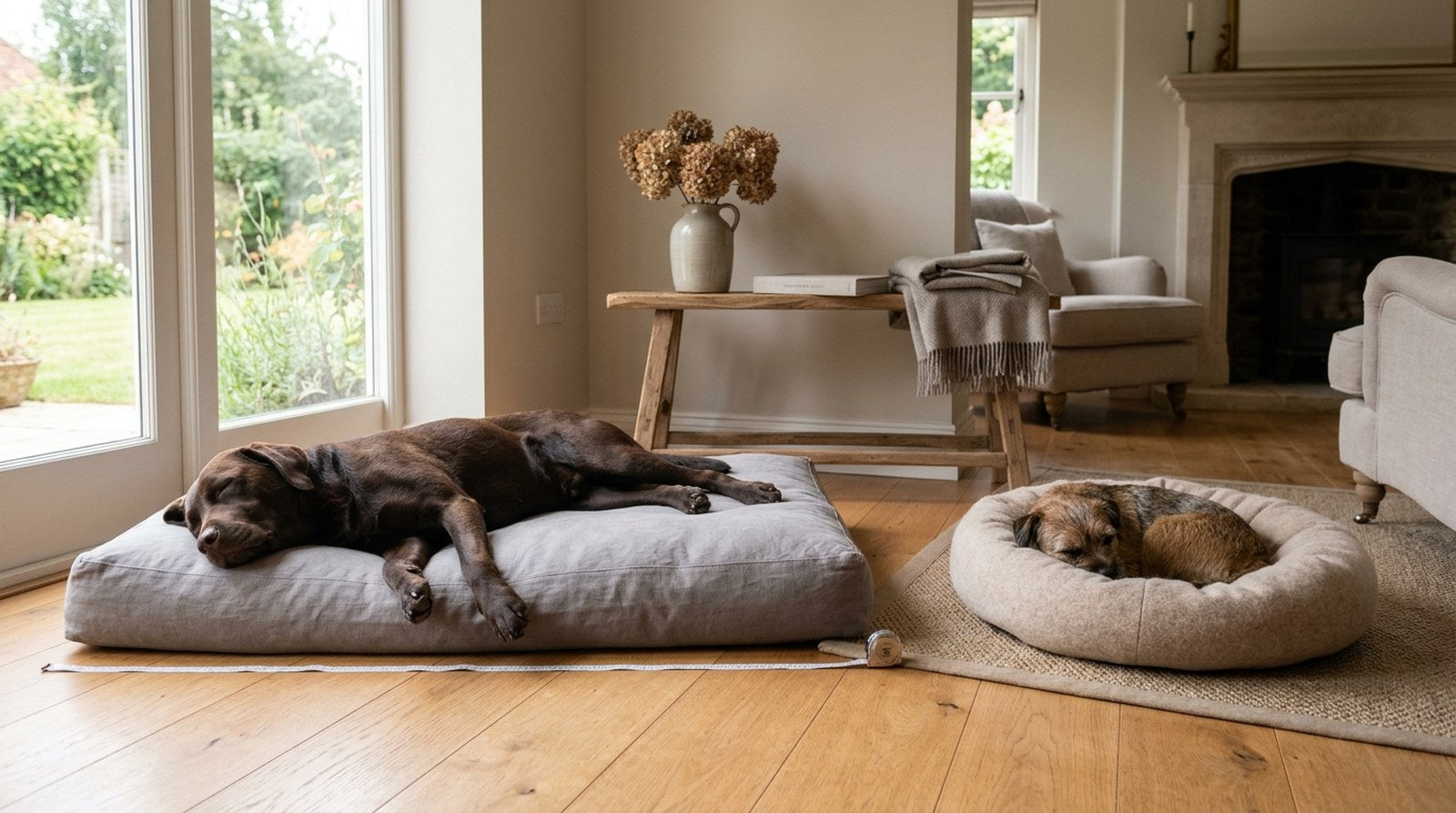
Most dog owners size a bed by weight class and call it done. It's a reasonable starting point, but it doesn't account for how your dog actually sleeps. A Labrador who sprawls like a starfish needs a completely different footprint from a Beagle who curls into a tight ball, even if they weigh the same. Getting the size right means looking at body length, typical sleep position, and a few breed-specific habits that weight guides simply can't capture.
Why weight guides alone won't get you the right dog bed size
Weight is a useful rough filter, but it tells you nothing about how your dog distributes that weight across a sleeping surface. According to the PDSA, most dogs need 14 to 16 hours of sleep or more in every 24, and puppies and older dogs are likely to need the most. With that much time spent horizontal, the dimensions of a bed matter far more than most people realise.
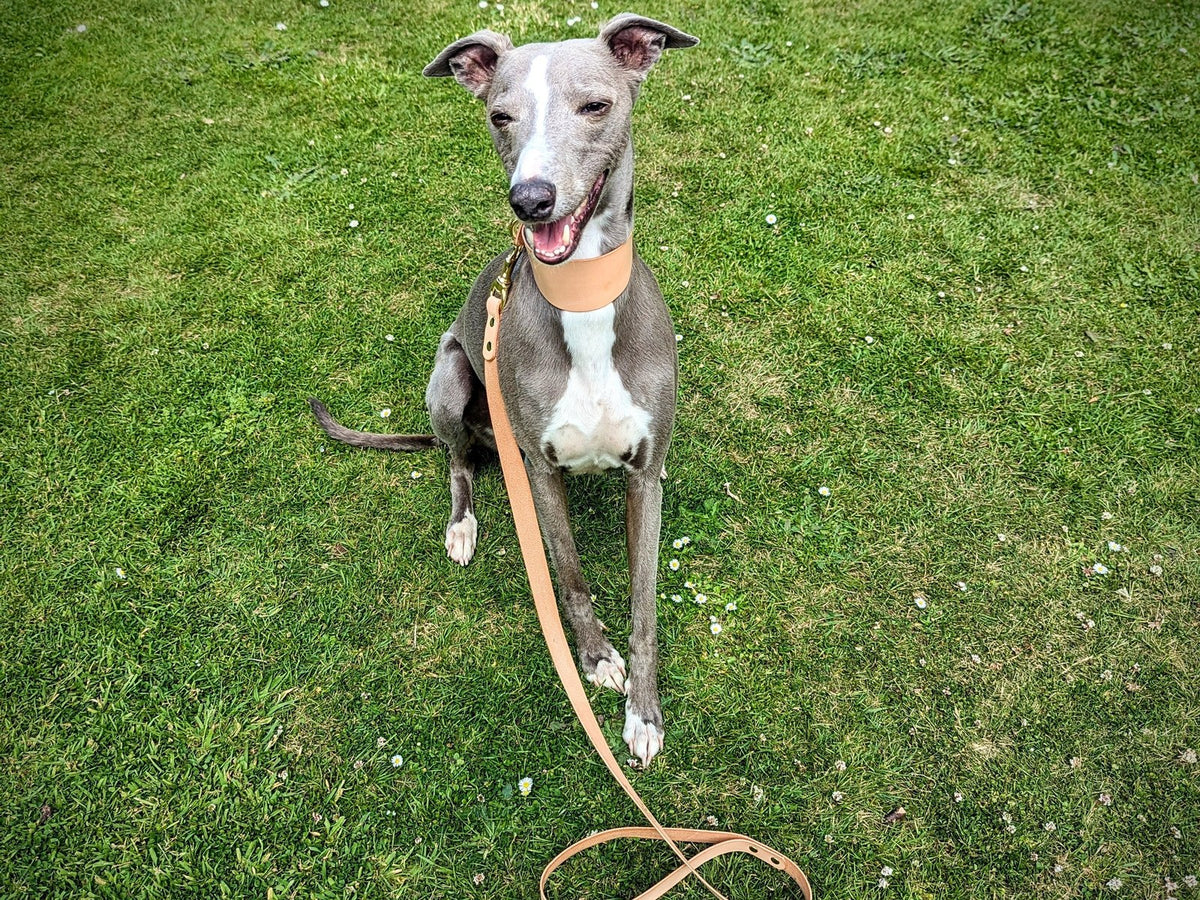
Consider two dogs of similar weight: a Staffordshire Bull Terrier and a Whippet. The Staffie is compact and often sleeps curled or with legs tucked. The Whippet stretches full length, nose to tail. A bed sized for one will feel wrong for the other, despite a near-identical weight. Breed body type, leg length, and torso depth all influence what "the right size" actually means in practice.
There's also the question of depth. Dogs with deep, barrel-shaped chests, Boxers and Rottweilers being the obvious examples, need a bed with enough internal volume to support the shoulder and hip without forcing them into an awkward position. A shallow tray that works for a Spaniel won't suit a dog built like a barrel.
How to measure your dog for a bed
The most reliable method is a two-measurement approach: nose-to-tail body length and shoulder width. Measure your dog while they're lying in their most common sleep position. If they typically sprawl, measure nose to tip of tail. If they curl, take the full length anyway as a reference point for the bed's minimum dimension.
Once you have that number, add roughly 20 to 25 centimetres to find the minimum sleeping surface needed. This gives your dog room to shift position without feeling boxed in, which matters especially during deeper sleep phases. For width, measure across the widest point of your dog's shoulders and add a similar margin. Dogs often sleep with one or both front legs extended sideways, so a bed that only just fits the body won't feel comfortable in practice.
- Sprawlers and side-sleepers (Labradors, Golden Retrievers, Boxers): measure full nose-to-tail length, add 25cm for the bed's internal dimension
- Curlers (terriers, Shih Tzus, Dachshunds): measure shoulder to rump when curled, but consider sizing up one step to allow for occasional stretching
- Back-sleepers with legs in the air (Bulldogs, French Bulldogs, Staffies): width is your primary consideration; these dogs benefit from a wide, stable surface rather than a long one
- Mixed sleepers (most dogs shift between positions): take the larger of the two measurements and size up accordingly
For the smallest breeds, where the S and SM sizes are the whole decision, our guide to designer beds for small dogs goes breed by breed from the Chihuahua to the French Bulldog, with the measured dimensions of each size.
Matching sleep habits to the right bed style
Bed shape and structure matter as much as dimensions. A sprawling dog needs a flat, open surface with no obstruction across the sleeping area. A dog who curls tightly, or who rests their chin on a raised edge, often prefers a bolster or box-bed format with a defined surround.
For dogs who love a flat-out sprawl, the Barca Dog Bed from MiaCara is the natural starting point. Its low-profile, open design gives larger breeds the full surface area they need, with nothing to interrupt that full-length stretch. It's the bed we'd reach for first for a Labrador, Golden Retriever, or any dog who tends to claim the entire floor when they lie down.
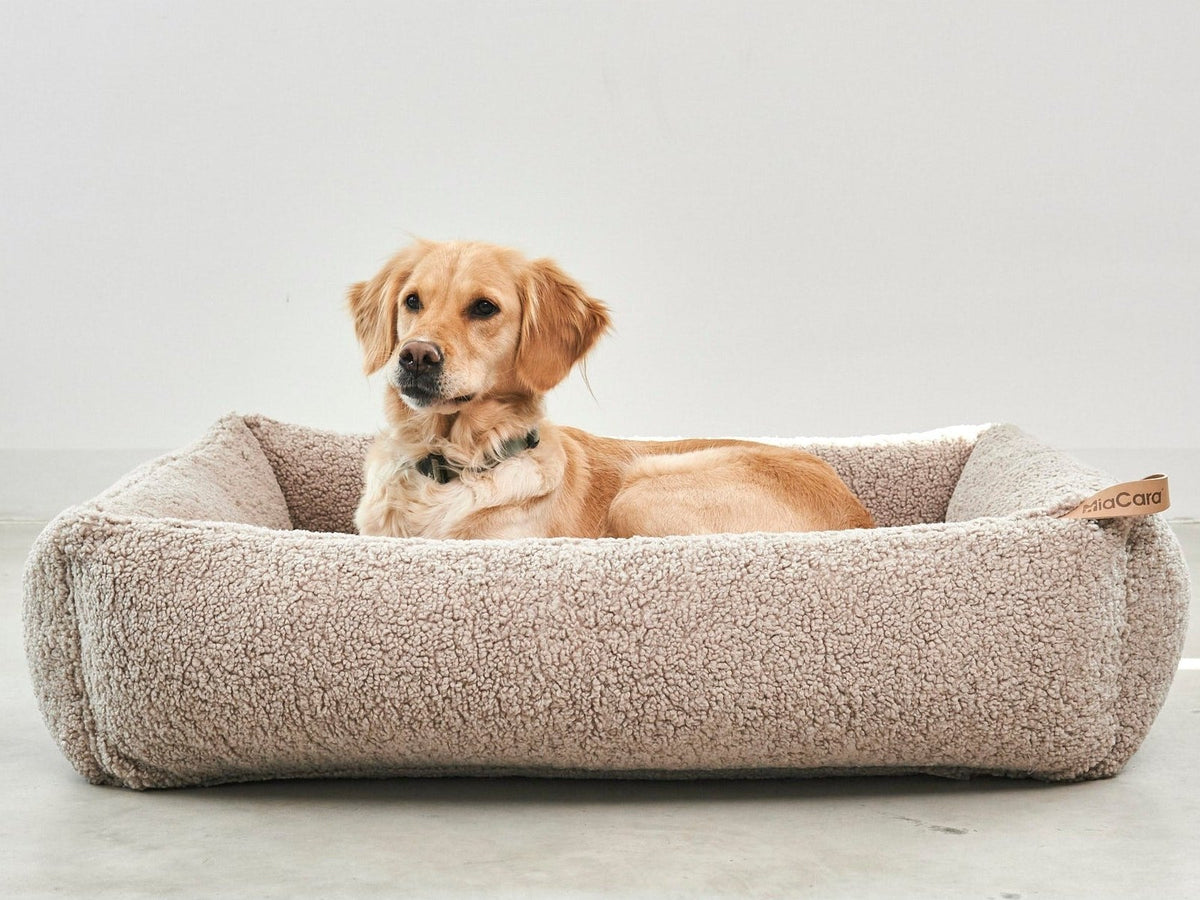
The Senso Dog Bed, also from MiaCara, works particularly well for dogs who like a contained feeling. Its structured walls give a resting point for the head and a sense of enclosure that many medium-to-large breeds find settling. It's the one we'd suggest for dogs who push themselves into corners or press against sofa cushions when they sleep. MiaCara publishes a suggested breed list against every Senso size, from 70 x 55 cm up to 120 x 93 cm, so you can check your dog's build against the range before choosing.
The Mare Dog Bed sits in the middle ground nicely. It has a raised border on three sides, making it a strong choice for dogs who curl but occasionally stretch, or those who like to use the side as a chin rest without the full enclosure of the Senso. If your dog is a genuinely mixed sleeper, this is usually where we'd start.
If you are still weighing up a box bed against a cushion, a basket or a pouffe, our dog bed shapes guide matches each shape to curlers, leaners, sprawlers and nesters. And for what happens after a few weeks of use, the washable dog beds guide lists what comes off and what goes in the machine, bed by bed.
Breed archetypes and what they actually need
Breed characteristics give a useful shortcut when you can't catch your dog sleeping long enough to measure comfortably. These aren't fixed rules, but they reflect real patterns across breed groups.
Large working and retriever breeds (Labradors, German Shepherds, Golden Retrievers) are almost always sprawlers. They need more bed than their weight suggests. A 30kg Labrador might weigh in at a medium on a standard weight chart but needs a large or extra-large sleeping surface to avoid hanging over the edge. An open, flat bed like the Barca is almost always the right call here.
Brachycephalic breeds (Bulldogs, French Bulldogs, Pugs) sleep in shorter, wider positions. They're not generally long dogs, but they need a bed with solid support under the chest and a surface wide enough for the front legs to extend sideways. A firmer base with gentle support is worth prioritising for them.
Terrier group dogs tend to curl tightly and are often comfortable in a smaller footprint than their energy levels would suggest. Sizing up slightly gives them the option to stretch on warmer nights, which they will take.
Giant breeds (Great Danes, Newfoundlands, Bernese Mountain Dogs) are a category of their own. These dogs genuinely need beds sized for their full body length, which often means 120cm or more of usable lying space. Weight alone drastically undersells their spatial needs, and it's worth requesting internal measurements directly from a retailer before buying.
If your dog is between sizes, always go larger. A slightly oversized bed is far preferable to one they'll grow frustrated with after a few nights. Dogs are adaptable, but they do notice when a bed doesn't quite work, and one that's too small often gets abandoned for the sofa. You can compare sizes across the range in our designer dog beds collection.
Frequently asked questions
How do I know if my dog's bed is the right size?
Your dog should be able to lie in their natural sleep position without any part of their body touching the edge or hanging off the side. If they consistently curl up despite normally being a sprawler, or shuffle themselves into one corner, the bed is likely too small. A well-fitted bed lets your dog shift positions freely without feeling restricted.
Should I size up if my dog is still growing?
Yes, particularly if your dog is under 18 months. Measure their current body length, then check the expected adult size for their breed and choose a bed that fits the adult dimensions. Most puppies adapt quickly to a larger surface, and it saves buying twice. Breeds that mature slowly, such as larger working breeds, can take up to two years to reach full size.
What's the difference between internal and external bed dimensions?
Always check the actual sleeping surface, not the overall footprint. Many beds have a thick outer shell or raised bolster that reduces the area your dog can lie on. A bed listed as 90cm may have a usable surface closer to 70cm once the walls are accounted for. When comparing beds, ask for internal measurements if they aren't listed.
For the wider picture, see our luxury dog living guide.