Article: Introducing a Kitten to an Older Cat: The First Two Weeks
Introducing a Kitten to an Older Cat: The First Two Weeks
Most people picture the introduction as a single moment: you open the carrier, the cats sniff noses, and everyone gets on with it. The reality is closer to a slow negotiation conducted in scent, body language and very pointed silences. Done well, two weeks gives both cats enough time and enough control to decide they can live together. Rush it, and you can spend the next few months undoing the damage. The process itself is simple once you know what you are actually managing, which is not affection but information: who is where, who smells of what, and who gets to choose.
Before the kitten arrives: set up a room of their own
The most useful thing you can do happens before the kitten sets foot in your home. Pick a room with a door and make it the kitten's base for at least the first week. A spare bedroom, a bathroom, a utility room. The size matters less than the door.
Set up everything the kitten needs in there: litter tray, water, food, a bed, something to scratch. This is not about shutting the kitten away. It gives the kitten a space that smells entirely of them before any introduction begins, and it leaves your established cat a home that still smells almost entirely of themselves. Both cats will know about each other through scent and sound long before they see each other, and that is the first introduction, at the lowest stakes you will ever get.
Keep your established cat's routine as close to normal as you can manage. Same feeding times, same access to their usual rooms, same attention from you. Whatever does change, your cat will connect with the kitten, fairly or not, so the less that changes the better.
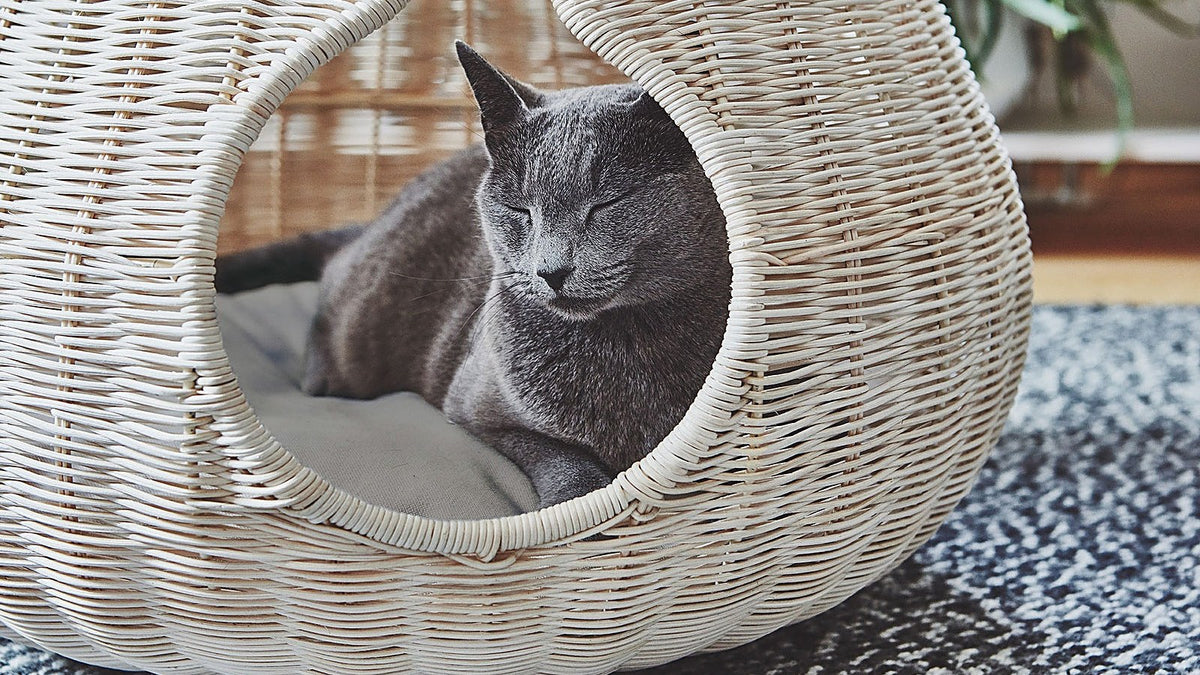
A bed the kitten can call their own matters more than it sounds. Both cats need somewhere that is reliably theirs. Something contained, with sides, tends to suit a small cat still working out where they are safe, and it should stay in the kitten's room for now rather than moving around the house.
Scent swapping and feeding through the door
Once the kitten has been in their room for a day or two and is eating, using the tray and showing some confidence, start swapping scent between them. Cats Protection's advice is to collect scent on a cloth by wiping it gently around one cat's cheeks or forehead, then leave that cloth where the other cat can choose to investigate it or ignore it. Do it in both directions, and put the cloth down near the other cat rather than on top of their food or bed.
Then watch what happens. Curiosity is a good sign. A sniff, then carrying on as normal, is a good sign. Hissing, backing away, or refusing to eat near the cloth means you slow down and give it a couple more days. Neither reaction is a failure. Both tell you where you are.
The next stage is feeding on either side of the closed door. Put both bowls as close to the door as each cat will comfortably tolerate, and over several sessions move them slightly closer. You want each cat to start associating the other's scent with something they enjoy. If either one stops eating or eats and leaves quickly, move the bowls back and take longer over it.
Keep the bowls separate from here on, not just during the introduction. Cats that share a single bowl can end up competing over it quietly, even when they otherwise get on, and two bowls in two places removes the question.
First sightings and supervised meetings
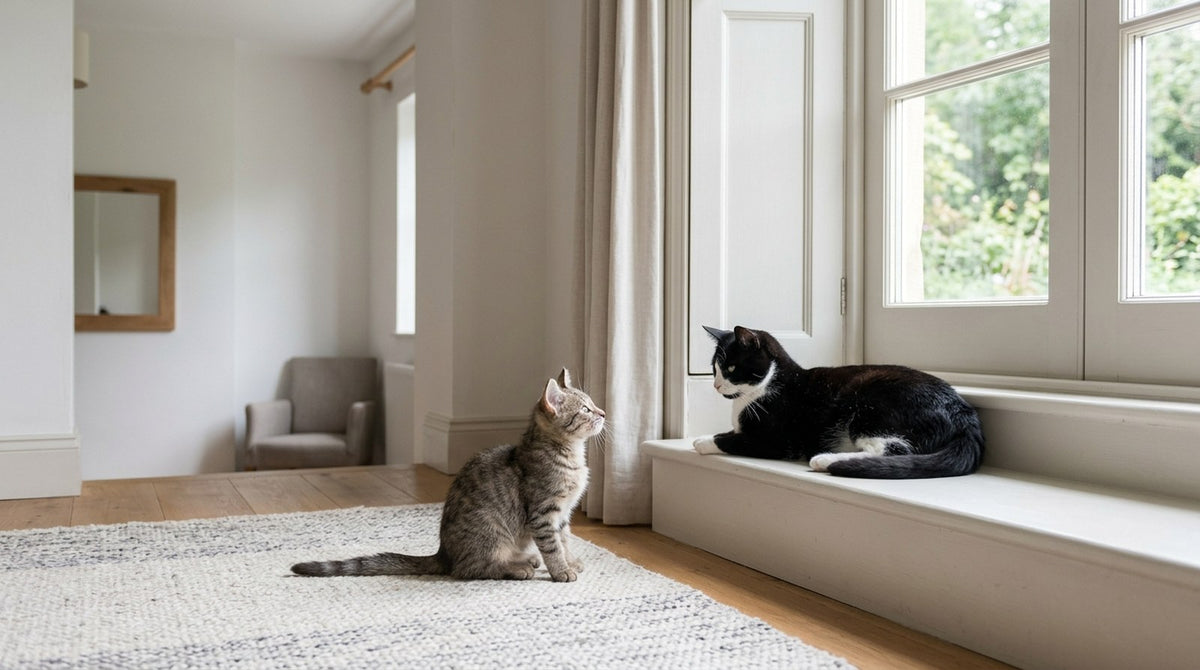
Visual contact comes after several days of scent swapping going well, with both cats eating calmly near the door. The first look should be brief and controlled. A baby gate across the kitten's door works well, because both cats can see each other with a barrier still in place. A closed patio door does the same job if you have one. Some people prop the door open a few inches with a doorstop instead. The point is that neither cat can chase and neither feels cornered.
Keep the first sessions short. A few minutes, then separate them again and follow it with something good: a meal, a treat, a game with you. You are building a pattern where seeing the other cat leads somewhere pleasant rather than into a standoff.
It helps to play with the kitten first and tire them out. An adult cat who wants to nap has limited patience for a kitten with energy to burn, and a calmer kitten makes a calmer first meeting.
Read both cats while it is happening. In the kitten, you want curiosity without recklessness. A kitten who bounds straight at a hissing adult has not learned the signals yet, and you manage that by keeping sessions short rather than leaving the adult to sort it out. In your established cat, some hissing and growling at this stage is normal. Flat ears, a low or lashing tail, and a hard stare that does not break are all reasons to end the session. A slow blink, a turned head, or simply choosing to walk away are signs that tolerance is building.
Why height matters more than space
Once gated introductions are going calmly, move to supervised time in a shared room. This is where vertical territory earns its place. Your established cat needs somewhere to watch from that the kitten cannot reach yet, which gives them height, distance and a clear view without being down at floor level where confrontations happen. The top of a wardrobe will do it. So will a well-positioned wall shelf, which is part of why the Cat's Atelier range we stock is built to go on the wall rather than stand on the floor.
Let the older cat go up and stay there as long as they want. Retreating upward is not the introduction failing. It is the older cat managing the situation themselves, which is exactly what you want them to be able to do.
Pacing by signals, not the calendar
Two weeks is a framework, not a deadline. Some pairs are sleeping in the same room by day ten. Others need three weeks or more before supervised sessions feel genuinely relaxed, and that is normal. International Cat Care sets out the same staged approach to introducing cats and makes the same point about patience being the part that matters.
Signs the pace is too fast: your older cat stops eating properly, starts toileting outside the tray, becomes withdrawn, or holds a tense, watchful posture that does not ease even when the kitten is shut away. Back up a stage, give them more undisturbed time in the main part of the house, and rebuild more slowly.
Signs you can move forward: both cats coming into shared spaces calmly, your established cat curious rather than alarmed, the kitten reading the adult's signals and backing off when told to. They do not need to be friends. They need to be comfortable enough that neither is constantly on edge.
If either cat seems stressed for a long stretch despite a careful introduction, or if there has been real aggression rather than a warning hiss, speak to your vet. They can rule out anything health-related and refer you to a qualified feline behaviourist.
The two weeks are only the start of a much longer cohabitation. Most cats end up somewhere sensible: not inseparable, but tolerant, and occasionally caught asleep a metre apart. It takes the time it takes.
Frequently asked questions
How long does it take for a resident cat to accept a new kitten?
There is no fixed timeline. Some cats settle into comfortable coexistence within two weeks; others take well over a month before the tension genuinely lifts. Pace it by what you see in both cats rather than by the date, and treat steady progress as the goal instead of speed.
Is it normal for my established cat to hiss and growl at the new kitten?
Yes, particularly in the first few days. A hiss or a growl is a warning, and it is useful communication: it tells the kitten where the boundary is. What matters is whether those reactions ease over the following days. If the hissing is constant, or comes with signs of real stress such as not eating or hiding, slow the introduction right down and give the older cat more space and undisturbed time.
Should I just let the two cats sort it out between themselves?
No. Left to themselves, a young kitten reads the warnings too late and an adult who feels cornered escalates, and both cats learn that the other one means trouble. Every stage above exists to stop that happening. Keep sessions short, end them on something good, and let the calmer of the two set the pace.