Article: Sighthound Style: Why Greyhounds Need Special Collars
Sighthound Style: Why Greyhounds Need Special Collars
If you've ever marveled at the elegant silhouette of a greyhound or whippet gliding through a park, you'll understand why these magnificent sighthounds capture hearts wherever they go. However, beneath their graceful exterior lies a unique anatomical structure that requires special consideration when selecting accessories. Particularly important is choosing the right greyhound collar. Unlike their broader-necked canine cousins, sighthounds possess distinctive physical characteristics that make standard collars not just unsuitable, but potentially harmful. Understanding why your sighthound needs a specialised collar isn't merely about style; it's about ensuring their comfort, safety, and wellbeing whilst maintaining that inherent elegance these breeds are renowned for.
The Unique Anatomy of Sighthounds
To understand why sighthounds require special collars, we must first appreciate their distinctive physical characteristics. Greyhounds, whippets, and Italian greyhounds all share a similar anatomical blueprint that sets them apart from other dog breeds. Their necks are notably longer and more slender than those of most dogs, with a graceful curve that flows naturally from their refined heads to their deep chests.
Perhaps most importantly, sighthounds have particularly delicate tracheas and throats. Their windpipes are proportionally narrower and more vulnerable to pressure than those of stockier breeds. This delicate throat structure, combined with their tendency to have less protective muscle and fat around the neck area, means that pressure from an ill-fitting collar can cause serious discomfort or even injury.
Additionally, sighthounds are blessed with what's often described as 'smaller heads relative to their neck size.' This characteristic, whilst contributing to their aerodynamic build, means that standard collars often slide up towards their ears or, conversely, sit too loosely around their necks. The result is either discomfort and potential breathing restriction, or a collar that could easily slip off, creating a safety hazard during walks.
Why Standard Collars Simply Won't Do
Many new sighthound owners make the mistake of purchasing a standard collar, only to discover it's wholly inappropriate for their elegant companion. Traditional dog collars, designed with the average dog's proportions in mind, create several problems when used on sighthounds.
Firstly, the width of most standard collars. Typically ranging from 1 to 2 inches, they concentrate pressure on too small an area of your sighthound's delicate neck. When your dog pulls or even moves suddenly, this concentrated pressure can cause tracheal damage or restrict breathing. Given that sighthounds are naturally athletic and may have bursts of energy, this risk is particularly concerning.
Secondly, standard collars often fail to stay in the correct position on a sighthound's neck. They either ride up towards the throat, where they can interfere with breathing and swallowing, or slide down towards the shoulders, where they become ineffective for control and can cause chafing against the chest.
Finally, many standard collars simply don't complement the elegant lines of a sighthound. These breeds deserve accessories that enhance their natural grace rather than appearing bulky or out of proportion with their refined features.
The Essential Features of a Proper Sighthound Collar
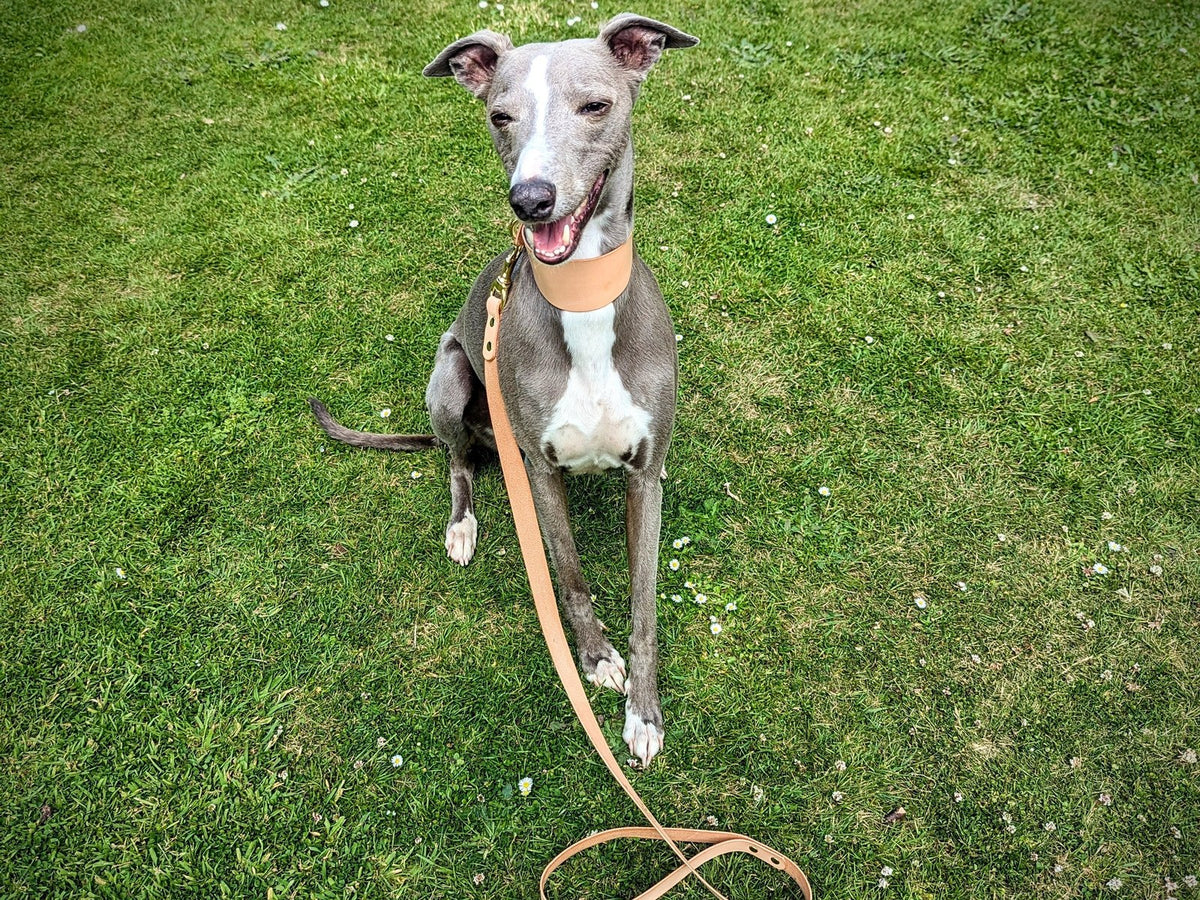
Greyhounds wear thick, wide collars for two connected reasons: protection and fit. Their trachea sits close to the surface of a long, slender neck with very little muscle or fat to cushion it, so a wide collar spreads the pressure of a lead pull or a sudden stop across several centimetres of neck instead of concentrating it on a narrow band, which is what protects the windpipe from injury. Width also keeps the collar in place: because a greyhound's head is narrower than its neck, a thin collar can slide up towards the ears or slip off entirely, whereas a wider, shaped collar, broader across the back of the neck and tapered at the throat, stays seated correctly even at a run.
Understanding what makes a collar suitable for sighthounds is crucial for any owner who wants to prioritise their dog's comfort and safety. The most critical feature is width. A proper sighthound collar should be significantly wider than standard collars, typically measuring between 2 and 3 inches (5 to 7.5cm) across the widest point.
This increased width serves multiple purposes. It distributes pressure across a larger area of the neck, reducing the risk of tracheal damage and making the collar more comfortable during walks. The wider surface area also helps prevent the collar from riding up towards the throat or sliding down towards the chest, keeping it positioned correctly on the neck.
The shape of a sighthound collar is equally important. Many feature a curved or contoured design that follows the natural line of your dog's neck, ensuring a comfortable fit that doesn't interfere with their movement or breathing. Some collars also incorporate a slight taper, being wider at the back of the neck and narrower towards the throat.
Quality materials are non-negotiable for sighthound collars. Look for soft, supple leather or high-quality fabrics that won't cause chafing or irritation against your dog's sensitive skin. The hardware should be robust enough to handle a sighthound's surprising strength when they spot something interesting, yet refined enough to complement their elegant appearance.
Sizing Considerations
Proper sizing is absolutely crucial when selecting a sighthound collar. The collar should sit comfortably around the widest part of your dog's neck, typically just above the shoulders. You should be able to fit two fingers beneath the collar when it's fastened, ensuring it's secure without being restrictive.
Remember that sighthounds can vary significantly in size. From the petite Italian greyhound to the statuesque greyhound, careful measurement is essential. Always measure your dog's neck circumference with a soft tape measure, and consider their coat thickness if they wear jumpers during colder months.
Style Meets Function: Choosing the Perfect Design
Whilst functionality is paramount, there's no reason why your sighthound's collar can't be a stunning accessory that complements their natural elegance. The key is finding pieces that balance practical requirements with aesthetic appeal.
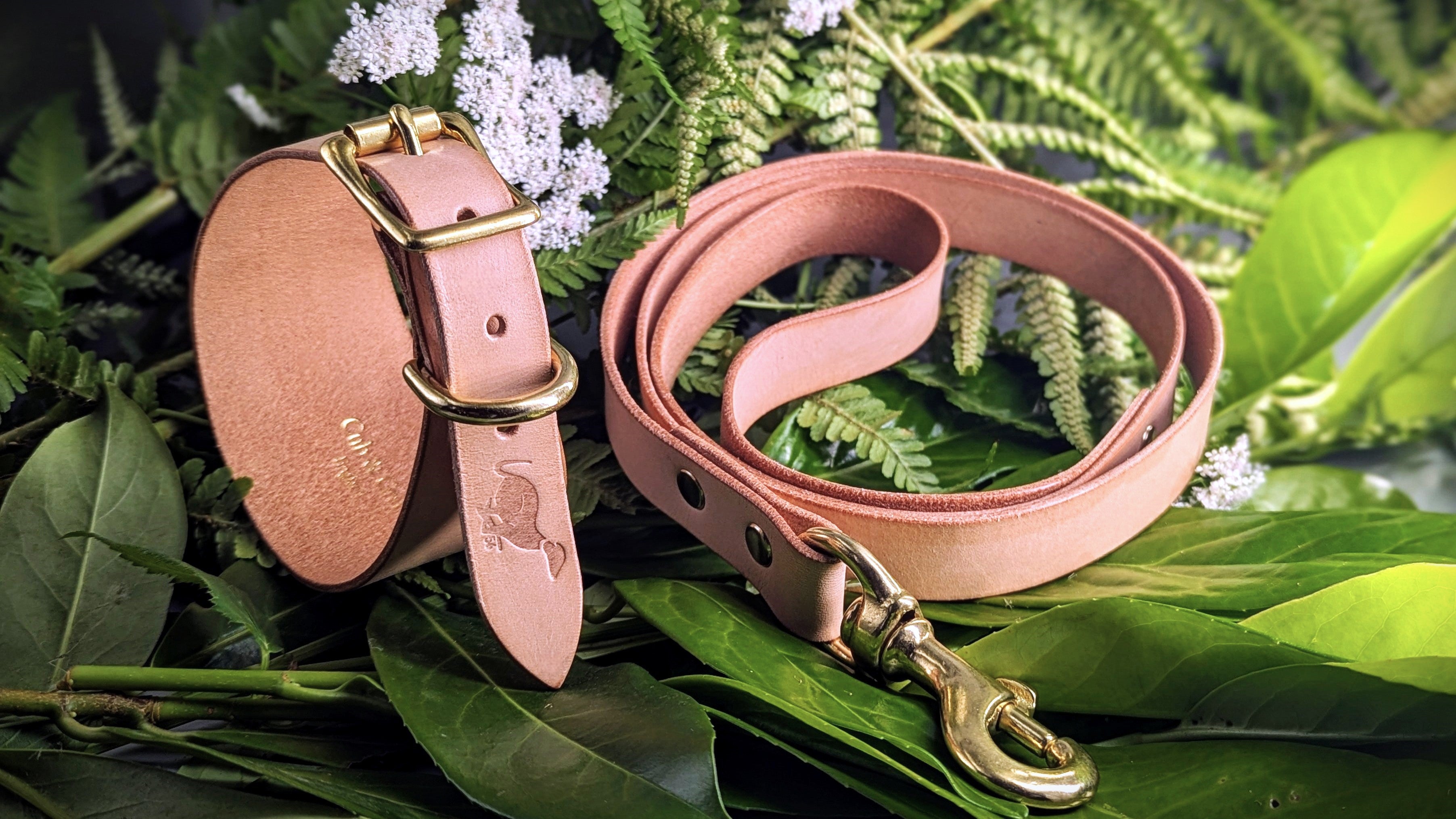
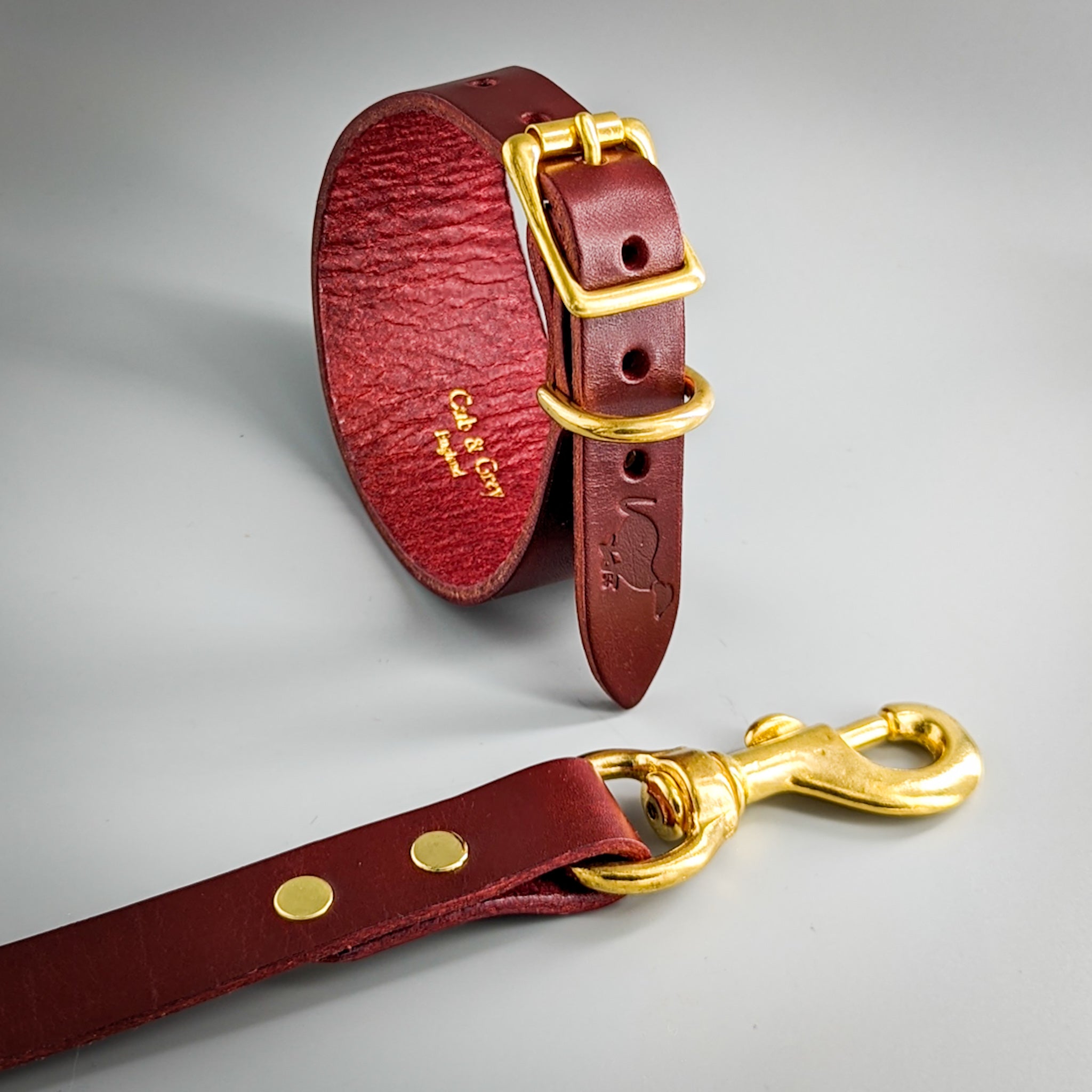
Classic leather remains the gold standard for sighthound collars, offering durability, comfort, and timeless style. Rich, supple leather develops a beautiful patina over time and can withstand the rigours of daily wear whilst looking increasingly distinguished. For those seeking something special, hand-crafted options like the Cub & Grey Leather Hound Collar offer exceptional quality and attention to detail that matches the refinement of your sighthound. Whippet owners pairing a collar with a matching lead can opt for the Whippet Collar & Lead Set, cut from the same hide and shaped to the same sighthound profile.
Colour selection can enhance your dog's natural beauty. Traditional colours like tan, brown, and black are versatile choices that complement any coat colour, whilst more adventurous owners might opt for rich burgundies, deep greens, or even subtle metallics that catch the light as your sighthound moves.
For larger sighthounds, particularly greyhounds and larger whippets, consider designs specifically created for bigger breeds. Options like XL Hound Collar ensure that even the most substantial sighthounds have access to properly proportioned, stylish accessories that meet their specific needs.
Decorative Elements
Many sighthound collars feature subtle decorative elements that add interest without overwhelming the dog's natural lines. Brass or silver hardware can provide an elegant accent, whilst discreet stitching details or small studs can add personality without appearing gaudy.
However, it's important to ensure that any decorative elements won't cause discomfort or catch on objects during walks. The best sighthound collar designs incorporate embellishments that lie flat against the collar and won't rub against your dog's skin.
Care and Maintenance for Longevity
A quality sighthound collar represents an investment in your dog's comfort and safety, so proper care is essential to ensure it serves your companion well for years to come. Leather collars require regular conditioning to maintain their suppleness and prevent cracking. Use a high-quality leather conditioner every few months, or more frequently if your dog swims regularly or the collar is exposed to harsh weather.
Regular cleaning is also important, particularly as sighthounds are active dogs who may accumulate dirt and debris during their adventures. For leather collars, use a damp cloth to remove surface dirt, followed by appropriate leather cleaner for deeper cleaning. Always allow the collar to dry completely before conditioning.
Inspect your sighthound's collar regularly for signs of wear, paying particular attention to the stitching and hardware. Given the strength and speed that sighthounds can display when something catches their interest, ensuring the collar's integrity is crucial for safety.
Conclusion
Selecting the right collar for your sighthound isn't simply a matter of preference. It's an essential aspect of responsible ownership that directly impacts your dog's comfort, safety, and wellbeing. By understanding the unique anatomical needs of greyhounds, whippets, and Italian greyhounds, you can make an informed choice that protects their delicate throat structure whilst celebrating their inherent elegance.
Remember that a proper sighthound collar should be wide enough to distribute pressure, crafted from quality materials that won't cause irritation, and designed to stay in the correct position on your dog's distinctive neck shape. When you combine these functional requirements with thoughtful styling choices, you create the perfect accessory that enhances your sighthound's natural grace whilst ensuring their comfort on every adventure.
Your elegant companion deserves accessories that match their refined nature and meet their specific needs. Investing in a properly designed sighthound collar is one of the most important decisions you'll make for your dog's daily comfort and long-term health.
Greyhound collars: quick answers
Why do greyhounds wear thick collars? Greyhounds wear thick collars to protect their delicate windpipe. Their neck has very little muscle or fat cushioning the trachea, so pressure from a normal flat collar concentrates on a small area and can cause discomfort or injury. A thick, wide collar, generally several centimetres across, spreads that same pressure over a much larger area of the neck, which is why sighthound-specific collars are built wider than a standard dog collar.
Why do greyhounds have wide collars? Wide collars suit greyhounds because their neck is long and slender with little padding around the throat. Widening the collar increases the surface area in contact with the neck, so everyday pressure from walking on a lead, or a sudden lunge, is distributed rather than concentrated on the windpipe. The wider profile also helps the collar sit correctly instead of twisting or riding up towards the ears.
Why do greyhounds have thick collars? A greyhound's head is narrower than its neck, so a standard collar can slide up towards the ears or slip off entirely once fastened loosely enough to be comfortable. A thick, wider collar, usually shaped broader across the back of the neck and tapered at the throat, stays seated in the correct position during a walk or a run, which is why thicker collars are the standard recommendation for the breed.
How wide should a greyhound's collar be? There is no single industry figure, but our Leather Hound Collar and Leather XL Hound Collar are noticeably wider than a standard flat collar, typically in the region of 5 to 7.5cm (roughly 2 to 3 inches) at the widest point, tapering to a narrower section at the throat. The right width for an individual dog depends on neck size and coat thickness, so always measure rather than judge by eye.
How do I know if a sighthound collar fits correctly? A correctly fitted sighthound collar should feel secure without tension, with room for two fingers flat underneath once fastened. It should not be possible to slide the collar forward over the ears, and it should stay seated in place rather than rotating around the neck during a walk. Check the fit again after a coat change, or if your dog gains or loses condition.