Article: Why Dogs Circle, Scratch and Dig Their Beds
Why Dogs Circle, Scratch and Dig Their Beds
Walk three circles, paw at the surface, collapse dramatically onto one hip, then repeat the whole sequence at 11pm. If that describes your dog most evenings, you haven't got a problem. You've got a nester. The circling and scratching isn't random, and it's not something to train out. Understanding what your dog is actually doing when they do it makes choosing the right bed considerably more straightforward, because not every bed suits a nester.
Why dogs circle, scratch and nest before settling
The short answer is that your dog is solving a problem their ancestors spent a long time solving. Before beds existed, wild canids patted down grass, leaves and earth to create a flat, smooth resting surface shaped to their body. The circling compresses that material, the pawing redistributes it, and the result is a customised hollow that holds warmth and signals ownership. Your dog is doing exactly the same thing, just to your bouclé cushion.
Temperature regulation plays a role too. In warm conditions, scratching can expose cooler layers beneath the surface. In cold ones, the circling and nosing creates a contained pocket of warmth. The behaviour also does something spatial: it marks the spot as theirs, drawing a clear perimeter around the place they intend to rest. A dog that nests is not confused. They're settling in with intent.
Many of the behaviours we watch our dogs perform indoors trace back to instincts that developed long before dogs lived in houses. The nesting sequence is a good example: it looks odd in a sitting room but makes complete sense in context.
What this means practically is that a committed nester needs a bed that can actually be nested in. A flat cushion with no sides gives them nothing to work with. A bed with structured bolsters they can press against, a generous footprint that allows a full turn, and a filling that reshapes under them rather than compacting into a lump is a bed that makes sense to them.
The bed features that suit a dog that digs and circles
A bolster or raised rim is the single most useful feature you can offer here. It gives them something to press into during the circling phase, something to rest a chin or a shoulder against once they've settled, and a clear boundary that says: this space is mine. Many dogs return to the same bolster corner every evening with an accuracy that would be impressive if it weren't also slightly inconvenient when you're trying to watch television.
Footprint matters more than most people expect. Your dog needs enough floor space to complete a full turn without stepping off the bed mid-way. Landing consistently half on, half off is a reliable sign the bed is too small. The breed size guides on individual product pages are worth reading carefully rather than skipping past.
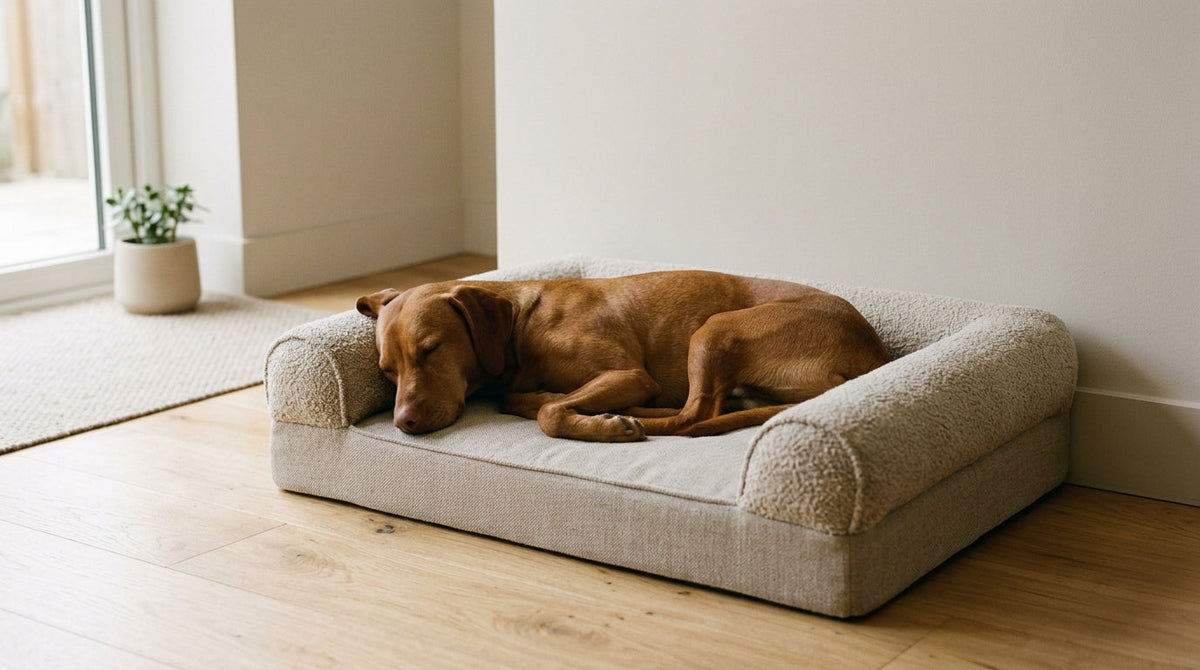
The filling also has to hold up to the nesting process over time, which means avoiding anything that flattens or shifts to one side after a few weeks. Visco-elastic foam responds to body weight and returns to shape. The Senso Dog Bed from the German design house MiaCara uses an orthopaedic memory foam mattress paired with bouclé bolsters on three sides. The bolsters are structured enough to lean against without collapsing, and the looped bouclé weave resists pilling with regular use.
A removable, washable cover is not a luxury feature on this kind of bed. It's a practical requirement. Dogs with strong nesting habits press their face, their paws and their coat into the surface repeatedly every day, and a cover you can't wash is a cover you'll eventually give up on. A removable, washable cover was the feature we prioritised consistently when choosing which beds to stock.
Matching the bed to the nesting style
Not all nesters behave identically. Some dogs go through the full circling ritual and then sprawl flat, wanting maximum surface area once they've settled. Others curl tight and want the sides close in around them, preferring to feel contained rather than spread out. A few do both, depending on the time of day and the temperature, which keeps things interesting.
For sprawlers, a generously sized box bed with low sides works well. The Mare Dog Bed from MiaCara is filled with recycled foam and covered in certified SEAQUAL® YARN, a fibre made from recovered marine plastic. It comes in five sizes, with a fully removable cover that goes in the machine. The calm Sand and Kelp colourways tend to disappear into a neutral interior, which is either a selling point or irrelevant depending on how you feel about pet furniture being visible.
For dogs that curl and like to feel enclosed, the Covo Dog Basket is worth considering. Its shell is pressure formed bent plywood, rising into a high rear wall that curves around a small or medium dog on three sides. The open front keeps them connected to the room; the raised back gives them the den containment that a curling nester finds genuinely comfortable. The foam cushion inside is engineered for spinal support, and the fabric cover is removable and washable.
For a dog that sits somewhere between the two, the Barca Dog Bed offers curved sides that function as headrests, built from four interlocking moulded foam components that hold their shape rather than sagging or shifting. The memory foam mattress inside contours to the dog's body weight. Both the fabric cover and the mattress go in the machine; the foam sides wipe down with a damp cloth. Available in two sizes, in Slate and Taupe.
Browse the full range of designer dog beds to find the right match for your dog's nesting style.
The circling and scratching isn't a quirk to work around. It's your dog telling you, in the clearest terms they have, what a good bed feels like to them: sides to press into, enough room to turn, and a filling that holds its shape. Find a bed that answers all three, and your dog will settle into it every evening with the same reliable conviction. Which is about the best endorsement any piece of furniture can get.
Frequently asked questions
Why does my dog scratch and circle before lying down?
It's an inherited instinct that traces back to wild canids patting down grass and earth to create a shaped resting surface. The circling compresses the material beneath them, the scratching redistributes it, and the result is a custom hollow that holds warmth and marks the spot as theirs. It's completely normal, contented behaviour. Choose a bed that gives them enough room and structure to carry it out properly.
What type of bed suits a dog that circles and digs before settling?
Look for raised bolsters or a rimmed edge your dog can press into during the circling phase and rest against once settled. The footprint needs to be generous enough for a complete turn without stepping off the edge. A visco-elastic or memory foam fill holds its shape under daily nesting better than loose or fibrous fillings. A removable, washable cover makes upkeep straightforward for a dog using their bed intensively every day.
How do I know if my dog's bed is the right size for a nester?
If your dog is consistently landing with part of their body off the edge, or has to curl tighter than they seem to want to, the bed is too small. Dogs with pronounced nesting instincts need enough floor space to complete a full turn before they settle. The product pages list exact dimensions for every size, and the Senso size guide pairs each size with example breeds, which is a more reliable guide than estimating by eye.