Article: The Best Dog Beds for Anxious Dogs: Calm by Design
The Best Dog Beds for Anxious Dogs: Calm by Design
If your dog circles their bed five times before settling, wakes at every small noise, or refuses to sleep unless pressed against the sofa, the bed itself might be part of the problem. Most owners think about size and firmness when choosing a calming dog bed, and those things matter. But for anxious dogs, the shape, enclosure, and placement of a bed can have just as much influence on how quickly they settle and how deeply they rest.
Why anxious dogs need more than a comfortable surface
Anxiety in dogs isn't a single thing. Some dogs are noise-sensitive. Others struggle with separation, with change, or with being in open spaces where they feel exposed. It is also common: the PDSA's 2024 Animal Wellbeing Report found that 11% of UK dogs show signs of distress when left alone, and 12% show signs of fear. Sleep is where that vigilance tends to surface. The PDSA notes that most dogs need 14 to 16 hours of sleep in a 24-hour period, and that dogs getting less than ten hours a day may be more likely to show confrontational behaviours such as growling or snapping. Where and how your dog rests is not a minor detail in their wellbeing.
Anxious dogs aren't simply uncomfortable. They're vigilant. Their nervous system is on alert, scanning for threats even during rest. A flat, open bed in the middle of a room offers no visual buffer, no sense of enclosure, no reason for that alert state to switch off. The right bed won't resolve the underlying anxiety, and it's not a substitute for veterinary or behavioural support. But a well-chosen bed can reduce the number of environmental triggers your dog encounters during sleep, and that reduction in triggers can make a real difference to how well they rest.
The case for enclosure: bolster beds and cocooning designs
There's a reason dogs burrow under duvets, press into corners, and choose the narrowest spots in the house to nap. Enclosure is instinctively calming. Feeling a physical boundary against their back, side, or head gives a dog's nervous system something concrete to process rather than open, unpredictable space. If you're looking for the best dog bed for nervous dogs, enclosure is the feature to prioritise above all others.
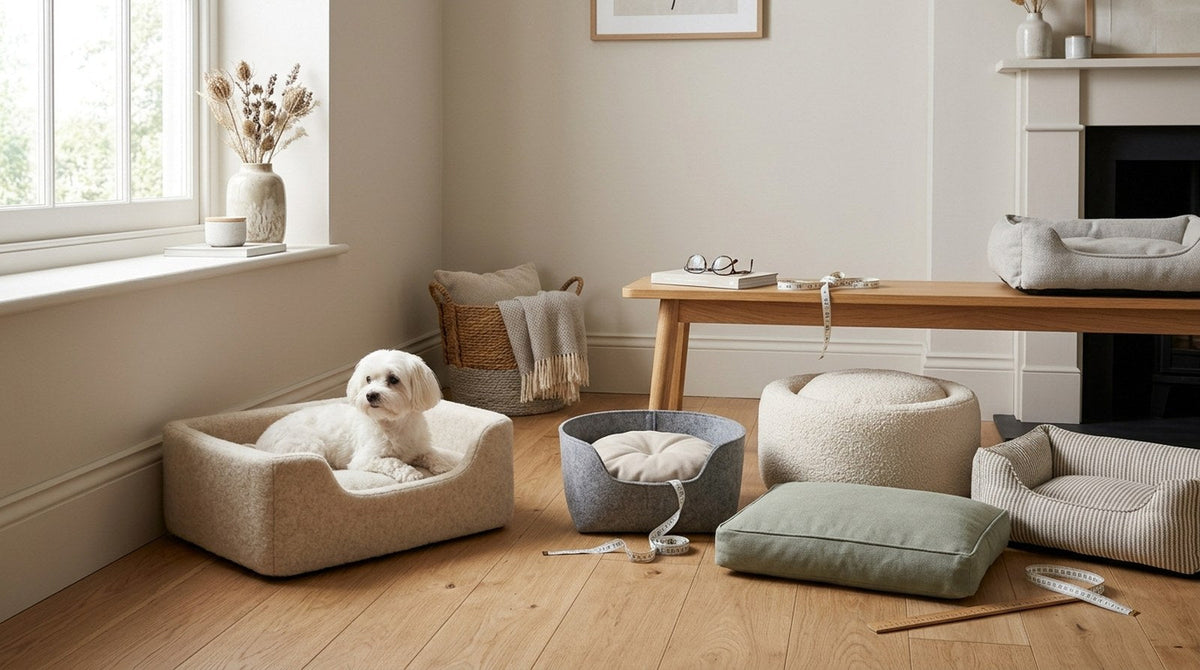
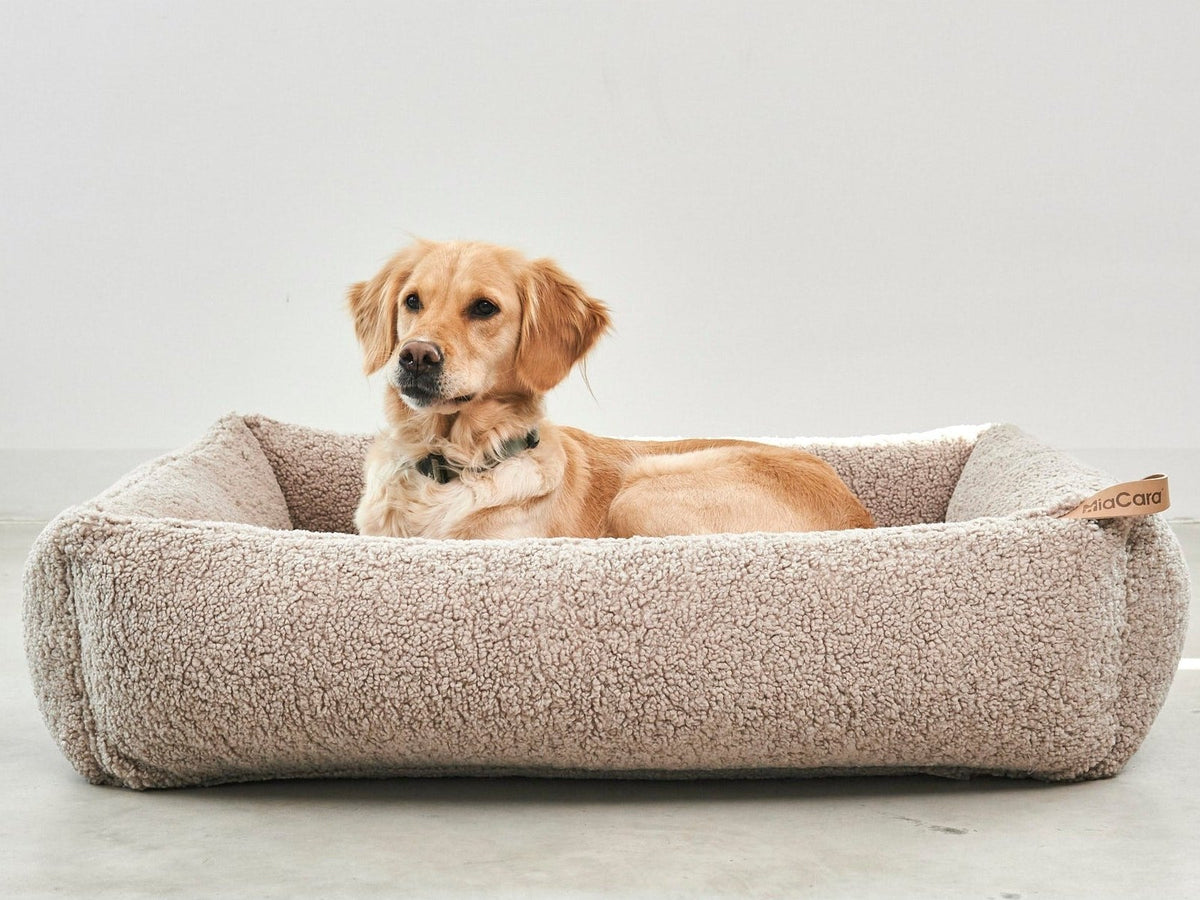
Bolster beds address this well. The raised sides give your dog something to lean into and a clear sense of where the safe zone ends. The Barca Dog Bed from MiaCara is a strong starting point here. Its sides are moulded foam rather than loose filling, so the raised edge keeps its defined shape instead of flattening under a dog who leans on it night after night. That gives dogs who press into furniture or against walls a consistent contact point without restricting movement. Dogs that settle through contact rather than stillness tend to find this style particularly useful. Your dog can tuck their chin over the rim, curl into the interior, or rest their flank against the raised side depending on how they're feeling.
For dogs with more acute anxiety, the Senso Dog Bed takes the principle further with a deeper bolster and a more enclosed silhouette that creates a genuine sense of retreat. It suits dogs who need to feel truly contained rather than simply supported. You'll notice anxious dogs often gravitate to the most enclosed corner of a room, and this type of design brings that feeling to wherever you place it.
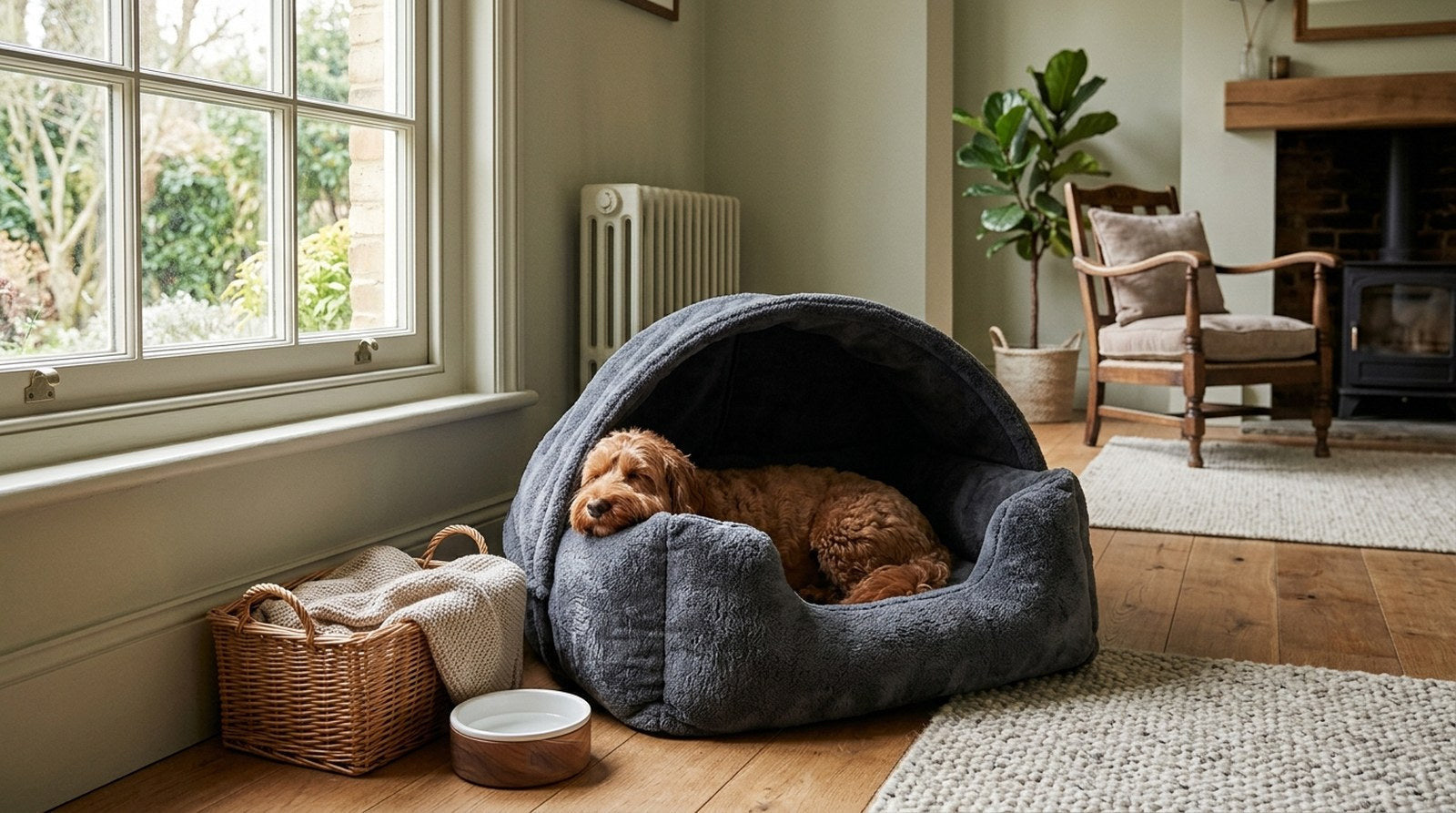
Cave beds and fully enclosed designs go further still, and they're worth considering for dogs with significant noise sensitivity. Bear in mind that some dogs find fully enclosed spaces stressful rather than calming, so observe how your dog already sleeps before committing to a completely closed design.
Material and texture: what your dog actually feels
Fabric choice matters more for an anxious dog than for one who sleeps soundly regardless of circumstance. Rough or crinkly materials can be mildly stimulating rather than calming, and some dogs are sensitive to synthetic textures that carry unfamiliar scents. Soft, dense fabrics that hold warmth without overheating tend to be the best fit.
Dogs prone to anxiety frequently knead, dig, and rearrange their bedding before settling. This is a self-soothing behaviour, not a sign the bed is wrong, but it does mean the fabric needs to hold up to repeated manipulation. Materials that pill quickly or shift out of position can increase your dog's agitation in those pre-sleep moments rather than ease it.
Scent is easy to overlook here. Anxious dogs rely heavily on olfactory cues to assess safety. Washing a new bed with a small amount of your dog's existing bedding, or placing a worn item of your clothing nearby during the first few nights, can help your dog associate the new space with familiar, safe scent signals far more quickly.
We stock MiaCara beds partly because their fabrics are chosen to survive that treatment. The Senso is upholstered in bouclé, a looped, textured weave picked for resilience as much as appearance: the loops resist pilling and hold their texture through regular use. For a dog whose pre-sleep ritual involves a lot of movement, that counts for more than it sounds.
Placement: where the bed sits changes how it feels
You can choose a well-designed bed and still undermine it with poor placement. Position is close to everything here.
The instinct for most owners is to put the dog bed in a social space, near the sofa or in the centre of the room. For an anxious dog, the middle of a room is often the worst place. There's no wall behind them, no visual limit to the space, and constant movement from multiple directions to process. It keeps the nervous system active.
Place the bed in a corner, with at least two walls creating a natural enclosure. If your dog is sensitive to external noise, avoid positioning near exterior doors or large windows. For dogs with separation anxiety, a spot within sight of where the family spends time can help: close enough to feel included, contained enough to feel safe.
- Corner placement reduces the number of directions your dog needs to monitor
- Consistent location matters: moving the bed regularly resets the scent familiarity your dog has built up
- Avoid high-traffic routes where people frequently walk past, particularly for sound-sensitive dogs
- Low, recessed spots such as alcoves, under a desk, or beside a bookcase mimic the den-like quality anxious dogs seek naturally
In a multi-dog household, make sure each dog has their own bed and that they're not competing for the same space. Even mild social tension between dogs can prevent a nervous dog from resting properly, regardless of how well-suited the bed itself is. You'll find a range of sizes and enclosure styles in our designer dog beds collection if you're kitting out more than one space.
A note on what beds can and can't do
A well-chosen bed is genuinely useful. It reduces environmental triggers, supports self-soothing behaviour, and gives your dog a consistent, predictable place to decompress. But if your dog's anxiety is significantly affecting their quality of life, a conversation with your vet should come first. Behavioural support, environmental management, and in some cases medication are tools that a bed alone can't replace. The bed works best as one piece of a broader approach, not a standalone fix.
Frequently asked questions
Does the size of the bed matter for anxious dogs?
Yes, and perhaps not in the way you'd expect. A bed that's too large can feel exposed rather than secure, particularly for smaller or more nervous dogs. The goal is a fit that lets your dog curl up or stretch out without leaving a large amount of empty space around them. A dog who consistently sleeps curled tightly, pressed into one corner of an oversized bed, is likely telling you the sleeping area feels too open. Sizing down, or choosing a bolster design that reduces the effective interior space, can make a noticeable difference.
How do I know if my dog's anxiety is affecting their sleep?
Watch for patterns rather than single incidents. A dog whose sleep is disrupted by anxiety will typically show a cluster of signs: circling or digging repeatedly before lying down, waking frequently at low-level sounds, choosing to sleep pressed against furniture or walls rather than in their bed, and appearing tired or irritable during the day despite long rest periods. If several of these apply consistently, it's worth raising with your vet, as some cases benefit from a formal assessment by a qualified animal behaviourist alongside changes to the sleeping environment.
Related guides
- Dog bed shapes guide: which shape suits a curler, leaner, sprawler or nester.
- Dog bed size guide: how to measure your dog and size from that rather than from weight.
- Senior dog comfort: designing an age-friendly sleep space.
- Luxury dog living: our guide to designing a home around a dog.