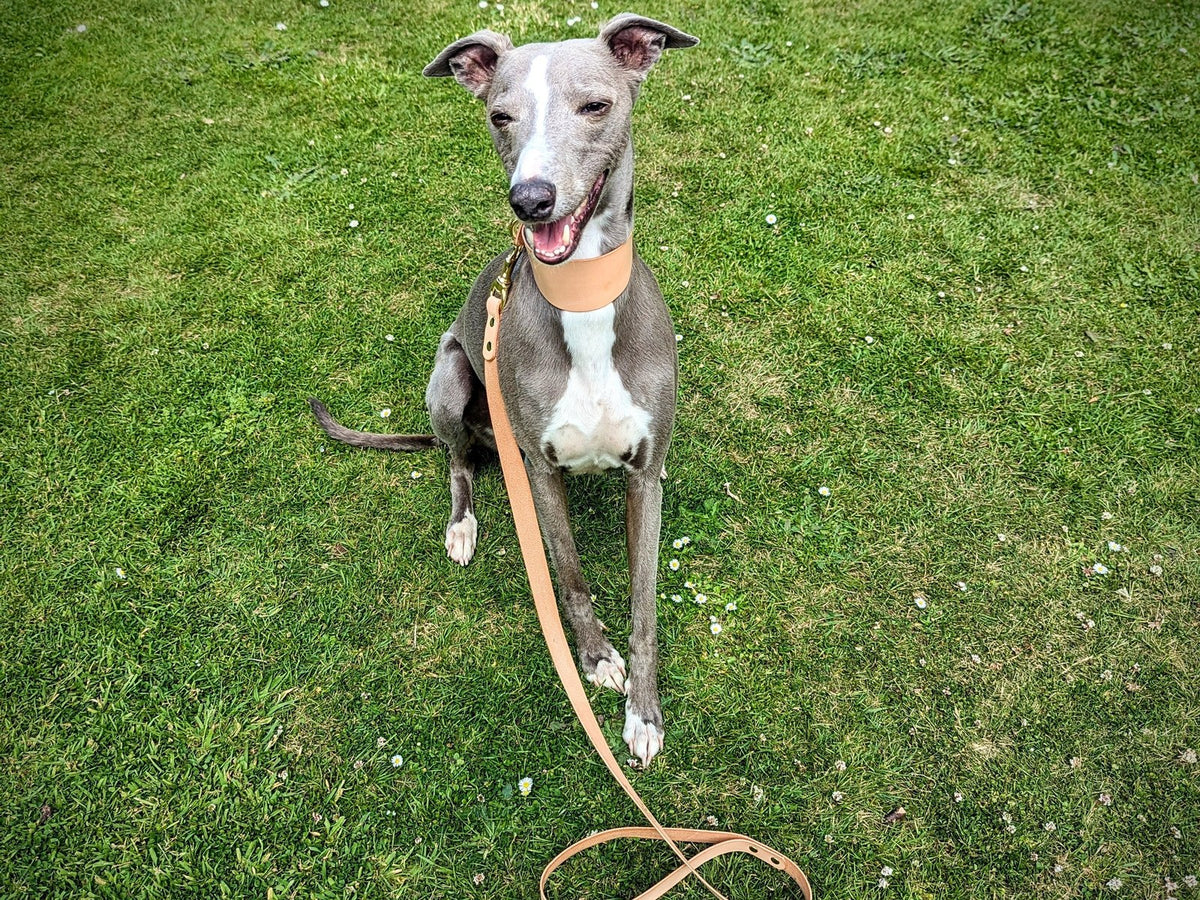
Article: How to Choose the Right Dog Bowl Size for Your Breed
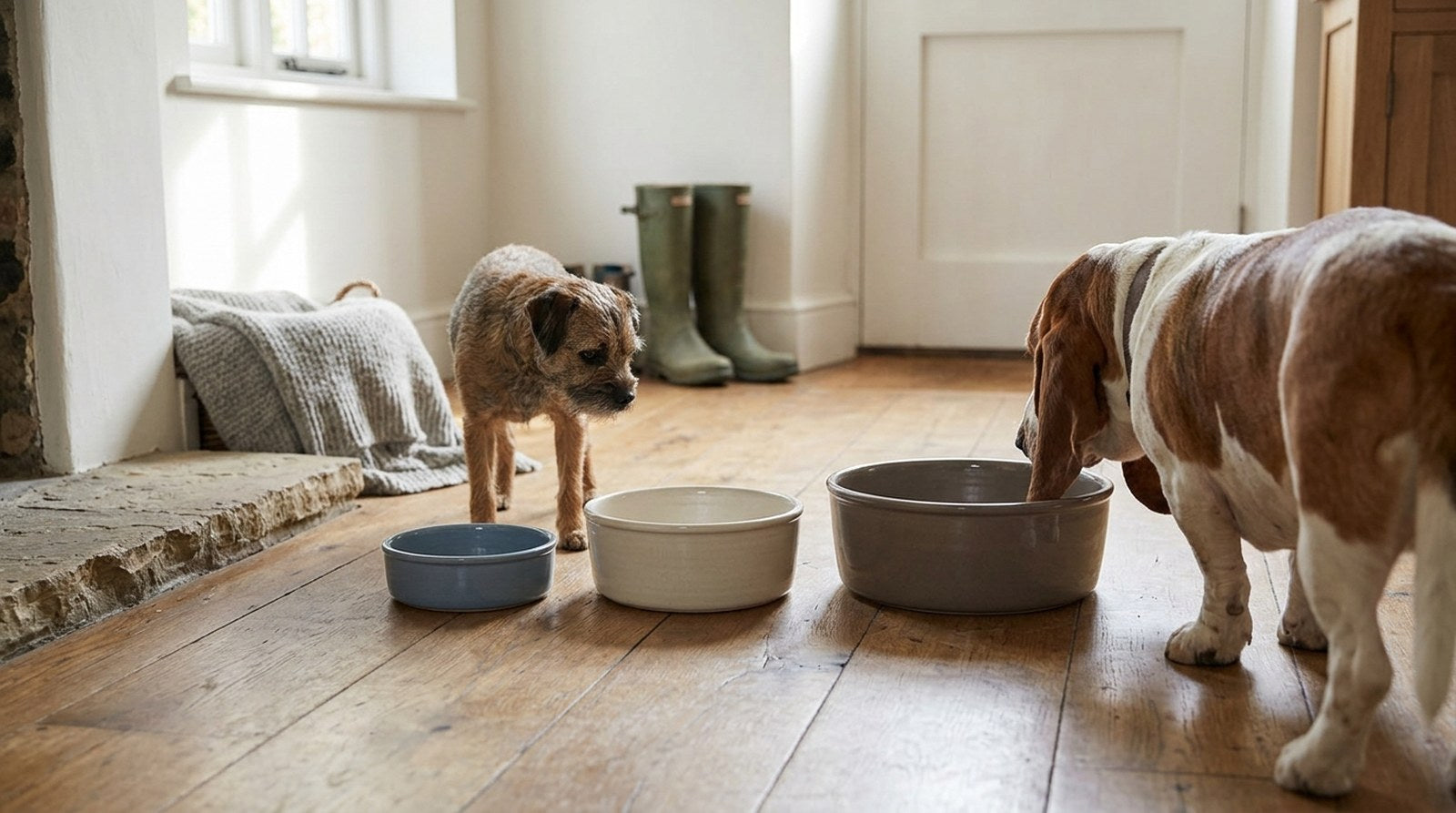
How to Choose the Right Dog Bowl Size for Your Breed
Most dog owners pick a bowl by grabbing whatever looks right on the shelf. Too wide, too deep, too shallow, and your dog's eating experience suffers quietly every single meal. The truth is that bowl diameter, depth, and capacity all interact with your dog's anatomy in ways that are easy to get right once you know what to look for. This guide focuses on breed-specific sizing, because a Basset Hound's ears and a Greyhound's long snout create entirely different requirements. The hand-thrown small, medium and large ceramic bowls we stock map onto those same breed categories, and the breakdown below shows which suits which.
Why breed anatomy should drive your dog bowl size choice
Forget guessing by weight category alone. The most useful measurements are snout shape, head width, and ear length. These three factors determine how comfortably your dog can access their food without strain, splash, or frustration.
Snout depth and bowl depth
Brachycephalic breeds, including Pugs, French Bulldogs, and Bulldogs, have short, flat faces. A deep bowl forces them to tilt their head awkwardly to reach the bottom, which makes eating uncomfortable and increases gulping. A wide, shallow bowl lets them eat naturally, with their face level rather than angled downward. A Dachshund or a Collie, by contrast, needs enough depth to encourage slower eating without food scattering across the floor.
Ear length and bowl width
This one surprises people. Breeds with longer ears, such as Cocker Spaniels, Basset Hounds, and Bloodhounds, need a bowl that's narrow enough at the top to keep their ears from trailing into the food. Wet ears attract debris, create matting around the face, and can cause recurring skin irritation. A tapered or narrower-diameter bowl solves this without any intervention from you.
Head width and bowl diameter
Large-headed breeds such as Labradors, Rottweilers, and Saint Bernards need enough diameter to eat comfortably without their face pressing against the rim. Too narrow a bowl and they'll be pushing food around rather than eating it.
Matching bowl size to breed: a practical breakdown
Once you've considered anatomy, sizing becomes straightforward. Wirksworth Pottery, a Derbyshire-based maker working from the Peak District, produces handmade ceramic bowls in three sizes that map neatly across breed categories. Each piece is individually hand-thrown with food-safe glazes, which is precisely why we stock them.
Small bowl, best for toy and small breeds: Chihuahuas, Miniature Dachshunds, Shih Tzus, and small Terriers. The Ceramic Dog Bowl (Small) suits dogs up to roughly 10kg. The diameter is wide enough for a small snout to eat without crowding, while the capacity avoids overwhelming tiny stomachs.
Medium bowl, the most versatile size. This fits medium breeds: Spaniels, Whippets, Border Collies, Staffordshire Bull Terriers in the 10 to 25kg range. A common mistake here is owners buying the medium size for dogs that have already crossed into large-breed territory, typically to save money or because the large bowl looks excessive. It isn't. A bowl that's too small for the breed means your dog is eating with their nose pressed against the rim, which slows them down in an uncomfortable way rather than a useful one. The Ceramic Dog Bowl (Medium) suits spaniel-type and hound breeds, helping keep long ears clear of the food surface, a small detail that makes a real difference over thousands of meals.
Large bowl, for bigger breeds: Labradors, Dalmatians, Weimaraners, Boxers, Standard Poodles. The Ceramic Dog Bowl (Large) provides the diameter these dogs need to eat at a natural angle without their nose grazing the rim. For truly large breeds, Great Danes, Irish Wolfhounds, Bernese Mountain Dogs, check the bowl's internal diameter rather than the size name on the label, as sizing varies between makers.
When bowl height matters as much as bowl dimensions
Bowl dimensions are only part of the equation. Joint stiffness and arthritis become more common as a dog gets older, and the PDSA lists several large breeds among those most at risk. For a tall dog with a long neck, eating from floor level with the head bent sharply downward puts unnecessary pressure on the spine and neck muscles at every meal.
Raised feeders bring the bowl to a more natural height, with the rim sitting at roughly chest level. The Desco Dog Feeder from MiaCara works well here, and its clean lines suit a feeding station you would rather not hide away. A practical rule of thumb: measure from your dog's front leg to the floor, and aim for the top of the bowl to sit at roughly that height. You're matching the feeding position to your dog's natural standing posture, not raising the bowl arbitrarily.
Raised feeders aren't necessary for every dog. Small and medium breeds eating from the floor is entirely appropriate, and the bowl choice itself is the primary variable for them. You can browse the full range of elevated pet feeders to see what suits your setup.
Why ceramic holds up better than plastic
Ceramic bowls earn their place through material properties that synthetic alternatives simply can't replicate. They're naturally heavier, which means they stay put during meals rather than sliding across the floor. The glazed surface is non-porous, so bacteria can't colonise micro-scratches the way they do in worn plastic. Ceramic also stays cooler in warmer months, which keeps water fresher between refills.
The weight is particularly useful for enthusiastic eaters, since it removes the need for a non-slip mat in most cases. For flat-faced breeds especially, a stable bowl that doesn't shift when they're pushing into it makes the whole meal less effortful. A handmade dog bowl depth guide is only useful if the bowl itself holds up to daily use, and glazed ceramic does.
To keep any ceramic bowl in good condition, wash by hand rather than running it through a dishwasher repeatedly. A quick rinse after each meal and a proper wash daily is all it takes.
Putting it all together
Breed anatomy first, bowl dimensions second, elevation third if your dog needs it. That order matters. Owners who work through it this way tend to land on the right bowl first time rather than buying twice. A bowl sized to your dog's face and ears, made from a material that stays clean and stable, is one of those purchases you'll stop noticing because it just works.
Frequently asked questions
How do I know which size bowl to buy if I'm unsure of my dog's breed mix?
Use your dog's current weight as a starting point: under 10kg for a small bowl, 10 to 25kg for a medium, and above 25kg for a large. Then look at their face shape and ear length. If your dog has floppy ears that hang forward, err toward a narrower diameter at the top of the bowl. If they have a flat face, prioritise a shallower, wider profile over raw capacity. When genuinely in doubt between two sizes, go larger. A dog can eat comfortably from a slightly larger bowl; the reverse isn't true.
Are raised feeders suitable for every dog, or only certain dogs?
Elevation helps most for dogs with existing joint, neck, or spinal conditions, and for tall dogs that have to drop their head well below their shoulders to reach a floor bowl. For a healthy medium-sized dog eating from the floor, there's no strong reason to elevate. If your dog has been diagnosed with arthritis or has mobility issues, speak to your vet about feeding height, as individual needs vary.