

Article: Multi-Cat Households: How Cats Share Territory and Resources
Multi-Cat Households: How Cats Share Territory and Resources
Two cats in one home is not automatically double the company. Cats did not evolve as a social species the way dogs did, and living well together in a shared house is something most cats have to be set up for rather than something they naturally slide into. Some pairs genuinely bond. Many more simply learn to coexist, each running a separate life under the same roof, and that is a good outcome too. The difference between a calm multi-cat home and a stressed one usually comes down to two things: how much has to be shared, and how early anyone notices when a cat is unhappy about it.
Why cats don't just "get along"
Cats are, by nature, more comfortable managing their own territory than defending or sharing it. The RSPCA puts it plainly: cats usually enjoy company on their own terms and often prefer to be "the only cat" in a household. That is not a training problem to be fixed. It is the starting point.
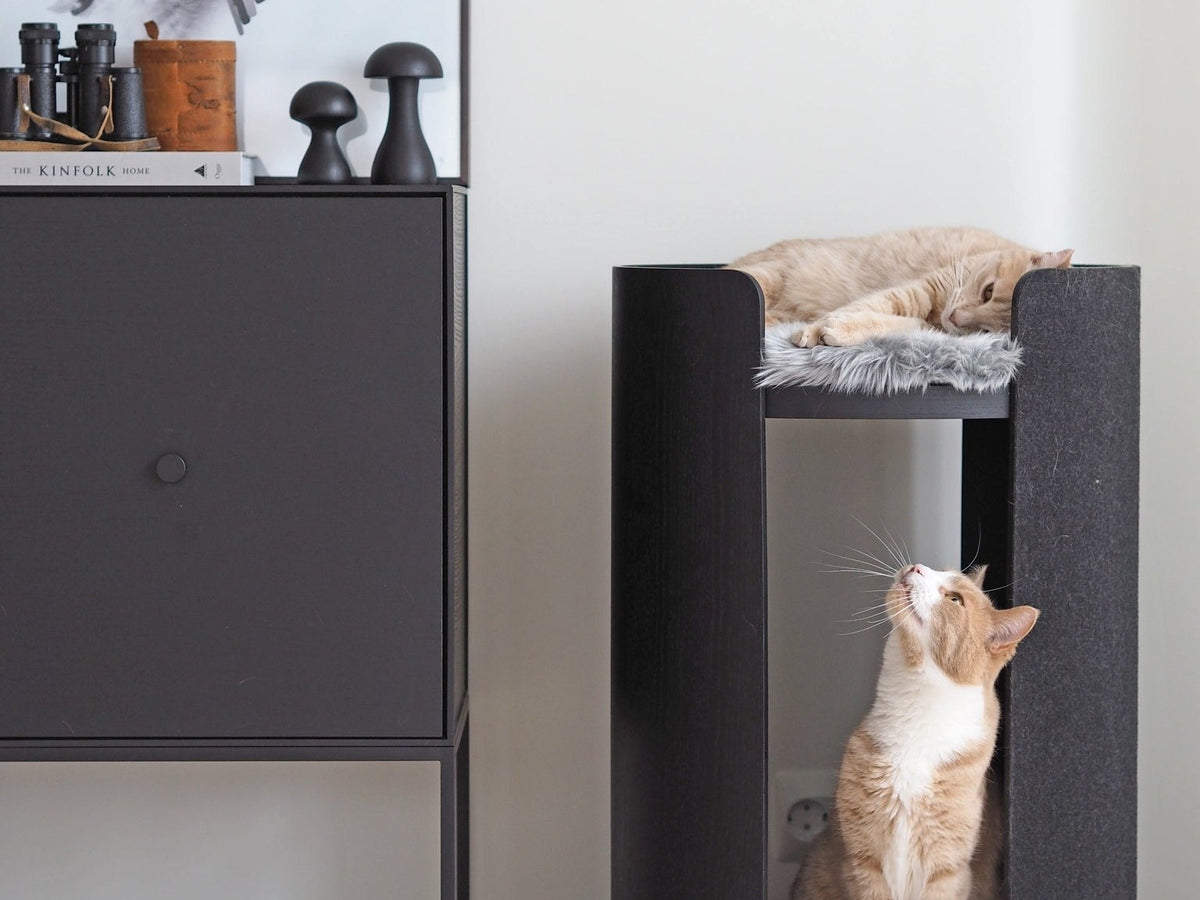
Where cats do live together successfully, they rarely behave as one uniform group. International Cat Care notes that cats in multi-cat homes often form sub-groups, with two, three or more cats bonded together and others in the same house choosing to stay largely on their own. A household of four cats might really be one pair, one trio, and one cat who wants nothing to do with either. All of that can be entirely normal.
The resource rule that prevents most conflict
Most tension in a multi-cat home is not really about the cats disliking each other. It is about competition for a small number of things: food, water, litter trays and resting places. International Cat Care's guidance is a simple formula: one resource per cat, plus one extra, and positioned in different locations around the home rather than clustered together. The RSPCA gives the same advice on litter trays and hiding places specifically, so that cats "don't have to share."
Spreading resources out matters as much as the count. Two food bowls side by side in the kitchen are, from a cat's point of view, still one contested space. Two food bowls in two different rooms are two separate, uncontested options. The same logic applies to litter trays, water and anywhere a cat likes to rest.
Reading tension before it becomes a fight
Open fighting is the least common sign that cats are struggling to share a home, and usually the last one to appear. International Cat Care describes the far more typical pattern as cats being "reactive towards each other's presence", which shows up as one cat leaving a room the moment another enters, staring, or blocking access to a litter tray or food bowl without a single hiss exchanged. None of that looks dramatic. All of it is a cat managing a level of stress that a resource change can usually resolve.
The practical takeaway is to watch use, not just behaviour. If one cat has quietly stopped using a particular litter tray, or waits outside a doorway before going through, that is worth treating as a real signal rather than a personality quirk.
Giving each cat somewhere that is genuinely theirs
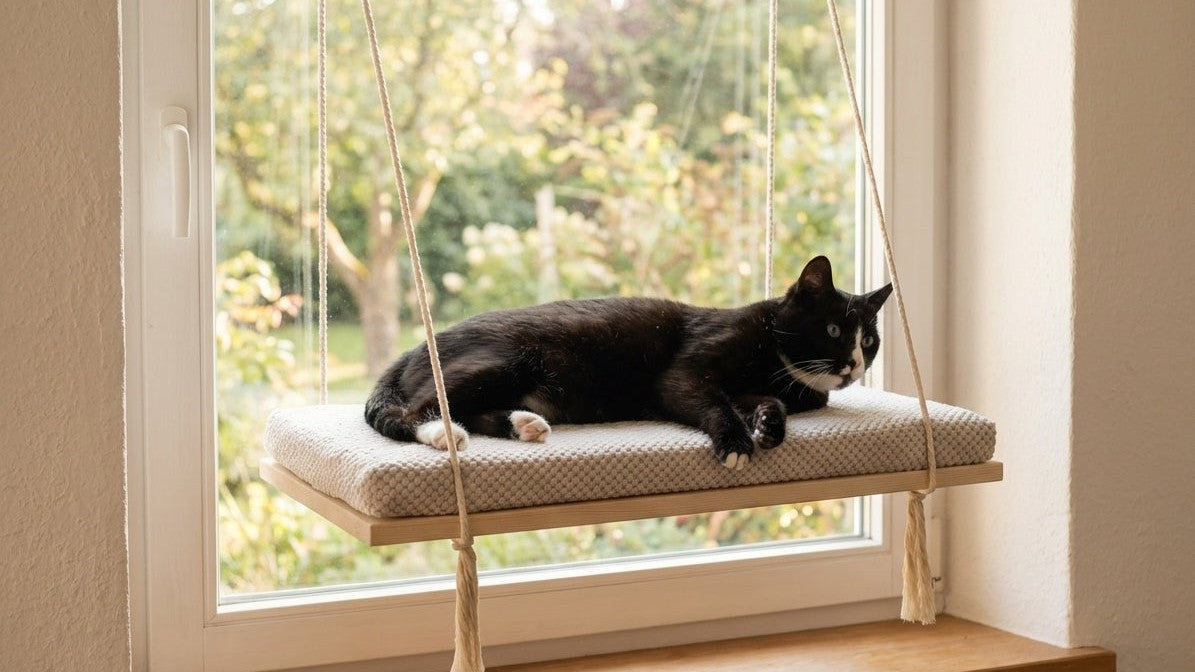
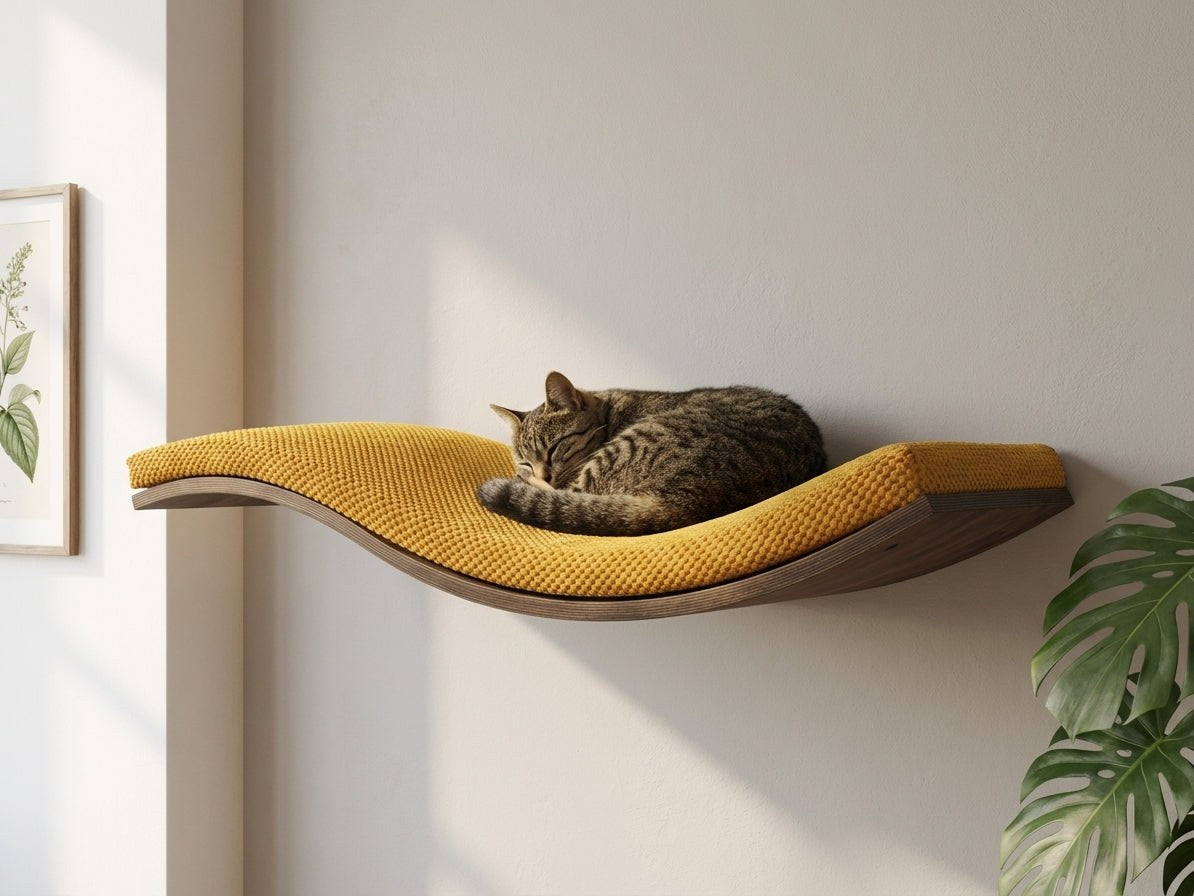
Resting places work the same way as food and litter: duplication and distance reduce competition. Two cats each need somewhere to settle that the other one is not also trying to use, and putting both options in the same spot defeats the point.
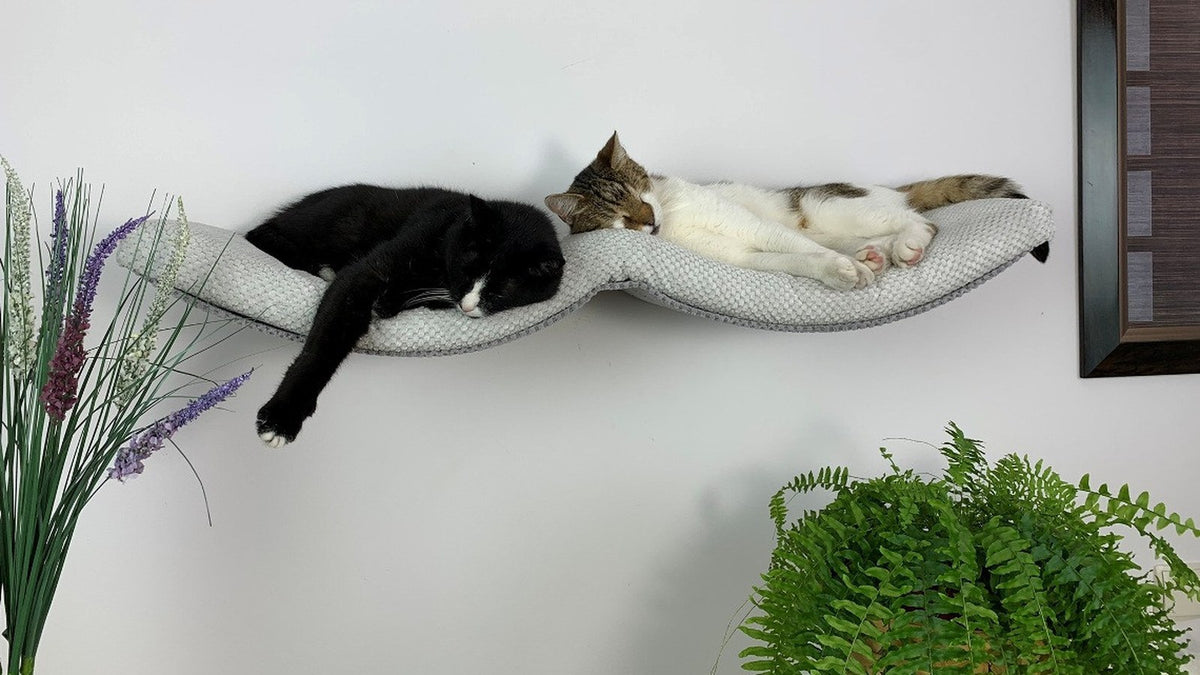
A MiaCara Cesto basket in one room and a MiaCara Calma hexagon bed in another gives two cats a resting place each without asking either of them to negotiate for it. For a cat who prefers height over floor level, a Cat's Atelier wall shelf mounted well away from the other cat's usual spots offers a separate option again, on a different plane entirely, which is often enough to remove the competition altogether. The Cat's Atelier collection covers a range of these elevated pieces if one shelf is not enough ground to cover for the number of cats in the house.
When two cats never quite bond, and why that's fine
Not every pairing becomes affectionate, and that is not a failure on the owner's part. Two cats who avoid each other, keep to their own resources and never fight are living a perfectly good multi-cat life. The goal worth aiming for is calm coexistence, not friendship. If tension is rising rather than settling, the resource check above is the first thing to revisit before assuming the cats simply cannot live together.
If one of your cats is a new kitten joining an older cat, our guide to introducing a kitten to an older cat walks through the first two weeks.
Frequently asked questions
How many litter trays do I need for two cats?
The commonly used formula is one tray per cat plus one extra, so three trays for two cats, positioned in separate locations rather than side by side. The same one-plus-one approach applies to food and water stations.
My cats aren't fighting, but one always leaves the room when the other comes in. Is that a problem?
It's worth taking seriously rather than dismissing. A cat consistently leaving a room, avoiding a particular litter tray, or hanging back before crossing a doorway is showing exactly the kind of low-level tension that rarely escalates into a visible fight but still reflects real stress. Spreading out resources so neither cat has to pass the other to reach what they need is the usual first step.
Do all cats in a household need to become friends?
No. Some cats form close bonds; many more simply coexist, each managing their own territory within the same home. Calm, separate coexistence with no ongoing tension is a good outcome in its own right, not a sign that something is missing.